
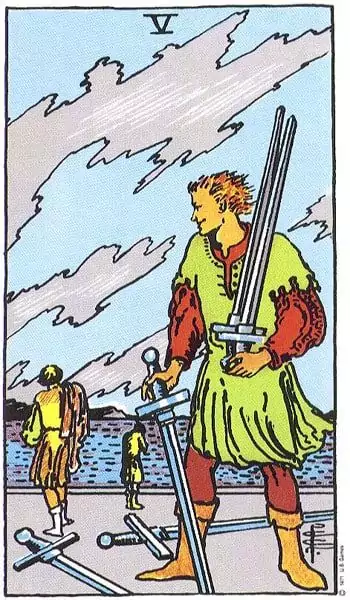
Five of Swords
Card meaning
The story of the Five of Swords is the war promised after the rest period of the Four. It is a card of defeat, no matter how you slice it. Even when you think you have been victorious, any victory is really no victory at all. Take a look at the card. We have what appears to be a champion, but who are the real victors here? It’s very possible the two other figures didn’t actually lose, but knew that this was an unnecessary fight not worth fighting. If this is the case, our smug victor really won nothing at all. His victory is hollow.
When the Five of Swords appears in a reading, it is a warning to carefully consider whether the fight you are about to engage in is really worth it in the long run. True victory can only be found by not fighting at all. Smugness and pride also have no place in this card—and if you are feeling either of those emotions, then you are disillusioned, and the truth will swing back to cut you down in the very near future.
Frequently Asked Questions About Five of Swords Tarot Card
The Five of Swords is a card of defeat and hollow victory. No matter who appears to win the fight, any victory here is really no victory at all — conflict leaves everyone diminished.
In shadow, pride and smugness reveal the querent is disillusioned. They fought an unnecessary fight and lost more than they gained. The truth will swing back to cut them down soon.
The Fives disrupt the rest of the Fours. After the truce, war returns. The Fool learns here that tunnel vision and incorrect focus lead only to loss, even when the scoreboard says otherwise.
Tarot cards are too layered and contextual to reduce to yes or no. For that, try a pendulum or dowsing rods. Here it warns: true victory comes from not fighting. Any yes may cost more than it gains.
In love, this card flags a power struggle where no one truly wins. One partner may feel victorious, but the relationship suffers. Consider whether the argument is worth having at all.
The apparent winner holds the swords but lost allies and goodwill. The two who walked away may be the real victors — they chose not to engage in an unnecessary fight.
Not always — it can point to an internal battle. Fighting your own better judgment, or pursuing a goal through dishonest means, also fits the card theme of self-defeating conflict.
At work, beware of office politics or disputes that feel winnable but damage your reputation. The card warns that defeating a colleague through underhanded means will backfire eventually.

