

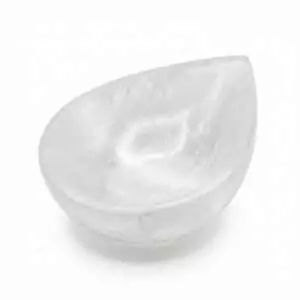
Quick Specs
- Type: Selenite (satin spar) carved athame
- Shape: Crescent moon blade
- Size: 6 inches
- Best for: Lunar rituals, Goddess work, altar casting
Selenite Crescent Athame for Moon Rituals
Selenite, technically classified as a fibrous form of gypsum known as satin spar, has been prized in ritual contexts since ancient Mesopotamia, where it was associated with the moon god Nanna. Its fine parallel striations catch light in a way no other stone does, producing that characteristic inner glow practitioners associate with lunar and crown chakra energy. This 6-inch crescent athame is carved entirely from selenite, with the blade shaped to echo the waxing or waning moon arc, making the form itself a symbolic statement before any working begins.
Unlike metal athames, selenite carries a soft, receptive quality in the hand. Wiccans who work the Dianic tradition or any practice centered on the Goddess find the crescent form especially resonant because it maps directly to the three-phase moon: waxing, full, and waning. The crescent specifically honors the Diana and Artemis archetype and the liminal spaces between moon phases, making this a natural fit for esbat rites, drawing-down-the-moon ceremonies, and any working tied to cycles, tides, or feminine mysteries.
Selenite as a Self-Cleansing Ritual Tool
One of selenite’s most discussed properties in crystal work is that it does not accumulate or hold onto ambient energy the way denser stones like obsidian or black tourmaline do. This makes it a low-maintenance athame for practitioners who work frequently and prefer not to smudge or recharge their tools after every session. That said, selenite is water-soluble, so it should never be soaked or left in damp conditions, and its softness on the Mohs scale (2) means the carved edge can chip if dropped on a hard surface.
For practitioners working with the chakra system, selenite is almost universally placed at the crown and third-eye positions. Pairing this crescent athame with a selenite wand on the altar creates a cohesive lunar toolkit. It also works well alongside labradorite, moonstone, or white howlite for a fully moon-aligned altar setup. Explore my selenite collection for wands, bowls, and plates that complement this piece.
How to Use Selenite Crescent Athame 6 Inch Lunar Ritual Blade
A three-step process for integrating a selenite crescent athame into lunar ritual practice.
- Attune at the New Moon
Hold the athame facing a window under the new moon sky. Visualize the blade absorbing dark-moon stillness. Set your intention aloud for the full lunar cycle of work ahead before placing it on the altar.
- Cast Circle and Direct Energy
Hold the crescent point outward and walk the perimeter clockwise, visualizing silver light forming a boundary as you move. The crescent arc channels direction with less physical pressure than a metal blade.
- Close and Rest the Athame
After ritual, lay the athame flat on a selenite plate or white cloth. Avoid wooden boxes that trap humidity. Position the crescent tip toward the north or your Goddess figure as a gesture of completion.
The Tarot Fellow Standard
I stock selenite tools selectively because the quality of the carving matters more than it does for rough specimens. This crescent blade has clean definition in the arc without the chalky, pitted surface you sometimes get with lower-grade satin spar. The 6-inch size is practical for single-hand use in a standard ritual circle without being too light to feel intentional in the grip. If you’re building a moon-focused altar, browse my full athames collection to see how this piece fits alongside other ritual blades.
Frequently Asked Questions
Yes for ritual use. Selenite scores Mohs 2 and is water-soluble, so keep it dry and handle carefully. It will not hold a metal-sharp edge, but it works well for directing energy in circle casting and ceremony.
The crescent marks the waxing and waning lunar phases, the Goddess in her Diana or Hecate aspect, and liminal transitions. It suits esbat rites, moon-phase workings, and feminine deity or cyclical magic practice.
Most practitioners consider selenite self-cleansing due to its crystalline structure, but a brief moonlight exposure or sound cleansing is a good way to set personal intention before first use with any new tool.
Selenite is lighter, fragile, and carries a receptive quality. Practitioners choose it for lunar or Goddess-centered rites. Metal athames suit elemental fire work and more assertive ceremonial magic traditions.


Reviews
There are no reviews yet