

Quick Specs
- Genus: Arctostaphylos
- Species: Not stated by the supplier
- Sold as: Mexican bearberry (uva ursi)
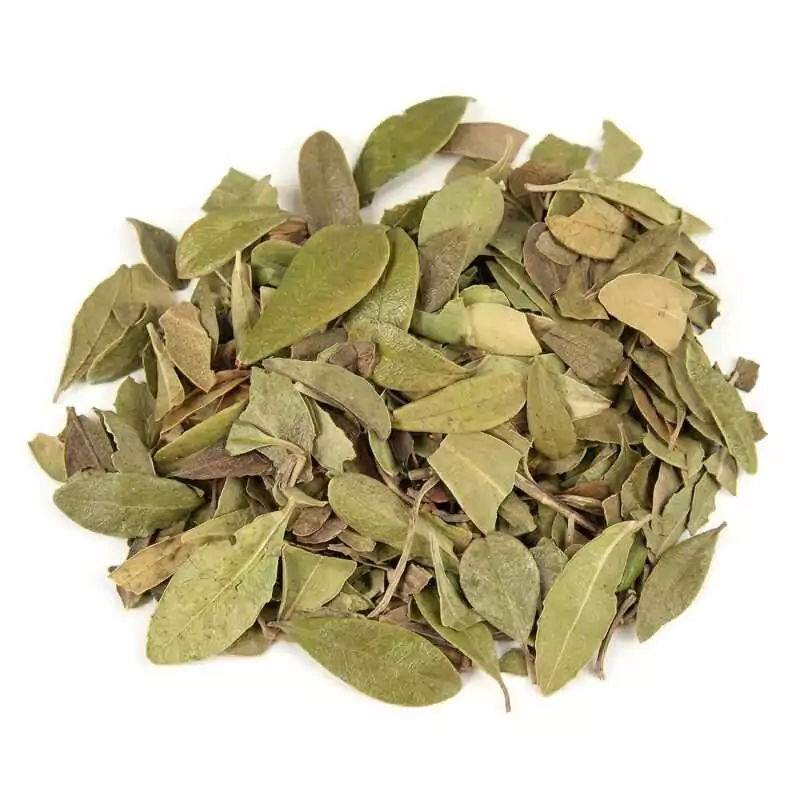
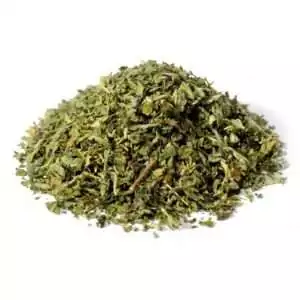
- Form: Whole dried leaf
- Net weight: 1 oz
- Sourcing: SQF & Kosher certified supplier
Mexican Bearberry Leaf: A Heath-Family Evergreen
Arctostaphylos is a genus of evergreen shrubs in the heath family, Ericaceae, the family that also holds blueberries and rhododendrons. Its members go by two common names, manzanita and bearberry, and they share thick, leathery leaves that stay on the plant through winter, urn-shaped flowers, and small round fruit that bears, coyotes, and other wildlife eat. Nearly all of them grow in and around California, though a few reach north into colder country and south into Mexico. This packet holds whole dried leaves that the supplier sells as Mexican bearberry (uva ursi). That name could refer to either of two plants: the northern uva ursi, Arctostaphylos uva-ursi, which creeps along the ground a foot or less high, or the Mexican manzanita, Arctostaphylos pungens, an upright shrub that stands three to ten feet tall. What you’ll see in the packet is the leaf, small, stiff, and leathery, olive green to tan once dried.
Folk-magic writers list uva ursi mainly as an herb for psychic work and intuition. Their advice is simple: keep a pinch in a small bag with your divination tools, whether that’s a deck, a pendulum, or a mirror, or scatter some of the crumbled leaf around an altar before a reading. An older protective belief rides alongside, that anyone carrying the leaf is safe from malicious spirits and ghosts. Ancestor work comes up too, as does the bear, an animal some practitioners treat as a guide, and they keep the leaf close when they work with it. Lists of correspondences mostly assign it the earth element but can’t agree on a planet, offering Mars, Jupiter, Saturn, and Pluto. Treat all of this as modern and folk lore collected from writing about uva ursi, and keep your own notes on what works for you.
Practical Ritual Applications
A small packet suits small workings. Tuck a few whole leaves into the pouch that holds your deck, or fold a pinch into a scrap of cloth to keep in your pocket when you read for others. If the bear is your guide, rest a few leaves in a saucer on your altar. For charcoal, set a lit disc on a bed of sand in a fireproof dish, add a small pinch of crumbled leaf before you begin a reading, open a window, and don’t leave the dish unattended until the charcoal has gone out. Other plants from my divination and psychic development herbs combine with it in jars and sachets, and you can find charcoal discs and sand in my shop. Do not use during pregnancy or while nursing, and do not give to children. If you take prescription medication, or have a kidney or liver condition, check with a qualified practitioner before use. These statements have not been evaluated by the FDA. This product is not intended to diagnose, treat, cure, or prevent any disease.
How to Build a Bearberry Spell Jar for Clear Sight
A small lidded jar keeps the leaf visible beside your tools and is easy to refill.
- Pick the jar and name the work
Choose a small jar with a tight lid, clean and fully dry. Decide what the jar is for, such as a month of readings, a run of scrying practice, or a dream journal, and write it on a slip of paper in a few words. Keep the purpose narrow, since a jar with one job is easier to read back later.
- Layer the leaf
Lay the paper in the bottom, then crumble a pinch of leaf over it with your fingers. Add thin layers of any other dry herbs you've picked for the work. Finish with a few whole leaves on top so their shape shows through the glass. Close the packet right away so the rest stays dry.
- Close it and keep it
Screw on the lid and set the jar beside your deck, pendulum, or scrying tools. Say your purpose aloud once as you close it. When the work feels finished, return the leaf to the ground outdoors, wash the jar, and begin again for the next purpose, so every jar keeps a single job.
The Tarot Fellow Standard
I carry bearberry in this 1 oz packet because a small amount goes a long way in a sachet, a jar, or a charcoal dish. The leaf comes from a supplier with SQF (Safe Quality Food) and Kosher certification. Kinnikinnick is the Algonquian word for the smoking mixtures that Native nations prepare, and bearberry leaf is among the plants they use. Those blends and the ceremonies around them are living practices with their own teachers and communities. This packet is one herb for modern ritual work of your own. To learn what kinnikinnick means within those nations, read what they publish themselves.
Frequently Asked Questions
No, not according to Kew's Plants of the World Online, which gives the native range of Arctostaphylos uva-ursi as the Subarctic to the northern, western, and central United States. The Forest Service describes it running south through the Rocky Mountains to New Mexico. The Arctostaphylos of Mexico is A. pungens, called pointleaf manzanita or Mexican manzanita, which Kew lists from the southwestern and south-central United States to Mexico. They are separate species in one genus.
Kinnikinnick is an Algonquian word meaning a mixture to smoke. Several Native nations prepare such blends, with recipes and uses that differ between them, and some uses are spiritual. Bearberry leaf is a frequent ingredient, sometimes alongside dogwood bark or sumac leaves. This packet holds one dried leaf and nothing else: the single herb that goes into such blends, sold on its own.
The Latin phrase translates as bear's grape, a reference to the fruit that bears eat in the wild. The genus name Arctostaphylos carries the same idea in Greek, joining arktos, bear, to staphyle, a bunch of grapes. Manzanita, the Spanish name for many shrubs in the genus, means little apple.
Reviews
There are no reviews yet