
Quick Specs
- Brand: Phoenix Publishing
- Author: Paul Beyerl
- Type: Paperback reference compendium, 528 pages
- Best for: Serious magical practitioners who want an authoritative, indexed herbal reference grounded in documented folklore
Herbal Magick Reference: Beyerl’s Encyclopedic Approach
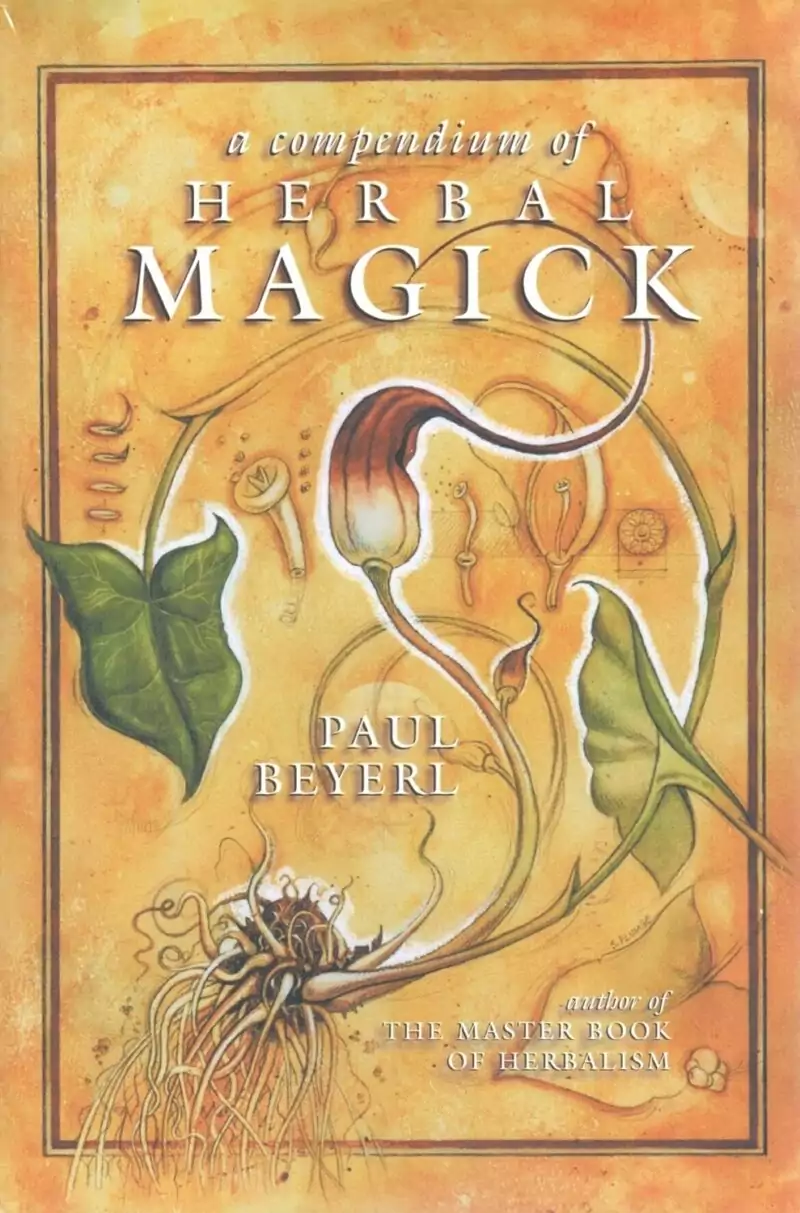
Paul Beyerl is not a casual author. He founded The Rowan Tree Church and the Wiccan Tradition of Lothlorien in the 1970s, trained as a Master Herbalist, and has maintained a 4,500-book research library alongside a botanical collection of more than 200 dried species. A Compendium of Herbal Magick is the direct output of that decades-long work: over 330 herbs documented with planetary and zodiacal correspondences, deity associations, and historical lore that Beyerl verified against primary sources rather than simply passing along unexamined.
The book’s structure sets it apart from most herbal magic titles. Each entry lists the herb alphabetically by common name, then provides documented associations in a consistent format: planetary rulers, zodiacal links, magickal classifications, alternative names, deity connections, historical lore, and usage guidance. Beyerl also distinguishes clearly between his two spellings, using “herbes” for magical applications and “herbs” for medicinal work, a distinction that reflects his view that the two traditions overlap but are not identical. Browse additional titles in my herb and herbal books section.
Why Serious Practitioners Rely on This Text
What distinguishes this compendium from popular competitors is Beyerl’s insistence on documented authenticity. He explicitly acknowledges which sources are reputable and which popular attributions cannot be verified, a level of scholarly transparency rare in the genre. His classification system categorizes herbs by their magical function rather than simply listing uses, giving practitioners a working framework rather than a lookup list.
Part I covers the magickal classification system and how to use the compendium format. Part III provides extensive astrological correspondence tables, an unusual depth that reflects Beyerl’s parallel training as a Master Astrologer. Experienced practitioners in Wicca, ceremonial traditions, and folk herbalism consistently cite this text alongside Scott Cunningham’s encyclopedia, noting that Beyerl’s sourcing discipline makes it a superior reference for anyone who wants to know why a correspondence exists, not just that it does.
How to Use the Compendium of Herbal Magick
How to navigate and use Beyerl’s herbal magick compendium effectively in practice.
- Start with the Alphabetical Herb Entries
Use the alphabetical index to locate any herb by common name. Each entry gives planetary correspondences, zodiacal associations, deity connections, and documented historical lore before offering practical usage guidance for ritual and spiritual use.
- Learn the Classification System First
Cross-reference Part I’s magickal classification system before using any herb. Beyerl’s categories, such as protective, countermagickal, and consecration herbs, reveal how a plant’s energy functions in context and prevent misapplication in practice.
- Use the Astrological Tables in Part III
Work with Part III’s astrological correspondence tables alongside individual entries. Beyerl spent decades as a Master Astrologer alongside his herbalism work, and the planetary timing guidance adds a precision layer most herbal magick texts omit.
The Tarot Fellow Standard
I carry this book because it earns its shelf space through sourcing discipline that most herbal magick titles lack entirely. If you want a reference that explains why a correspondence is used, not just that someone once wrote it down, Beyerl’s compendium is worth the investment. It holds up as a research tool years into practice, not just a first-year read. For practitioners building a working magical apothecary, also explore my spellcraft and witchcraft books collection for complementary texts.
Frequently Asked Questions
It lists over 330 herbs alphabetically, each with planetary and zodiacal correspondences, deity associations, documented historical lore, and practical usage guidance drawn from Beyerl’s decades of research as a Master Herbalist and Wiccan priest.
Beyerl founded The Rowan Tree Church and the Tradition of Lothlorien in the 1970s. He trained as both Master Herbalist and Master Astrologer, giving his research a rigor grounded in authenticated folklore rather than recycled correspondences.
It is a reference compendium organized alphabetically, not a spellbook with step-by-step workings. It is best used alongside active practice, not as a standalone introductory course. Beginners may want a foundational witchcraft text before this one.
Beyerl uses ‘herbes’ for magical applications and ‘herbs’ for medicinal or physiological work. This distinction reflects his view that spiritual and physical herbal traditions overlap but are not the same and require different training to practice.

Reviews
There are no reviews yet