

Quick Specs
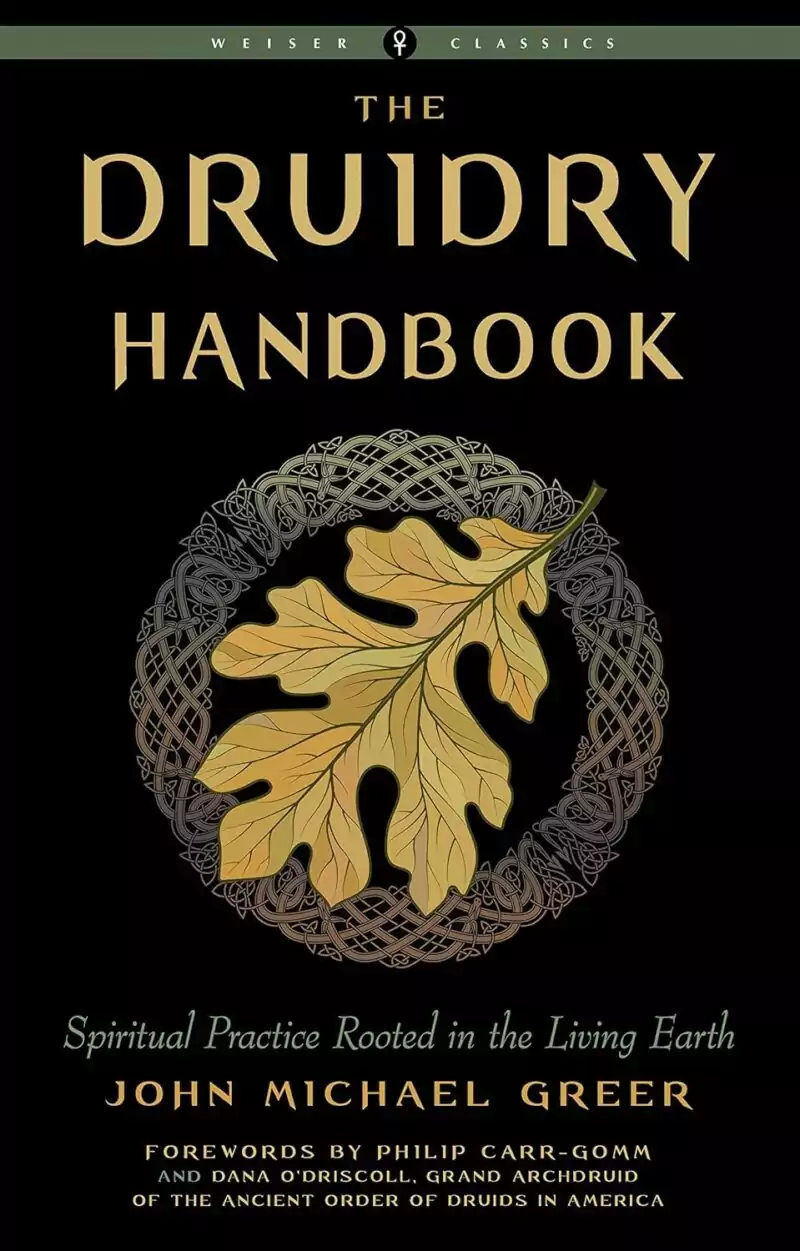
- Author: John Michael Greer
- Publisher: Weiser Books
- Format: Paperback, 264 pages
- Best for: Practitioners entering Druidry, AODA students, and anyone seeking a structured modern Druid curriculum
Druidry Handbook by Greer: A Structured Entry into Modern Druidic Practice
John Michael Greer is one of the most prolific writers in contemporary Western esotericism, and The Druidry Handbook stands as his foundational contribution to modern Druidic practice. Greer served as Grand Archdruid of the Ancient Order of Druids in America (AODA) and wrote this book as the primary textbook for the AODA Druid Apprentice first-degree curriculum. Philip Carr-Gomm, head of the Order of Bards, Ovates, and Druids (OBOD), wrote the foreword, a recognition across two major Druid orders of the book’s importance as an entry point into modern druidry.
The book is organized in three parts. Part I surveys the history of Druidry from the ancient Celts through the 18th and 19th century Revival Druids to the modern neopagan movement, giving students the context they need before taking up practice. Greer’s treatment of the Revival period is notably sympathetic: where some reconstructionists dismiss it, he argues that it represents a living lineage worth inheriting and building on. Part II covers nine core Druid concepts and symbols, providing the philosophical and cosmological vocabulary the practice draws from. Part III presents the actual curriculum: the Earth Path, Moon Path, and Sun Path.
The Three Paths and How They Structure Druid Practice
Greer’s three-path structure is one of the most clearly articulated frameworks in modern Druidry. The Earth Path focuses on developing a conscious relationship with the natural world through nature awareness, ecological choices, and direct observation of plants, animals, and seasons in the practitioner’s immediate environment. The Moon Path develops the inner life through discursive meditation, a specific Druidic technique that differs from the emptying-of-mind approach common in Buddhist-influenced practice. The Sun Path works through the eight seasonal festivals of the Celtic and neo-pagan year, giving practitioners a structured ritual calendar.
What distinguishes this book from other introductory Druidry texts is the degree to which it functions as a working curriculum rather than an overview. Each path comes with concrete practices, progressive exercises, and the expectation that students will track their work in a dedicated journal. The book also includes an appendix describing AODA’s first-degree requirements, giving readers a clear picture of where the self-directed study leads if they choose to pursue formal membership in the order.
How to Use The Druidry Handbook
Begin your Druid practice with these three steps drawn from Greer's own curriculum structure.
- Work Through Part I: History and Context
Read Part I before any practice. Greer surveys three phases of Druidism: ancient Celtic Druids, the 18th and 19th century Revival tradition, and modern neopagan Druidry, giving the historical context needed to understand the AODA approach.
- Begin the Three Paths Simultaneously
Start all three paths at once. The Earth Path involves nature observation and lifestyle changes. The Moon Path develops meditation and self-reflection. The Sun Path follows seasonal rituals across the eight-spoke wheel of the year.
- Keep a Druid Journal
Maintain a journal from the first day of practice. Greer treats recording observations, meditation experiences, and seasonal notes as a core curriculum method, since the AODA tradition builds required self-knowledge through consistent documentation.
The Tarot Fellow Standard
I carry this book because it is genuinely the most structurally complete entry point into modern Druidry in print. Most introductory nature spirituality books describe a tradition and leave the reader to figure out how to practice it. Greer gives practitioners a curriculum with clear milestones, concrete daily practices, and an honest account of what tradition they are entering and why. The AODA lineage he presents is not claimed to be a direct continuation of ancient Celtic practice; it is presented as a living Revival tradition with its own integrity. That kind of intellectual honesty matters to me when I’m deciding what earns shelf space. If you want to explore the broader range of Celtic and druidic practice, browse my books collection for related titles in paganism, nature spirituality, and earth-centered traditions.
Frequently Asked Questions
AODA stands for the Ancient Order of Druids in America. Greer served as its Grand Archdruid, and this book is the main textbook for the AODA first-degree curriculum, though it also works as a standalone guide for solitaries outside the order.
The handbook covers the Earth Path, focused on nature awareness and ecological living; the Moon Path, developing discursive meditation and self-reflection; and the Sun Path, structuring practice around seasonal rituals of the eight-spoke wheel year.
OBOD follows the Order of Bards, Ovates, and Druids correspondence course. Greer's handbook comes from AODA and treats Revival Druidry as a valid lineage, whereas OBOD places greater emphasis on neo-shamanic and Celtic spirituality frameworks.
Yes. Greer structures the book as a curriculum requiring no prior Druidry knowledge. Part I covers history, Part II addresses core symbols and philosophy, and Part III provides the actual daily and seasonal practices for the beginning student.



Reviews
There are no reviews yet