


Quick Specs
- Author: Catherine Yronwode & Gregory Lee White
- Type: Paperback reference guide
- Pages: 96, lavishly illustrated
- Best for: Hoodoo practitioners, rootworkers, conjure students
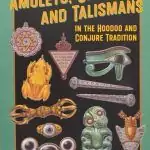
Hoodoo Amulets, Charms, and Talismans: A Practitioner’s Field Guide
Catherine Yronwode is the closest thing the hoodoo tradition has to a living encyclopedia. As the founder of the Lucky Mojo Curio Company and lead instructor of the Hoodoo Rootwork Correspondence Course, she has spent decades compiling the oral and written history of African American folk magic with scholarly rigor. This compact volume, co-authored with Gregory Lee White, packs more than 150 curios, amulets, and talismans into 96 illustrated pages, organized for practical use rather than casual reading. It’s a working reference, not a survey course.
The book moves methodically through major categories of protective curios, drawn from many traditions and eras and framed for hoodoo and conjure practice: animal mascots and fetishes, stone and crystal amulets, herb and root curios, zodiacal gemstones, enchanted jewelry, talismanic seals and sigils, lucky charms and lockets, and reliquary prayer papers. Each entry identifies the curio, explains its traditional folkloric role, and tells you how practitioners deploy it, whether worn, carried, placed in a mojo bag, or fixed to a doorframe. Browse my hoodoo and conjure books for companion titles across the rootwork tradition.
Using Hoodoo Charms for Protection, Money, Love, and Long Life
Hoodoo’s approach to physical protective magic is pragmatic. Where ceremonial systems often emphasize elaborate consecration rites, hoodoo focuses on selecting the right material ingredient, feeding it correctly, and wearing or placing it with clear intent. Yronwode walks through that entire process for each item category, including how to identify curios, how to prepare and consecrate them, and how to combine multiple items for layered working. Practitioners who have only encountered amulets in passing will find this fills a significant gap.
The Lucky Mojo Curio Company published this title. It draws on hoodoo as a living, practitioner-maintained tradition with roots in West and Central African spiritual practices carried by enslaved people into the American South. It pairs naturally with my amulets and talismans collection, letting you cross-reference described curios against items you already have on hand.
How to Use Hoodoo Amulets and Charms
A step-by-step approach to working with physical hoodoo charms.
- Identify Your Need
Work through the book’s categories to find curios that match your intent. Yronwode organizes items by type and use, so if you need luck or protection, you can locate relevant amulets quickly without reading cover to cover.
- Select and Source Your Curio
Once you identify a suitable amulet or charm, use the book’s identification notes to check what you have. It describes what roots, stones, and seals look like and where practitioners traditionally obtain them for conjure work.
- Prepare, Consecrate, and Carry
Follow the preparation and consecration steps for your chosen item. Yronwode explains how to dress, fix, and activate each type, and whether to wear it, carry it in a mojo bag, or place it in a specific location.
The Tarot Fellow Standard
I stock this because it gathers more than 150 curios, amulets, and talismans in one illustrated reference, which is useful when you’re working with actual curios rather than just reading about them. Hoodoo is a living tradition, and I offer this book as an entry point, not a substitute for learning from practitioners and community. It belongs on the shelf of anyone serious about conjure, rootwork, or folk protective magic.
Frequently Asked Questions
In hoodoo, amulets are natural objects worn for passive protection, charms are spoken or written spells tied to objects, and talismans are made items activated for a specific purpose. Yronwode clarifies each.
It assumes basic familiarity with hoodoo. Readers brand new to the tradition will benefit more from broader overview texts first. This is a focused reference for those already working with curios and conjure materials.
Yes. The book covers how curio types combine in mojo bags and carried charms, which items work together, how to layer protections, and the logic behind combining roots, stones, and seals in a single working.
Published by the Lucky Mojo Curio Company, Yronwode’s own imprint in Forestville, California.






Reviews
There are no reviews yet