
Quick Specs
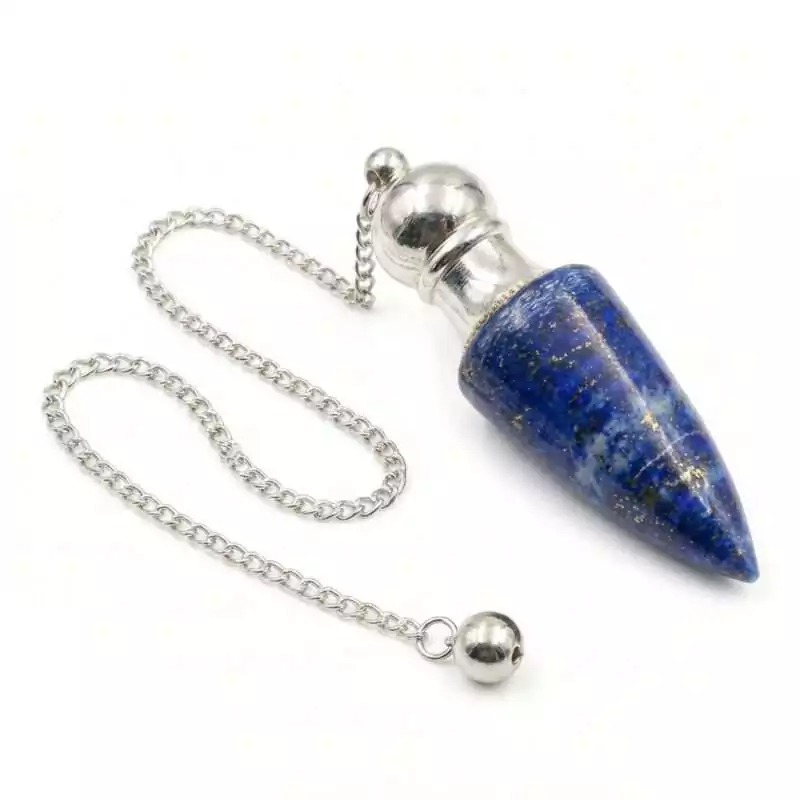
- Material: Genuine lapis lazuli with silver-toned metal chamber
- Feature: Threaded bob that unscrews to reveal an internal cavity
- Chakra Association: Third Eye (Ajna) and Throat (Vishuddha)
- Best for: Dowsing, petition paper loading, truth-seeking divination, communication work
Lapis Lazuli: Six Thousand Years of Truth and Wisdom
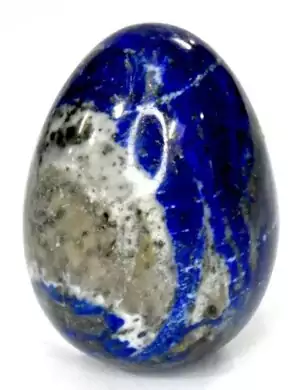
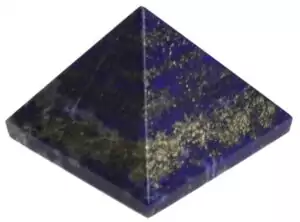
Lapis lazuli has been mined from the Sar-i Sang deposits in the Badakhshan region of Afghanistan for at least six thousand years, making it one of the earliest documented gemstones in human spiritual and artistic history. Ancient Egyptians ground lapis to make the pigment used in royal and sacred art, and genuine lapis adorned the death mask of Tutankhamun alongside gold. In Mesopotamian temple culture, lapis was the stone of the heavens, its deep blue matrix and gold pyrite flecks understood as a physical representation of the night sky. It traveled the ancient Silk Road as one of the most valued trade materials in the pre-modern world, appearing in Sumerian, Egyptian, Persian, and later Greek and Roman contexts.
In metaphysical practice, lapis lazuli is associated with Thoth, the Egyptian deity of writing, wisdom, and communication, and with Mercury and Hermes in Greco-Roman tradition. This is the stone of scribes, oracles, and truth-seekers. Its connection to the Throat chakra, the seat of honest speech, and the Third Eye chakra, the seat of inner vision and discernment, gives it a distinct role in divination work: it is not asked to draw love or generate abundance but to cut through confusion and reveal what is actually true. For pendulum work, that orientation toward clarity and honest answers makes lapis a meaningful material choice for practitioners who want their divination tool’s stone to actively support accurate readings. Browse my full pendulum collection to compare lapis against other crystal options.
The Chambered Design: Petitions, Herbs, and Programmable Intent
A chambered pendulum has a functional interior cavity accessible by unscrewing the weighted bob. The chamber is typically large enough to hold a small folded petition paper, a pinch of dried herb, a tiny crystal chip, or a few grains of salt. This transforms the pendulum from a passive dowsing weight into a loaded working tool: the practitioner places a written question or intention inside the chamber before a reading session, creating a direct material link between the pendulum and the specific inquiry. For practitioners who use sigils, this is also a space for a charged sigil paper to accompany the stone’s innate properties through each session.
The silver-toned metal housing that contains the lapis bob is not merely decorative; it provides the thread mechanism that makes the chamber functional and contributes structural weight that affects the pendulum’s swing responsiveness. Lapis is a moderately dense stone, and combined with the metal chamber, this pendulum has a satisfying heft that helps distinguish genuine movement from idle hand tremor, a common frustration for newer practitioners. The chain length allows for responsive arc swings without excessive drift.
How to Use a Lapis Chambered Pendulum
How to load, calibrate, and use the lapis lazuli chambered pendulum for divination and truth-seeking work.
- Load the Chamber Before Your Session
Unscrew the bob and place content inside: a folded petition paper with your question, a pinch of herb such as mugwort for clarity, or a tiny crystal chip. Rescrew firmly. The loaded chamber ties the pendulum directly to your specific working.
- Establish Your Baseline Responses
Hold the chain between thumb and forefinger, letting the bob hang freely. Ask the pendulum to show you its yes movement, then its no movement. Confirm with known-answer questions before your actual inquiry. Repeat this calibration each session.
- Work with Lapis for Truth-Seeking Questions
Lapis suits questions about communication, hidden truths, and discernment rather than emotional guidance. Frame questions in binary yes-or-no form, or use a pendulum board for directional answers. Record responses to track accuracy over time.
The Tarot Fellow Standard
I chose lapis lazuli for a chambered pendulum rather than a more common stone because the pairing makes sense on a functional level, not just an aesthetic one. If you are loading a chamber with a petition or herb, you want a stone whose traditional associations support the purpose of that loading, and lapis’s long history with truth, writing, and communication makes it a rational fit for a tool designed to receive and hold your specific written inquiry. This pendulum is not positioned as a beginner’s first tool; it’s for practitioners who have worked with pendulums before and want a stone with depth and specificity. For more crystal divination tools that complement pendulum work, explore my crystals and gemstones collection.
Frequently Asked Questions
The chamber fits small folded petition papers, a pinch of dried herb, a charged sigil, or a tiny crystal chip. Common choices include mugwort for clarity or lavender for calm, creating a material link between the pendulum and your specific inquiry.
Lapis lazuli has a 6,000-year history as a stone of truth, associated with Thoth and Mercury. For divination, lapis orients the tool toward honest clarity rather than emotional coloring, making it suited for truth-seeking and discernment questions.
Rose quartz pendulums suit heart chakra and Venus-ruled emotional questions. Lapis pendulums address Third Eye and Throat chakra work: clarity, truth, and communication. Practitioners often own both for use with distinctly different question types.
The bob is threaded and unscrews to reveal the chamber, allowing you to reload it between sessions. Avoid overtightening, as the metal threads are delicate and should be hand-tightened only. This is a functional design feature, not a decorative one.




Perfect size and beautifully made!