

Quick Specs
- Size: Approximately 1 inch (25mm) diameter
- Shape: Round circle cabochon
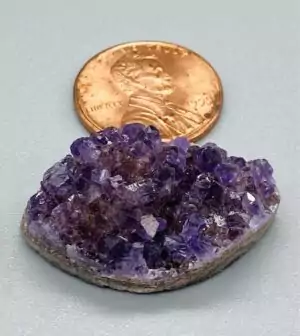
- Type: Druzy amethyst cabochon, natural mineral specimen
- Origin: Uruguay
- Best For: Pendant settings, ring bezels, crystal grids, meditation focal points
- Note: Each piece is one-of-a-kind; color, crystal coverage, and depth vary naturally
A Circle of Crystals on a Crystal
Amethyst is silicon dioxide with trace manganese and iron substitutions that push the color from pale lilac into deep royal violet. The scientific name for the mineral family is quartz, specifically macrocrystalline quartz, though what you’re holding here is anything but macro. A druzy surface, sometimes spelled drusy or druse, is a crust of tiny crystal points that formed as mineralized water cooled slowly inside a void. The result is a surface that catches light the way a snowfield does: from a thousand angles at once, each micro-point acting as its own tiny prism.
The circle cabochon form is the oldest cutting shape in lapidary history, favored since antiquity in Roman cameos, Byzantine medallions, and medieval reliquary settings. A cab has a domed or, in this case, druzy face on one side and a flat or lightly curved base on the other. That flat base is what lets it sit cleanly in a bezel, a ring mount, or flush on a grid cloth without rocking. The round shape also carries symbolic weight across traditions. In many Taoist and Buddhist design systems, the circle represents wholeness and unbroken continuity. In amuletic practices from West Africa and the African diaspora, rounded forms carry protective resonance, an enclosed field with no edges for energy to leak from.
I stock these because the quality of the crystal crust on these Uruguayan pieces is notably consistent. Uruguay is one of the few regions where amethyst forms in the deep iron-rich basalt cavities that produce saturated color rather than pale lavender. The druzy face here has actual depth to it, not a dusting. If you’re browsing my geodes, clusters, and druse collection, you’ll find these sitting alongside full-size cathedral geodes from the same deposit region. The cabochon form just makes that same energy wearable and giftable. If you’re planning to set one as a pendant, check out my crystal and gemstone necklaces and pendants for setting inspiration and finished examples.
How to Work With a Druzy Amethyst Cabochon
Three steps for setting intention with, placing, and maintaining a druzy amethyst cabochon.
- Choose Your Intention
Hold the cabochon in both hands and decide what you want it to anchor. Amethyst connects to the third eye and crown chakras, so clarity, intuition, and calming work are natural fits. Keep the intention specific, not vague.
- Set It on Your Space or Skin
Place the flat base down on an altar, a windowsill in moonlight, or the center of a crystal grid. If you wear it in a bezel pendant, position the druzy face outward. The circle shape makes it stable in most ring and pendant settings.
- Cleanse and Reset Between Uses
Druzy faces can trap dust and oils, so use a dry soft brush to clean the crystals. Cleanse energetically with sound, breath, or moonlight. Avoid prolonged water immersion, as the tiny crystal points are more fragile than a smooth polished surface.
The Tarot Fellow Standard
The supplier I use for these Uruguayan druzy cabochons has been cutting lapidary pieces from the same amethyst deposits for over a decade. What I look for is crust density, meaning how much of the face is actually covered in crystal rather than chalcedony or base quartz. This batch hit that standard well. The pieces aren’t uniform, because they can’t be, but they’re consistent in quality.
One honest practical note: the druzy face is beautiful and fragile at the same time. The micro-crystal points can chip if the piece is knocked against a hard surface or stored loose with other stones. A small fabric pouch or a bezel setting that cups the edges will protect it. Also, don’t mistake the variation in color for inconsistency in grade. A lighter piece isn’t lesser. It’s just from a different section of the geode.
Frequently Asked Questions
A druzy cabochon has a flat or shaped base that’s been cut and polished, with the opposite face left as a natural crust of tiny interlocking crystals. The sparkle comes from those micro-crystals catching light from multiple angles at once.
No, and that’s the point. Each one’s pulled from natural amethyst, so the violet depth, crystal coverage, and surface texture shift from piece to piece. What you receive won’t match the photo exactly, but it’ll carry that same druzy character.
Yes, the round form is the classic cabochon shape for a reason. It drops cleanly into standard round bezel settings for pendants and rings. Just confirm your setting’s interior diameter before ordering, since these run approximately 1 inch across.
These come from Uruguay, which produces some of the world’s deepest-color amethyst. Uruguayan deposits tend toward rich violet with good crystal saturation, which is why I stock from that region when it comes to druse and cluster pieces.



Reviews
There are no reviews yet