
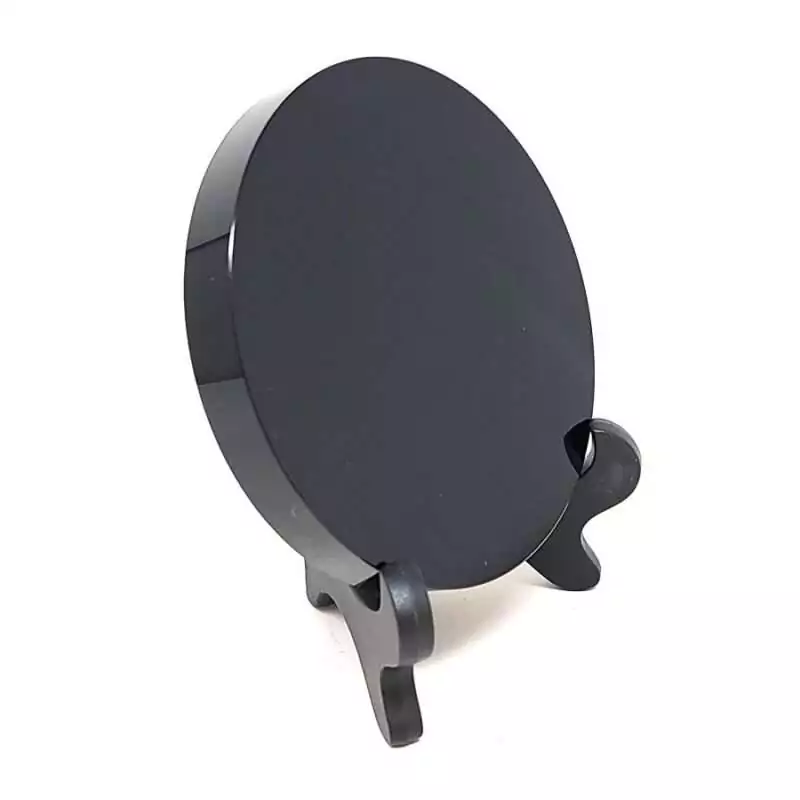
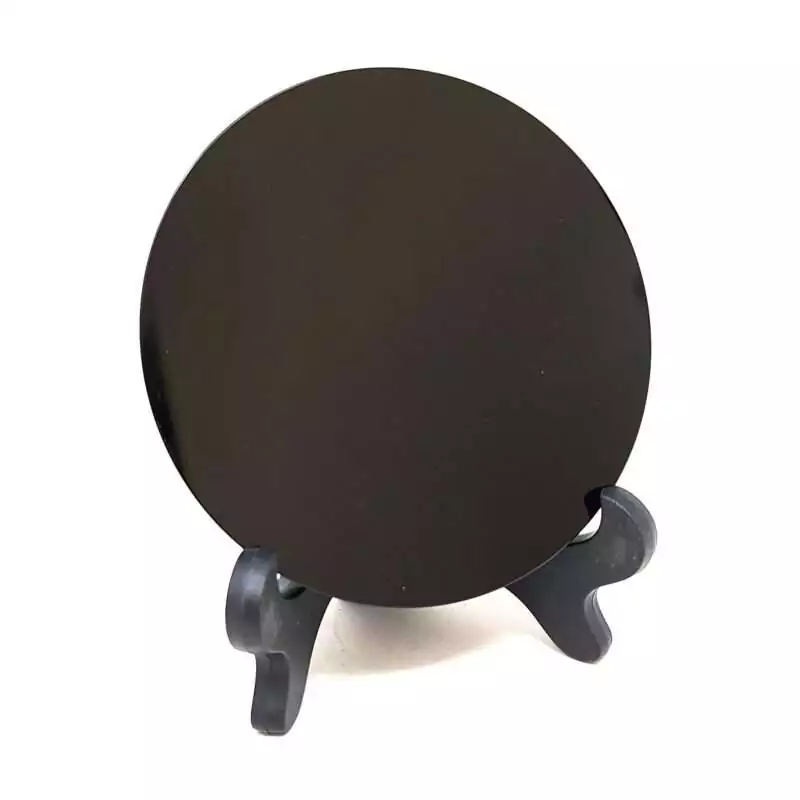
Quick Specs
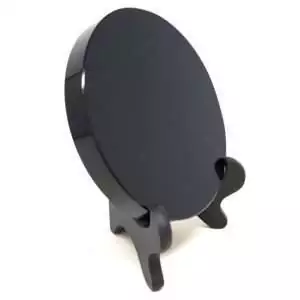
- Type: Black Obsidian Scrying Mirror with Stand
- Material: Natural volcanic obsidian glass
- Size: 10cm (approximately 4 inches) diameter
- Best for: Catoptromancy, black mirror gazing, psychic development, shadow work
Black Mirror Scrying and the Obsidian Tradition
Obsidian is not a mineral in the crystallographic sense. It’s volcanic glass, an amorphous solid formed when silica-rich lava cools faster than mineral crystals can organize. The Aztec and Mexica peoples polished obsidian into flat circular mirrors they called tezcatl, using them in divination and ritual contexts tied to Tezcatlipoca, the smoking mirror deity. When the Spanish arrived in the early sixteenth century, some of these mirrors made their way to Europe, where Elizabethan court astrologer John Dee acquired one and used it alongside his partner Edward Kelley in angelic scrying sessions. That mirror, now in the British Museum’s collection, is almost certainly Aztec obsidian. The lineage of black mirror practice is long and distinct from the quartz crystal ball tradition.
The mechanics of obsidian scrying differ from sphere scrying in an important way. A crystal ball is a lens that bends and focuses light; the eye moves around it, and visions are often attributed to light playing inside the sphere. A flat black obsidian mirror is absorptive. It draws the eye inward rather than refracting it outward. Practitioners across the modern Western magical tradition describe the black mirror as a threshold, a surface through which the unconscious or symbolic mind projects imagery rather than a literal window. The difference matters for practitioners deciding which tool fits their work. Those drawn to depth, shadow work, or ancestral contact tend to gravitate to the black mirror; those working with future-sight or third-eye opening more often reach for the clear sphere.
Using a Black Obsidian Scrying Mirror in Practice
This mirror measures 10cm, placing it in the ideal size range for personal scrying work in my crystal collection. Smaller mirrors under 8cm tend to limit the gaze too tightly, while mirrors over 30cm require significant space and ceremonial setup. The 10cm diameter lets a practitioner work seated at a table with the mirror in its stand at a comfortable arm’s distance. Lighting matters considerably: most practitioners use a single candle positioned behind or beside them so that the mirror reflects only a soft diffuse glow rather than a bright direct flame. The goal is a surface dark enough to disappear into, not a polished decorative object.
Obsidian’s connection to the Apache Tears tradition, a specific form of rounded obsidian nodule found in the American Southwest, speaks to the broader cross-cultural recognition of obsidian’s absorptive quality. This mirror is flat-polished obsidian, not a nodule, but the same mineral logic applies: obsidian takes in rather than gives back, making it a favored material for practitioners working with boundaries and psychic protection alongside their divination practice.
How to Use a Black Obsidian Scrying Mirror
Black mirror gazing is a focused practice that requires minimal setup and calm, consistent conditions.
- Prepare the Space
Set the mirror in its stand in a dimly lit space, away from ambient glare. Let your eyes soften and gaze toward the surface rather than at it, releasing any expectation of what you will or will not perceive.
- Enter the Gaze
After gazing, record impressions in a dedicated journal before analyzing them. The symbols and images that surface in black mirror work often carry more meaning when revisited hours later with a rested, clear mind.
- Store with Intention
Between sessions, store the obsidian mirror face-down or wrapped in dark cloth to prevent casual reflections that could interrupt the mirror's ritual context. Handle with clean hands; oils and dust affect the surface.
The Tarot Fellow Standard
I stock this mirror because it fills a specific gap in the scrying toolkit that a clear quartz sphere cannot fill. The black mirror tradition runs through Mesoamerican ritual technology and Elizabethan ceremonial magic in a long thread that most metaphysical shops flatten into generic protection stone language. This mirror comes with its stand, which means it’s immediately usable without sourcing a separate holder. The obsidian is naturally formed volcanic glass, not dyed or coated. If you’re building out a divination practice, browse my full divination collection for complementary tools to pair with your black mirror work.
Frequently Asked Questions
Obsidian is not quartz. It's volcanic glass, an amorphous solid formed when lava cools rapidly with no time to crystallize. That glass-smooth surface and deep absorption of light are unique to obsidian among scrying surfaces.
The practice is catoptromancy, divination by mirrors or reflective surfaces. John Dee, the Elizabethan court astrologer, used an Aztec obsidian mirror now held by the British Museum to conduct his angelic communications.
Keep it face-down on a cloth when not in use. Never use water or chemical cleaners on raw obsidian. A soft dry cloth removes fingerprints. Some practitioners smudge the space around it with smoke, but avoid direct smoke contact.
Gaze toward the surface with soft focus, not a hard stare. Many practitioners report impressions in the first five to fifteen minutes. If nothing arises after thirty minutes, close the session and try again on another evening.





Reviews
There are no reviews yet