
Quick Specs
- Type: Egyptian goddess statue
- Size: 12.25″
- Size/Quantity: 12 1/4 inches wide, single piece
- Best for: Egyptian altar, healing ritual, ancestor work, goddess devotion
Isis: Egypt’s Goddess of Magic, Healing, and the Sacred Mysteries
Isis, known in ancient Egyptian as Aset, is arguably the most complete and powerful goddess in the ancient Egyptian pantheon. Her myths weave together the roles of devoted wife, grieving mother, resourceful magician, and guardian of the dead into a figure whose influence extended far beyond Egypt’s borders. The Isis cult spread throughout the Roman Empire from Britain to Mesopotamia, absorbing and merging with local goddess traditions along the way. Her open-wing gesture, familiar from temple reliefs and funerary carvings, represents the divine shelter she extends over the dead and over her followers in life.
In the myth of Osiris, Isis reassembles her husband’s dismembered body and uses her magical power to conceive Horus from the dead king, demonstrating mastery over life, death, and the boundaries between them. This capacity to operate across boundaries makes her a central figure in magical practice of many traditions, not only Egyptian. Practitioners invoke her in healing work, protective magic, and any rite where the power of love and determined will must overcome seemingly insurmountable obstacles. Her epithets include “Great of Magic,” “She of Ten Thousand Names,” and “Mistress of the House of Life.”
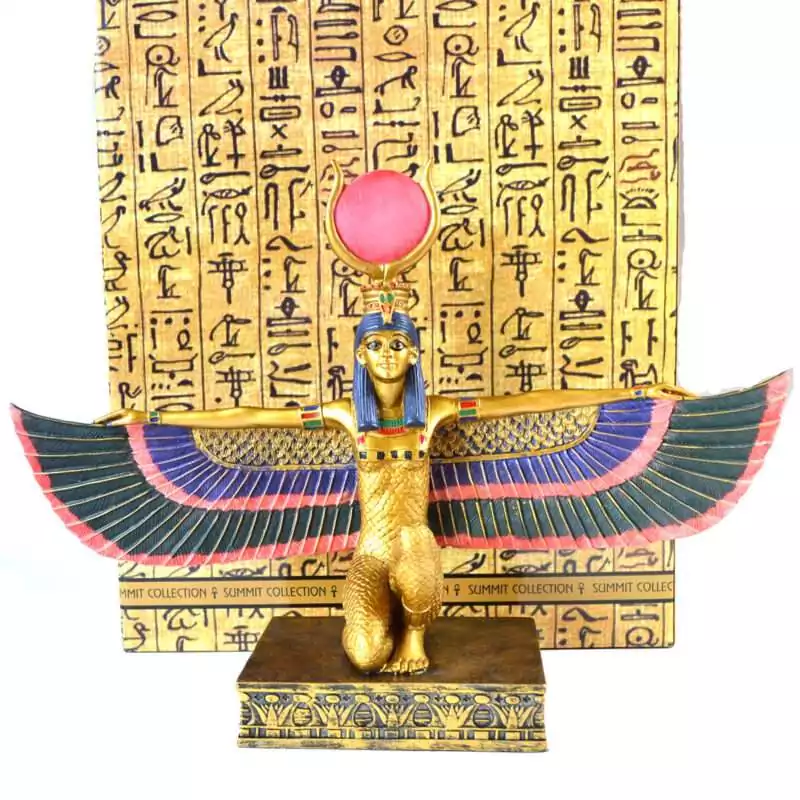
About This 12 1/4-Inch Open-Wings Statue
At 12 1/4 inches wide, this is a commanding presence on any altar. The open-wing pose echoes the famous representations of Isis found on the canopic chest of Tutankhamun and in countless funerary objects throughout the Ramesside period and beyond. The cold-cast resin construction and hand-painted Egyptian palette give it visual authenticity without the fragility of ceramic. I stock this piece because a quality Isis statue at this scale is a cornerstone piece for anyone building an Egyptian practice. Browse my gods and goddesses collection for companion Egyptian deity figures. For incense and offerings to accompany devotional work, visit my incense collection.
How to Use the Isis Open Wings Statue
Three ways to work with your Isis statue in devotional and ritual practice.
- Establish Isis on Your Altar
Place Isis at the eastern quarter of an altar to invoke her powers of wisdom, magic, and healing. Her 12 1/4-inch width commands presence on a dedicated devotional space or as a central goddess figure on any altar.
- Invoke Her in Healing and Protection Rites
Isis is invoked in rituals of protection, healing, and magical empowerment. Burn kyphi incense or cedarwood beside her statue and meditate on her open wings as symbols of divine shelter and transformative sacred power.
- Work With Her in Ancestor and Funerary Practice
In funerary and ancestor work, Isis guards the transition between life and death. Place her on a remembrance altar alongside photographs or mementos of those who have passed, and call on her to guide and protect the departed.
The Tarot Fellow Standard
I carry this Isis statue because the 12 1/4-inch open-wing format is one of the most iconic and sought-after presentations of this goddess, and finding one at a quality level appropriate for serious devotional use is not always straightforward. The painted detail on the wings, headdress, and ankh or staff details holds up to the scrutiny that a figure at this scale invites. This is a centerpiece piece, not a shelf decoration.
Frequently Asked Questions
Isis is one of the most prominent deities of ancient Egypt, revered as the great mother goddess, divine magician, and guardian of the dead. Her cult spread across the Roman Empire and her influence still resonates in modern goddess spirituality.
The statue is 12 1/4 inches wide and is cast from cold-cast resin with a hand-painted finish in traditional Egyptian palette tones. The open-wing pose is one of the most iconic representations of Isis in both ancient and modern art.
Isis is associated with magic, healing, protection, motherhood, and the resurrection of Osiris. She is the patron of magicians and healers, and her ritual role spans funerary protection, healing rites, and devotional altar practice.
Traditional offerings to Isis include lotus flowers, blue or gold candles, myrrh and kyphi incense, and lapis lazuli or turquoise stones. Water from a sacred source is also a historically attested offering in Isis worship.

Reviews
There are no reviews yet