

Quick Specs
- Type: Decorative ritual athame
- Size: 12″
- Size/Quantity: 12 inches overall length with matching scabbard
- Best for: Circle casting, energy direction, ceremonial magic, Wiccan altar work
Medieval Sword Athame and Its Place in Ceremonial Practice
The athame is one of the four classical tools of Wicca and Western ceremonial magic, alongside the wand, pentacle, and chalice. Rooted in the ceremonial systems codified by the Hermetic Order of the Golden Dawn in the late nineteenth century and later transmitted through Gardnerian and Alexandrian Wicca, the athame represents directed will, the masculine principle, and in most lineages either the element of air or the element of fire. It is the tool used to cast and seal the ritual circle, invoke the guardians of the quarters, and direct energy through focused intent rather than physical action.
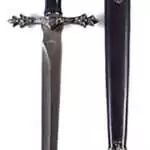
This 12-inch sword-style athame draws on the medieval European aesthetic that runs through much of Western esotericism. The ornate hilt design references the historical weaponry of the chivalric period, lending the tool a visual gravitas suited to Golden Dawn-inspired ceremonial work, Arthurian traditions, and theatrical ritual settings where atmosphere reinforces focus. The matching scabbard keeps the blade protected between uses and marks the tool as ritually set apart from everyday objects.
Practical Use and Altar Placement
Most athame traditions specify that the blade does not cut physical matter; it cuts the astral or energetic field, tracing the boundary of sacred space and directing power through gesture and will. The 12-inch length is at the longer end of what practitioners typically use, which gives it presence during larger-group ceremonies and makes directional gestures more deliberate and visible. For solitary practice at a compact altar, some practitioners prefer a shorter blade, but the added length suits anyone working in a dedicated ritual space or teaching ceremonial techniques to students.
Before the first use, most practitioners consecrate the athame by passing it through the four elements, incense smoke for air, candle flame for fire, salt water for earth and water, and stating a formal dedication aloud. This process aligns the tool’s energy with the practitioner’s intent and tradition. The athame can be consecrated to a specific deity, a working tradition, or simply to the practitioner’s own will. Browse my athame and ritual blade collection for additional options at varying sizes and styles.
How to Use a Medieval Sword Athame
How to consecrate and use a medieval sword athame in Wiccan and ceremonial ritual practice.
- Choose Your Intent
Before placing the athame on your altar, decide what work it will anchor. Ritual athames direct energy during circle casting, elemental invocations, and banishing rites, so aligning intent with placement matters.
- Consecrate Before First Use
Pass the blade through incense smoke, sprinkle it with salt water, and hold it in candlelight while stating your working aloud. Many Wiccan traditions consecrate athames to the element of air or fire before formal altar placement.
- Use for Energy Direction
Hold the hilt firmly and trace the boundary of your ritual circle, directing focused will through the tip. The athame does not cut physical matter in most traditions; it cuts and shapes the invisible landscape of ritual space.
The Tarot Fellow Standard
I stock this athame because ritual tools should carry visual weight appropriate to the work they anchor, and this medieval sword design does that without veering into the purely theatrical. The ornate hilt and matching scabbard signal that this is a tool taken seriously, and the 12-inch length suits both altar display and active circle-casting gesture. I keep a range of ritual blades available for practitioners at every level, from compact everyday-use athames to ceremonial pieces like this one. If you are building out a complete working altar, browse my altar supplies for chalices, pentacles, and wands that complement this blade.
Frequently Asked Questions
In Wicca, an athame is a double-edged ritual knife used to cast circles, direct energy, invoke the elements, and draw symbols. It represents masculine force and the element of air in most traditions, though some assign it to fire.
Twelve inches is on the longer end but remains practical for altar use. The added length gives visual presence during ceremony and makes circle-casting gestures more fluid, especially when working with larger groups or open-air rituals.
Yes. The ritual function of an athame comes from intent and consecration, not from sharpness. Most traditions do not use the athame to cut anything physical, so a decorative blade with a solid hilt works as well as a working blade.
The matching scabbard protects the blade between uses and keeps the tool ritually set apart from everyday objects. Storing the athame sheathed when not in active use is standard practice in Wiccan and ceremonial magic traditions.


Reviews
There are no reviews yet