

Quick Specs
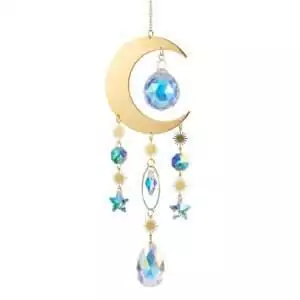
- Type: Crystal prism sun catcher
- Size: 18 inches
- Motif: Evil eye (nazar)
- Best for: Protective window placement, warding negativity, feng shui entry points, nazar tradition
The Nazar: An Ancient Protective Symbol
The evil eye amulet, called the nazar in Turkish, is among the oldest and most geographically widespread protective symbols in the world. Evidence of evil eye belief and counter-charm practice appears in ancient Mesopotamian texts dating to roughly 5,000 years ago. The classic blue-and-white concentric circle design of the nazar became standard in Anatolian glassmaking tradition, particularly in the Aegean coastal region of Turkey, where artisan families still produce hand-blown glass evil eye beads.
The belief underlying the nazar is that envious or malicious stares, even unintentional ones, can transmit harmful energy to a person, home, or business. The nazar’s distinctive blue eye design is meant to absorb and deflect that gaze before it reaches its target. The color blue, particularly the specific deep cobalt called nazar boncugu blue, is traditionally associated with protection against the evil eye in Mediterranean, Middle Eastern, and South Asian cultures from Morocco to India.
Protection at the Window and Entry Point
In both traditional nazar practice and feng shui-informed home placement, windows and doorways are understood as energetically vulnerable points: places where chi, energy, or unwanted influences can enter. Hanging an evil eye sun catcher at a primary window serves a dual function. The prism elements scatter incoming light to activate the room’s energy, and the nazar symbol acts as the traditional warding charm, facing outward toward the street to intercept any ill intent before it crosses the threshold.
At 18 inches, this is a statement piece sized for a front window, entryway glass panel, or a large living room window that faces the street. The length also means a more generous prism display: rainbow light traveling across a wider arc of the room. Browse my sun catchers collection for smaller companion pieces or complementary wind chimes for the same entry point.
How to Use an Evil Eye Sun Catcher
How to place and work with your evil eye sun catcher for household protection and nazar tradition.
- Position at the Entry Point
Hang this sun catcher in a window facing the street or the primary entry. Traditional nazar placement has the protective symbol facing outward to intercept envious gazes before they cross your threshold.
- Set a Warding Intention
Hold the piece before hanging and state what you want it to do: ward envy, deflect ill intent, or protect the household. Traditional nazar practice is direct and informal, so match that tone when you place it.
- Replace if Cracked or Broken
In nazar tradition, a cracked or broken evil eye piece means it absorbed a hit it was meant to take. Thank it for its work and replace it. A broken nazar signals success, not misfortune, in classic practice.
The Tarot Fellow Standard
The evil eye is one of the few protective symbols that has genuine cross-cultural depth: it’s not a trend, it’s a 5,000-year-old tradition still practiced daily from Istanbul to Mumbai to Los Angeles. I carry this piece because it earns the symbolism rather than just borrowing it for aesthetics. The 18-inch size makes it a genuine focal piece for window protection. For additional protection tools, visit my amulets and talismans collection.
Frequently Asked Questions
The nazar originates in ancient Mesopotamia around 5,000 years ago. The classic blue concentric circle design became standard in Anatolian Turkish glassmaking. It is used across Mediterranean, Middle Eastern, and South Asian cultures.
Traditional nazar practice places the evil eye facing outward at the front window or door to intercept envious gazes. In feng shui, windows and doors are vulnerable transition points that benefit from protective elements.
Yes, the cobalt blue called nazar boncugu blue is strongly associated with protection against the evil eye in Turkish, Greek, and broader Mediterranean tradition. It is linked to water, sky, and the deflection of harmful intent.
In nazar tradition, a broken evil eye amulet means it absorbed negative energy it was meant to intercept, doing its job successfully. The traditional response is to dispose of the piece respectfully and replace it.




Reviews
There are no reviews yet