
Quick Specs
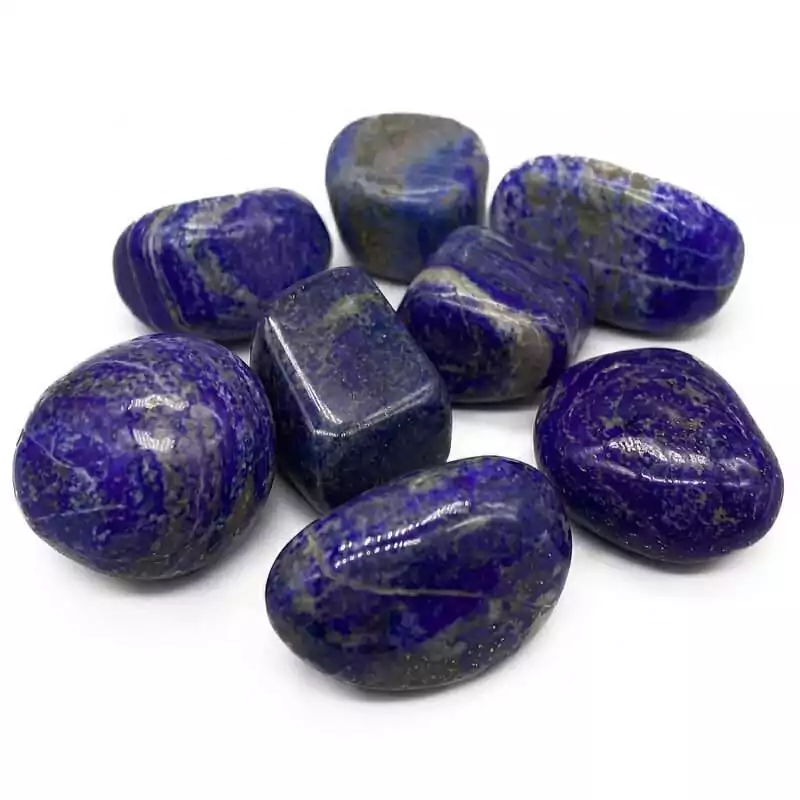
- Type: Lapis lazuli free-shape polished stones, bulk quantity
- Weight: Approximately 1 kg per bag
- Quantity: 6 to 11 pieces per bag (varies by natural stone size)
- Best for: Crystal grids, retail resale, practitioner kits, chakra work, altar display
Lapis Lazuli Origins and Mineral Identity
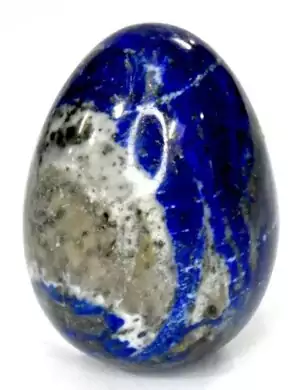
Lapis lazuli is a metamorphic rock rather than a single mineral. Its characteristic deep blue comes primarily from the mineral lazurite, a member of the sodalite group, while white calcite veining and bright gold flecks of pyrite complete the signature appearance. The finest lapis has been mined from the Sar-e-Sang deposits in Afghanistan’s Badakhshan province since at least 7000 BCE, making it one of the longest continuously quarried stones in human history. Ancient Egypt imported lapis along the same trade routes that carried frankincense and myrrh, and Tutankhamun’s burial mask is inlaid with lapis alongside turquoise and carnelian.
Across Mesopotamia, lapis appeared in temple offerings, cylinder seals, and the famous Standard of Ur mosaic panels dated to roughly 2600 BCE. The Sumerians called it uqnu and associated it with the sky, the heavens, and the divine. In medieval Europe, lapis was ground to produce ultramarine, the most expensive blue pigment available before synthetic alternatives arrived in the 19th century, and it was reserved for the highest-status commissions including the robes of the Virgin Mary in altarpiece painting.
Bulk Free-Shape Lapis for Practitioners and Retailers
A free-shape or free-form stone is polished to remove sharp edges and surface roughness but left in its natural outline rather than cut to a sphere, tower, or egg. The result is a stone that retains more of its original geological character while being comfortable to hold and visually interesting on a surface. For practitioners, this format is especially useful: the irregular surfaces mean each piece sits slightly differently in the hand, which many find more grounding than the uniform feel of a machined sphere. For retailers, the weight-based bulk format makes pricing and resale straightforward. Explore the broader free shapes collection for other bulk stone options.
In modern crystal practice, lapis lazuli is most commonly associated with the throat chakra and third eye, a pairing that reflects its historical connections to speech, wisdom, and divine vision in Sumerian and Egyptian contexts. It’s a go-to stone for practitioners working on clear communication, truth-telling, intuitive development, and the discipline of study. The approximately 1 kg bag with 6 to 11 pieces provides enough material for a dedicated crystal grid, a seasonal altar change, or a retail split. For complementary chakra tools, browse my chakra and meditation products.
How to Use Bulk Lapis Lazuli Free Shapes
How to sort, use in practice, and store your bulk lapis lazuli free-shape stones.
- Sort by Size on Arrival
Sort the bag by size and surface quality on arrival. Larger, more uniform pieces suit altar display and grid work while smaller irregular chips are ideal for mojo bags, spell bottles, or student practice kits that need tactile stone contact.
- Use in Chakra Meditation
Place one piece on the throat or forehead during meditation to work with the third eye and throat chakra associations lapis has held since Sumerian and Egyptian temple use. Flat free-form stones rest without rolling during a lying-down practice.
- Store Carefully to Prevent Damage
Lapis is a relatively soft stone, Mohs 5 to 6, and its matrix includes calcite and pyrite that can splinter from impact. Store pieces individually wrapped or in a cloth-lined tray rather than loose in a bag with harder stones like quartz or topaz.
The Tarot Fellow Standard
I stock lapis lazuli in bulk free-shape format because serious practitioners and small retailers need access to genuine, substantial-quality stone at a usable quantity. A single polished lapis sphere looks good on a shelf but doesn’t serve a grid, a classroom, or a shop split. The approximately 1 kg bag with 6 to 11 free-form pieces gives you real stone, real weight, and real utility without paying premium per-piece pricing. The pyrite inclusions in quality lapis read as authentic geological markers, not flaws. For other bulk stone formats, explore my raw and bulk stones collection.
Frequently Asked Questions
Lapis lazuli is a metamorphic rock of lazurite, calcite, and pyrite. The calcite gives white streaks; the pyrite produces gold flecks. It comes mainly from Afghanistan’s Badakhshan province, mined continuously since at least 7000 BCE.
Free-form stones are polished smooth but left in their natural outline rather than shaped into a sphere, tower, or egg. The result is a tactile, irregular piece that retains more of the stone’s geological character than precision shapes.
Lapis is linked to the throat chakra and third eye in crystal practice, reflecting its use in Egyptian amulets and Sumerian temples. Practitioners reach for it in truth, communication, and intuition work across a range of traditions.
The 6 to 11 count range reflects natural size variation in polished lapis free shapes. A bag of 11 smaller pieces weighs the same as one with 6 larger pieces. If exact piece count matters for grid work, reach out before ordering.

Reviews
There are no reviews yet