

Quick Specs
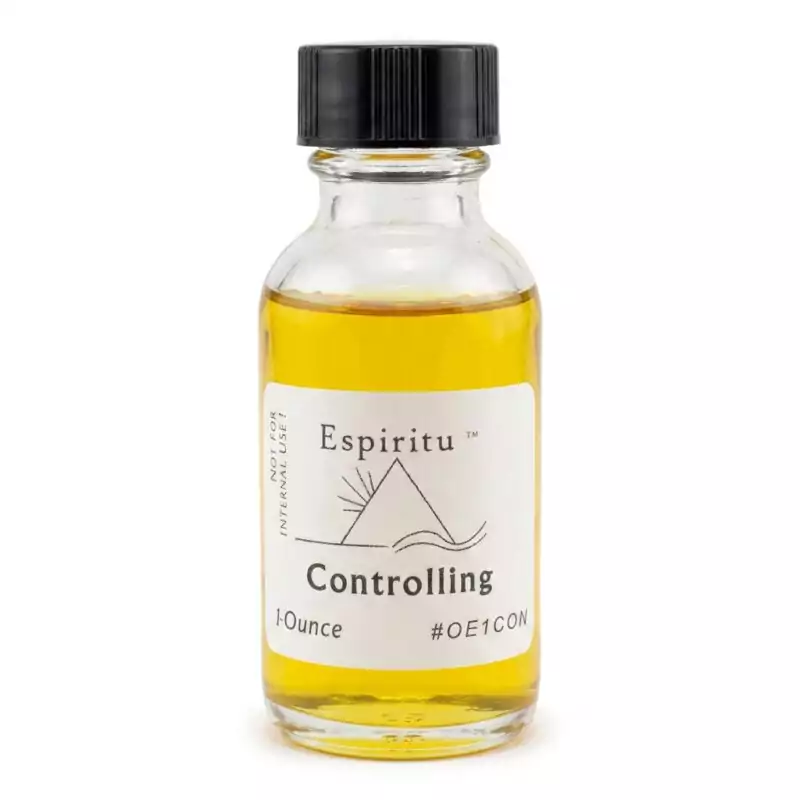
- Brand: Espiritu
- Type: Ritual aroma oil (fragrance oil)
- Size/Quantity: 1oz bottle
- Best for: Influencing behavior toward a specific outcome, candle work for directing situations, petition paper dressings in conjure practice
Controlling Oil and the Command-and-Compel Family
Hoodoo condition oils include a family of related but distinct names grouped around the concept of influence and direction: Controlling oil, Commanding oil, and Compelling oil each address a different angle of the same general intention. Controlling oil is used to guide a specific person’s behavior toward a particular outcome, shaping what they do or decide in relation to the practitioner’s situation. Commanding oil carries more of an authority dimension, asserting dominance over a situation or establishing the practitioner as the figure others defer to. Compelling oil focuses on drawing a specific action from a specific person, a targeted pull rather than a sustained influence. Controlling oil is a condition-oil name from the American hoodoo supply tradition, for influence over others. These distinctions help practitioners choose oils based on the precise nature of what they are trying to accomplish.
Calamus root, licorice root, and master root (masterwort) are herbs often paired with controlling and will-directing work in candle and petition setups. The Espiritu Controlling Ritual Oil is one of the formulas based on traditional conjure recipes, in a fragrance oil format suited to candle dressing, petition work, and similar applications.
How Controlling Oil Differs from Related Formulas
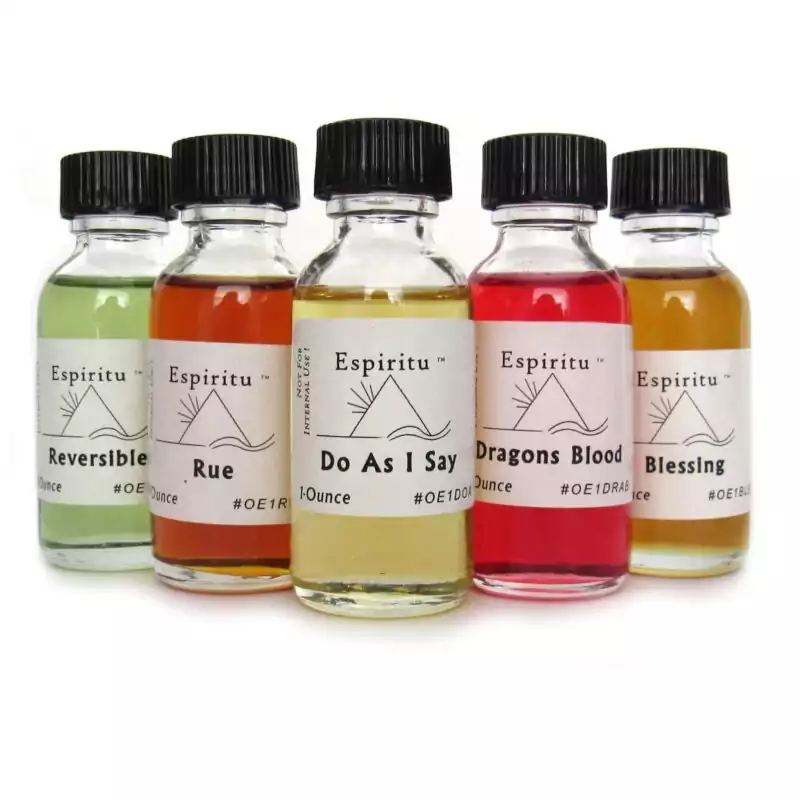
Practitioners sometimes conflate Controlling oil with Crown of Success oil or John the Conqueror oil, but the functional intent is distinct. Crown of Success oil is about achieving personal goals, attracting favorable outcomes in endeavors like career or education. John the Conqueror oil builds personal power, confidence, and dominance for the practitioner’s own benefit. Controlling oil is specifically relational and directional: it is aimed at influencing what another person does in relation to you or your situation, not at expanding your own capacity or achieving a goal through your own effort. St. Michael oil focuses on spiritual authority over malevolent forces and spiritual protection, which is again a different domain. Browse my 1 oz Espiritu oils for additional condition formulas that work alongside this oil.
These are formulas based on traditional conjure recipes, and I carry them as part of a ritual oil offering for practitioners who work within that tradition. The 1oz bottle gives you a supply suited to sustained workings that may require repeated application over several nights or weeks rather than a single candle dressing. Hoodoo is a living tradition, and I offer this oil as an entry point, not a substitute for learning from practitioners and community. That said, these are ritual tools, not guarantees of any outcome.
How to Use Espiritu Controlling Ritual Oil
One approach to using Controlling oil with candle work and petition papers.
- Prepare a Petition Paper for the Influence Work
Write the name of the person or situation you want to influence on a small piece of paper, then cross it with your own name written over theirs. Anoint the four corners and center of the petition paper with Controlling oil.
- Dress a Candle and Set It Over the Petition
Dress a purple or black candle with Controlling oil by stroking from the wick down toward the base, directing energy outward toward your target. Place the anointed petition beneath the candle and burn it over the course of several nights.
- Carry the Petition or Anoint Personal Objects
For ongoing influence, carry the folded petition in your shoe or wallet, or anoint a personal object belonging to the target if accessible. Calamus root and licorice root are often used for will-bending alongside oil dressings.
The Tarot Fellow Standard
I carry Espiritu Controlling oil for practitioners who work with influence and domination formulas, a category of hoodoo condition oils. It’s a ritual tool, not a novelty item. The 1oz size is the right call for sustained work that may span several candle sessions or weeks of petition carrying. See my Espiritu oils collection for the full line of condition oils in this format.
Frequently Asked Questions
Controlling oil is a hoodoo condition-oil name for influence over others, used to influence behavior toward a specific outcome. It differs from Commanding oil, which asserts authority, and Compelling oil, which draws a specific action or response.
Controlling oil is used with candles, petition papers, and personal objects to focus influence on a specific person or situation. It is not intended to dominate in harmful ways.
Controlling oil is a targeted influence oil focused on a specific person’s behavior. Crown of Success oil is about achieving personal goals and success. John the Conqueror oil builds personal power and dominance for the individual practitioner.
Calamus root and licorice root are often used as will-bending herbs in hoodoo controlling work.



Reviews
There are no reviews yet