
Quick Specs
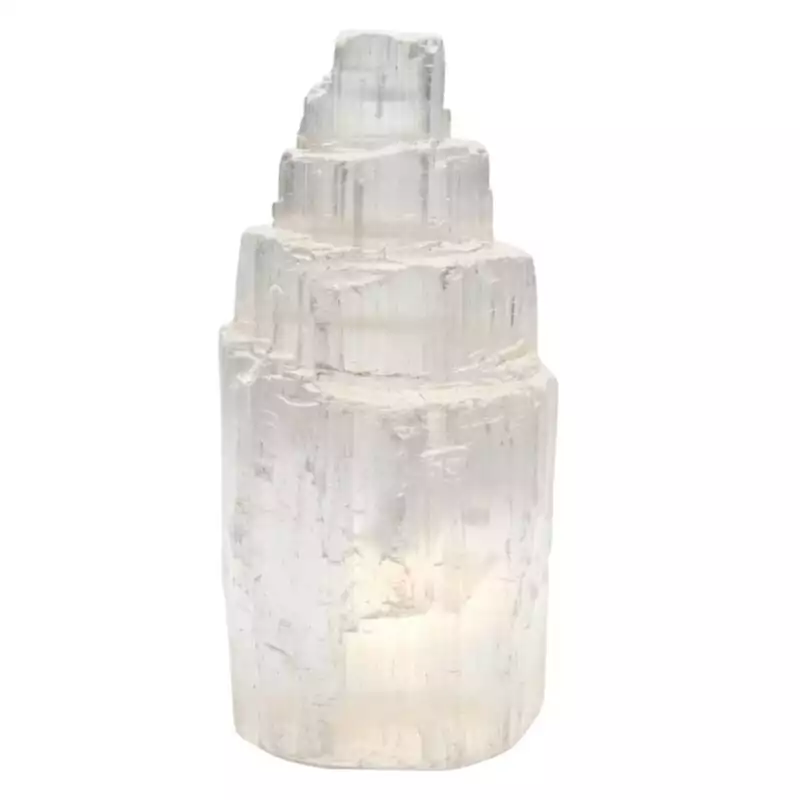
- Type: Polished selenite iceberg carving
- Size: 2.5″
- Size/Quantity: 2.5 inches, single piece
- Best for: Space clearing, crystal cleansing, altar display, meditation support
Selenite and the Iceberg Form in Crystal Practice
Selenite is a crystallized form of gypsum, calcium sulfate dihydrate, formed in sedimentary environments through the evaporation of briny lakes and inland seas over millions of years. The name derives from Selene, the Greek personification of the moon, and the connection is apt: selenite’s translucent white color and soft inner glow give it a lunar quality that has made it a staple of cleansing and purification practices across contemporary crystal healing, Wiccan, and energy work traditions. Major deposits are found in Morocco, Mexico, and the United States.
The iceberg carving form is a newer shape in the polished selenite market, designed to evoke the angular, peaked appearance of a glacial ice formation. The faceted sides and irregular top create a display piece that reads as both sculptural and natural. Functionally, the iceberg shape behaves identically to other selenite forms: it does not require cleansing itself according to most practitioners’ frameworks, making it a reliable static cleansing tool for surrounding stones or clearing a space passively.
Using Selenite for Space and Stone Clearing
Placing a selenite iceberg on a shelf or altar creates a passive cleansing field that, according to practitioners, continuously clears ambient energy from the space around it. Stones placed on or near the selenite are said to have accumulated energy cleared without the need for water, smoke, or sunlight methods. This makes selenite particularly useful for water-sensitive stones like halite, pyrite, and some dyed materials that cannot be safely rinsed. The 2.5 inch size is compact enough for a nightstand or small altar while providing a visually distinctive piece.
Selenite is soft, rating a 2 on the Mohs hardness scale, and should not be placed in water or stored where it will be scratched by harder stones. Despite its softness, it is not fragile in normal handling, and the iceberg shape’s angular cuts are stable under typical display conditions. Explore the full range of selenite shapes and forms in my selenite collection.
How to Use Your 2.5-Inch Selenite Iceberg
Three ways to use your selenite iceberg for cleansing, display, and practice.
- Place as a Passive Space Clearer
Set the selenite iceberg on a shelf, altar, or windowsill where it can remain undisturbed. Many practitioners place it near the entrance of a room or at the center of a stone arrangement to clear ambient energy without active ritual intervention.
- Cleanse Other Crystals on or Near It
Set smaller tumbled stones alongside the selenite iceberg overnight to clear accumulated energy. The selenite method is safe for water-sensitive stones, dyed minerals, and any crystal that cannot be safely rinsed or left in direct sunlight.
- Use as a Meditation Focus
Place the selenite iceberg at eye level during seated meditation and softly focus your gaze on the translucent surface. Its white glow and angular form provide a visual anchor suited to clarity, quieting, and lunar or moon-themed practice.
The Tarot Fellow Standard
I carry selenite in multiple forms because it is one of the few crystals that earns its place on any working altar regardless of tradition, focus, or experience level. The iceberg shape is a strong entry point for practitioners who want selenite’s clearing properties in a visually distinctive form. For more protection and space-clearing tools, browse my full crystal collection.
Frequently Asked Questions
Most practitioners hold that selenite does not accumulate energy as other stones do and therefore does not require cleansing. It is one of a small group said to maintain its clearing function passively, making it a low-maintenance altar staple.
No. Selenite is water-soluble over time and should not be submerged. Even prolonged humidity can affect the surface. To keep it pristine, dust dry and store away from moisture. Use moonlight or brief sunlight exposure if refreshing it feels needed.
The iceberg carving has angular faceted sides and a rough or peaked top mimicking glacial ice. Functionally it is equivalent to selenite plates, wands, or towers, but the iceberg shape stands out in display arrangements and on altar surfaces.
No. Satin spar is a fibrous, silky gypsum that displays chatoyancy, while true selenite is clear to white and glassy. Both are gypsum minerals and both appear widely in the crystal market under the selenite name, but they are distinct mineral forms.


Reviews
There are no reviews yet