
Quick Specs
- Brand: Espiritu
- Type: Ritual fragrance oil
- Size/Quantity: 2 dram
- Best for: Yule and winter solstice rituals, love blessing, protection charms, Druidic and Norse-influenced practice
Mistletoe in Celtic Druidic Tradition
Mistletoe (Viscum album) holds a singular place in the sacred botany of ancient Celtic and Druidic practice. Pliny the Elder, writing in the first century CE, described the elaborate ritual the Druids observed when harvesting it: white-robed priests climbed a sacred oak on the sixth day after the new moon, cut the mistletoe with a golden sickle, caught it in a white cloth before it could touch the ground, and sacrificed two white bulls at the base of the tree. The plant was called “all-healer” in the Celtic tongue and was credited with curing infertility and counteracting any poison. What made mistletoe particularly sacred to the Druids was its paradoxical nature: it grows in the air, rooted neither in soil nor in its host tree, thriving as a parasite in the highest branches of the oak, which was itself the most venerated of trees.
This aerial quality, life sustained without touching the earth, gave mistletoe an association with the space between worlds: neither fully of one thing nor another. In Celtic folk belief, mistletoe kept its green leaves and white berries through winter precisely because it held a vitality that the bare oak around it had temporarily surrendered. Hanging it in a home was believed to protect the household through the dark months, ward off lightning, and ensure that the life of the family would persist as surely as the evergreen plant persisted on the sleeping oak.
Norse Mythology, Love Traditions, and Yule
In Norse cosmology, mistletoe carries a darker and more paradoxical significance. Frigg, the goddess associated with love and motherhood, extracted an oath from every living thing in creation to never harm her son Baldur, the most beloved of all the gods. She overlooked mistletoe as too small and insignificant to bother with, and Loki used that oversight to craft the weapon that brought about Baldur’s death. The story is one of the saddest in the Eddas. Yet after Baldur’s eventual return in the myths of post-Ragnarok renewal, mistletoe’s association with love and reconciliation emerged: the Nordic and later European tradition of kissing beneath it is sometimes traced to Frigg’s grief and the plant’s redemption as a symbol of peace and renewed affection. Browse my altar supplies for tools that complement winter solstice and Yule ritual work.
In modern Wiccan and neopagan practice, mistletoe oil appears in Yule ritual as a component of the celebration of the winter solstice, the moment when the sun’s decline stops and the light begins its slow return. Candles dressed with mistletoe oil are lit to symbolize this turning, and protection charms anointed with it are made during the Yule period to carry the plant’s ancient warding properties through the coming year. It pairs well with Yule incense, pine-scented candles, and other winter ceremonial supplies.
What This Oil Is and What It Is Not
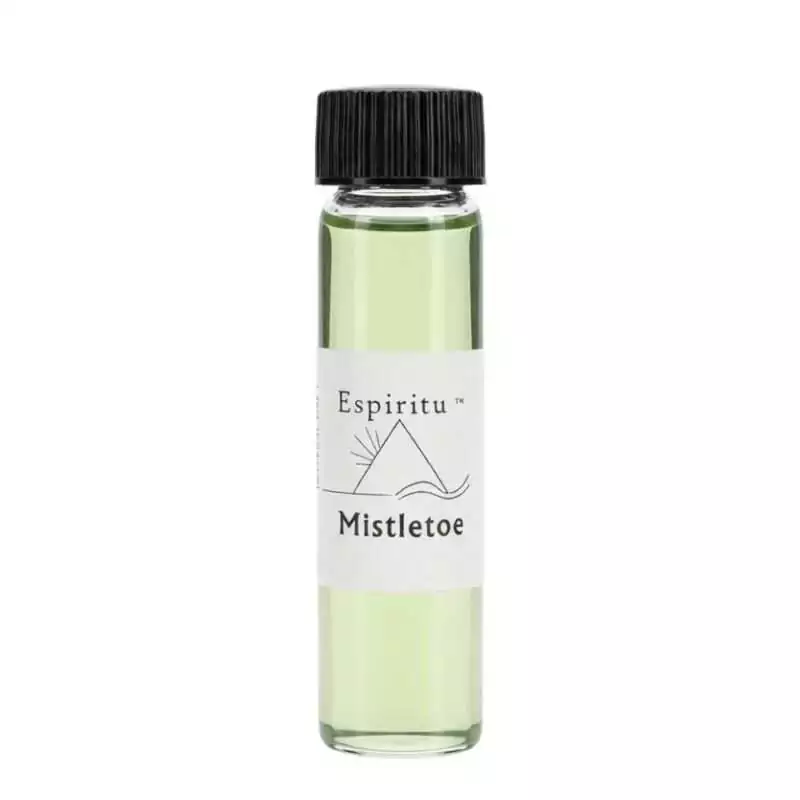
Espiritu Mistletoe oil is a ritual fragrance oil, not a distilled botanical essential oil. It is designed for ceremonial use: candle dressing, anointing charms, altar work, and seasonal ritual. The botanical plant is toxic, so this oil should not be ingested. For safe botanical essential oils suited to diffusing or skin application, visit the essential oils section. The Espiritu line carries limited retail distribution, making it a considered choice for practitioners who want formulas not found on every shelf.
How to Use Espiritu Mistletoe Oil
Three traditional approaches to working with Espiritu Mistletoe oil for Yule, love, and protection.
- Anoint at Winter Solstice or Yule
At Yule or the winter solstice, anoint a white or gold candle with mistletoe oil and light it as a symbol of life’s continuance through the darkest point of the year. Place dried mistletoe nearby if available, honoring the ancient Druidic tradition.
- Dress Candles or Charms for Love and Protection
Apply a few drops to a pink or red candle for love work, or to a white candle for protection. Mistletoe has long been associated with both romantic blessing and warding off malevolent forces, making it a versatile dressing oil for either intention.
- Anoint a Protection Charm or Doorway
Dress an amulet, talisman, or small bag for protection with a drop of mistletoe oil, continuing the Druidic tradition of using the plant as a ward against harmful spirits. You may also anoint a doorway lintel for household protection and blessing.
The Tarot Fellow Standard
I stock Espiritu Mistletoe oil because mistletoe is one of the most mythologically dense plants in European sacred tradition, and it deserves more than a two-sentence product description. The Pliny account of Druidic oak-and-mistletoe ritual, the Norse tragedy of Baldur, the transformation into a love symbol through the Yule tradition: all of this context is what makes this oil meaningful rather than generic. Practitioners who are building a Yule altar or working with Celtic and Norse symbolism need to know they’re getting something with actual historical depth behind it. See the full Espiritu ritual oils collection for all available titles.
Frequently Asked Questions
Pliny the Elder recorded that Celtic Druids harvested mistletoe from sacred oaks with golden sickles during the sixth day of the moon, considering it the most sacred of plants. They believed it could heal all ailments and render any poison harmless.
No. It is a ritual fragrance oil for ceremonial use, not an essential oil. Note that mistletoe is toxic in botanical form, so do not ingest this oil. For aromatherapy essential oils, visit my essential oils section for those safe botanical options.
In Norse myth, mistletoe was the only plant not bound by Frigg’s oath to protect Baldur, making it the weapon Loki used to cause his death. This paradoxical status makes mistletoe the plant of both vulnerability and enduring divine protection.
Mistletoe oil suits Yule and winter solstice rituals, love and romantic blessings, household protection, and any working connected to fertility, renewal, or the return of light after darkness. It also appears in Wiccan sabbat practice at midwinter.





Reviews
There are no reviews yet