

Quick Specs
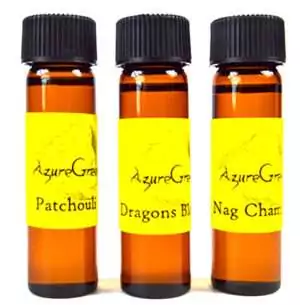
- Size: 2 dram (approximately 7.4ml)
- Type: Ritual anointing oil / fragrance oil
- Scent: Myrrh
- Bottle: Small glass vial with roller or cap, yellow label line
- Key uses: Anointing candles, charm bags, talismans, ancestor veneration, purification, protection
Myrrh: The Oldest Working Oil in the Room
Myrrh comes from Commiphora myrrha and Commiphora molmol, small thorny trees native to the dry scrublands of East Africa and the Arabian Peninsula. The resin bleeds from wounds in the bark and hardens into reddish-brown tears that have been traded across cultures for at least four thousand years. I think of it as one of the few materials that shows up in Egyptian embalming, Hebrew temple rites, and early Christian anointing without skipping a beat. That kind of staying power means something.
In the grimoire tradition, myrrh is primarily a purification and protection resin. It’s used to slow or stop unwanted situations, to honor ancestors and spirits of the dead, and to elevate spiritual work that needs a heavier, more somber gravity than frankincense alone provides. In ceremonial work, it’s one of the classic temple scents, often combined with frankincense in a ratio that has not changed much since the ancient world.
This is a 2-dram ritual anointing oil built around that myrrh scent. You get a compact, portable bottle that fits in a spell kit, a travel altar, or a desk drawer. For more aroma oils, browse my oils and diffusers collection. What this oil does is different: it’s a working oil, formulated for intention-setting and ritual use, not a diffuser blend.
How to Use Myrrh Ritual Oil
Three practical ways to use this myrrh ritual anointing oil in your practice.
- Anoint a candle, talisman, or charm bag
Apply a drop or two to a candle, talisman, or charm bag. Focus your intention as you work the oil in, moving from base to wick for drawing work, or wick to base to slow or stop something.
- Use for ancestor or devotional work
Anoint your wrists, temples, or the back of your neck before prayer, meditation, or ancestor work. Myrrh carries a long tradition of bridging the living and the dead.
- Add to a diffuser or offering bowl
Add a few drops to a small offering bowl or cotton wick diffuser to fill your space with its scent during ritual. It pairs well with frankincense for purification work.
The Tarot Fellow Standard
I stock this yellow label line because the formulas are consistent batch to batch, the scent throw is reliable, and the price point keeps them genuinely accessible for everyday practice. These aren’t exotic collector items. They’re working oils meant to be used, not hoarded. I’ve run through enough of them over the years to know when a batch is off, and these haven’t given me reason to pull them.
This is a fragrance oil. The scent is true to myrrh and it does the job it’s designed for in ritual work, but patch-test before using on skin, especially if you’re sensitive. If you’re building out a full altar setup, myrrh pairs naturally with my other 2-dram anointing oils or with ritual tools from my ritual spell supplies.
Frequently Asked Questions
This is a fragrance oil. It captures the scent and is formulated for ritual use, not aromatherapy diffusion or skin care.
The 2 dram bottle holds approximately 7.4ml. It is portable and sized for altar work, travel, or keeping in a spell kit.
Myrrh has a long history in purification, ancestor veneration, and protection rites across Egyptian, Hebrew, and Christian traditions.
Yes. Many practitioners layer myrrh with frankincense for temple-style purification, or combine it with protection oils for warding work.
Reviews
There are no reviews yet