

Quick Specs
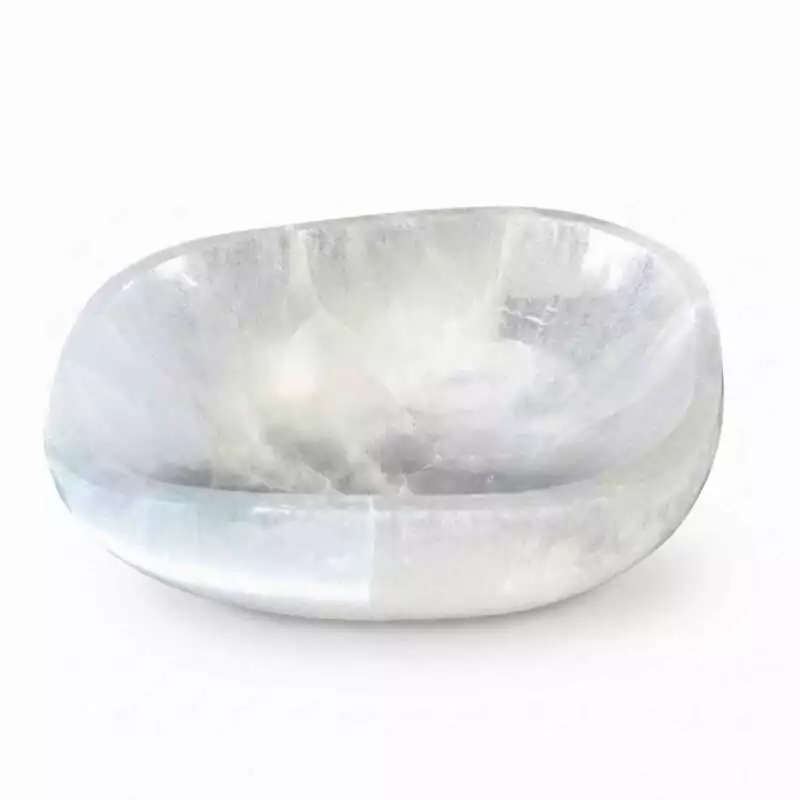
- Type: Selenite altar bowl
- Size: 4 to 5 inches in diameter (approximate; natural variation)
- Material: Natural selenite (CaSO4·2H2O, gypsum mineral)
- Best for: Holding crystals, herbs, small ritual items, altar display
Selenite Crystal Bowl: Mineral Facts and Tradition
Selenite is a crystallized form of gypsum (calcium sulfate dihydrate, CaSO4·2H2O), prized for its translucent white sheen and fibrous, silky luster. Its name comes from Selene, the ancient Greek goddess of the moon, reflecting the stone’s pale, luminous quality. One of the softest minerals in practical use at Mohs 2, selenite carves readily into bowls, plates, and wands, and it’s the softness combined with that fibrous texture that gives each piece its characteristic striations and inner glow.
Because selenite is water-soluble, it must never be rinsed or soaked. Moisture causes the surface to pit and eventually dissolve. This is worth repeating plainly: do not place liquids in this bowl, and keep it away from humid environments for long-term preservation. For cleansing the bowl itself, brief exposure to sunlight or moonlight is the standard approach among practitioners.
Ritual Use: What Makes a Medium Altar Bowl Different
At 4 to 5 inches in diameter, this medium altar bowl has substantially more depth and interior space than a charging plate or a small half-moon bowl. That extra depth makes it practical for holding loose herbs, smudge ash, tumbled stones of varied sizes, small candles, or a cluster of crystal chips, while the bowl shape naturally keeps items contained. Practitioners working in Wicca, folk magic, or general crystal healing use a vessel like this as the focal point of an altar arrangement, a place to return tools between uses, or a receptacle for offerings.
In crystal healing circles, selenite is widely used as a passive cleanser for other stones. Placing tumbled stones or crystal jewelry in a selenite bowl overnight is a common practice, based on the idea that selenite’s high-frequency vibration helps discharge accumulated energy from other minerals. The bowl format keeps the stones in sustained contact with the selenite surface, which practitioners consider more effective than simply setting stones beside a wand. Citrine, black tourmaline, and rose quartz are among the most commonly paired stones in these overnight rests. Browse my selenite collection for additional selenite forms.
Practical Care and Honest Expectations
Each bowl is carved from natural selenite, so dimensions and surface markings vary. The fibrous lines and occasional interior veining you see are part of the mineral’s natural crystal structure, not flaws. The bowl may show slight asymmetry and the interior will have a natural matte texture from the carving process. Weight is approximately 1 pound, making it substantial enough to remain stable on an altar surface. Store it away from windowsills where condensation could collect, and dust with a dry cloth only.
How to Use a Selenite Altar Bowl
Three steps for placing, using, and maintaining your medium selenite altar bowl.
- Set Up Your Bowl on a Stable Surface
Place the selenite bowl on a flat, dry altar surface away from water sources. Position it where it will not be jostled, since selenite is soft and chips easily. A cloth underneath protects the bowl and your altar from scratches.
- Add Crystals or Ritual Items
Place tumbled stones, crystal jewelry, or herbs directly into the bowl. For crystal cleansing, allow items to rest inside overnight or a few hours. The curved interior holds rounded stones in sustained contact with the selenite surface.
- Refresh the Bowl with Light
Set the empty bowl in direct sunlight for 30 minutes or on a windowsill under moonlight overnight to refresh it. Never rinse or soak it in water; selenite is water-soluble and moisture will pit and slowly dissolve the surface.
The Tarot Fellow Standard
I carry selenite in multiple forms because it earns its place on any altar, not just as decor but as a genuinely functional tool. A bowl this size fills a gap that smaller selenite pieces don’t cover: it’s deep enough to hold a real collection of tumbled stones, wide enough to use as an offering dish, and substantial enough to anchor an altar arrangement visually. I’m clear about its limits, particularly the no-water rule, because that’s the kind of information a customer needs before buying, not after. If you’re building out your sacred space, explore my full altar supplies collection for complementary pieces.
Frequently Asked Questions
No. Selenite is water-soluble gypsum and will pit, cloud, and eventually dissolve with moisture exposure. Keep the bowl completely dry. For salt rituals, use a separate ceramic or glass dish rather than your selenite bowl.
Practitioners across crystal healing traditions use selenite bowls to passively refresh other stones overnight. The bowl keeps crystals in close contact with the selenite surface, which is more effective than simply resting them beside a wand.
The half-moon bowl is a shallow tray suited for display and light crystal charging. This medium round bowl is deeper and wider, at 4 to 5 inches across, making it practical for holding herbs, loose stones, and small ritual items.
Dust with a soft dry cloth or brush only. For energetic refreshing, place it in direct sunlight for 30 minutes or under moonlight overnight. Avoid any moisture; damp cloths or sprays will erode the surface of this water-soluble mineral.





Medium Selenite Altar Bowl ⭐️⭐️⭐️⭐️⭐️ This selenite bowl is absolutely beautiful! It has such a soft, natural glow and every little variation in the stone makes it feel unique. It’s a gorgeous addition to my altar and is perfect for holding crystals, jewelry, herbs, or other small items. It feels substantial and looks much more expensive than it was. I’m seriously in love with this piece. ✨