

Quick Specs
- Material: Selenite (gypsum variety, CaSO4-2H2O)
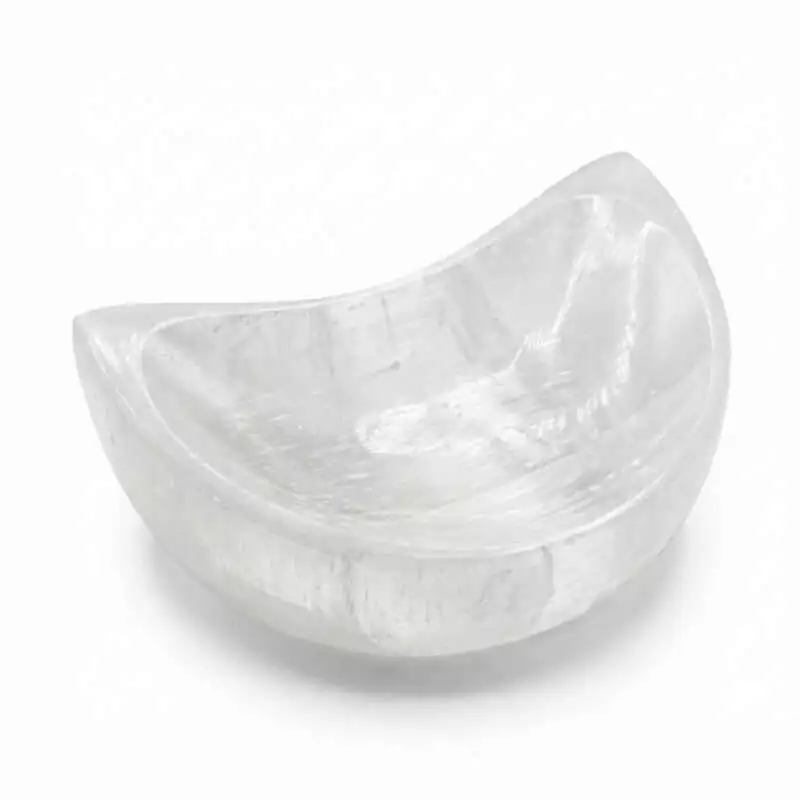
- Shape: Half-moon / crescent
- Size: 4 inches across
- Best for: Holding and cleansing crystals, altar display, jewelry storage, lunar intention work
What Selenite Is: Mineral Facts and Physical Properties
Selenite is a crystalline form of gypsum (calcium sulfate dihydrate, CaSO4-2H2O) and has no chemical relationship to the element selenium despite sharing the name’s Greek root, selene, meaning moon. It forms through the evaporation of saline water in sedimentary basins, and the largest commercial deposits come from Mexico, Morocco, and parts of the United States. The material is relatively soft (Mohs hardness of 2), which means it polishes smoothly into bowls and plates but should not be submerged in water, as prolonged exposure will cause the surface to dissolve or cloud.
The half-moon shape of this bowl is carved from a single piece of selenite, giving it a crescent profile with a shallow concave interior for holding small objects. The 4-inch measurement refers to the full width across the bowl from tip to tip of the crescent. Natural gypsum varies in translucency and may show internal striations or cloud patterns, which are characteristic of the material rather than defects.
Practitioner Use: Crystal Cleansing, Altar Work, and Lunar Symbolism
In the folk crystal tradition, selenite is among the most widely used tools for cleansing and resetting other stones. Practitioners place tumbled crystals, crystal jewelry, or small palm stones directly in the bowl overnight or for several hours, working from the understanding that selenite does not accumulate energy the way other stones do and actively dispels heavy or stagnant vibrations from items resting in contact with it. This is a traditional practitioner association, not a guaranteed physical effect, but it explains why selenite bowls and charging plates are staples in crystal working setups. Browse my selenite collection for the full range of selenite forms and tools.
The half-moon shape connects selenite’s existing lunar associations, drawn from its name’s Greek root, to the bowl’s function as a container for intention work timed to moon phases. Many practitioners use the bowl specifically during new or full moon rituals, placing charged or cleansed items within it as part of a lunar intention-setting practice. The crescent profile also works as an altar focal point in moon-centered deity or goddess work, where the shape itself carries symbolic weight independent of the selenite’s other associations.
How to Use a Selenite Half Moon Bowl
Three ways to work with a selenite half moon bowl for crystal care and ritual practice.
- Place Crystals or Jewelry in the Bowl
Set tumbled stones, crystal rings, or palm stones in the concave interior of the bowl. Allow them to rest four hours or overnight. In folk crystal tradition, selenite contact is understood to clear accumulated energy from stones placed within it.
- Use It in Moon-Phase Ritual Work
Position the bowl on your altar during new or full moon work. Place crystals or written intentions inside it. The crescent shape anchors lunar timing to your setup and serves as a focal point for moon-centered intentions around renewal or release.
- Care for the Selenite Bowl Properly
Selenite has a Mohs hardness of 2 and is water-soluble. Do not rinse or soak this bowl, as even brief submersion clouds or pits the surface. Wipe gently with a dry cloth only if needed. Store it away from humid environments for best longevity.
The Tarot Fellow Standard
I stock this bowl because the half-moon shape does something a flat selenite plate or round bowl doesn’t: it visually connects the crystal-cleansing function to lunar symbolism in a single piece, making it useful both as a working tool and as an altar focal point for moon-centered practice. The 4-inch size is right for daily crystal care without taking over an altar. For tools and supplies that complement selenite work on the altar, explore my altar supplies collection.
Frequently Asked Questions
No. Selenite is a form of gypsum (CaSO4-2H2O) with a Mohs hardness of 2, and it is water-soluble. Submerging or filling the bowl with water will cloud, pit, or dissolve the surface. Use it dry for holding crystals, jewelry, and ritual objects only.
In folk crystal tradition, selenite clears the energy of stones in contact with it, without needing cleansing itself. This is a traditional belief, not a verified effect. Most crystal workers rely on selenite bowls for daily crystal care.
Selenite is a crystalline gypsum variety, chemically calcium sulfate dihydrate (CaSO4-2H2O). It has no connection to selenium. Both names share the Greek root selene, meaning moon, explaining why selenite is so frequently linked to lunar practice.
Most practitioners leave crystals in a selenite bowl for at least four hours, overnight being most common. Heavily used stones are sometimes left 24 hours. Longer contact is fine, as selenite does not accumulate or project energy to other stones.


1 review for Selenite Half Moon Bowl — 4 Inch Crescent for Crystal Cleansing & Charging