


Quick Specs
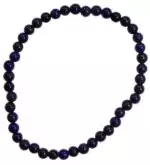
- Stone: Natural lapis lazuli (lazurite matrix with calcite and pyrite)
- Bead size: 4mm round
- Fit: Stretch elastic, one size fits most
- Best for: Daily wear, layering, meditation, third-eye and throat chakra work
Lapis Lazuli Bracelet: Six Thousand Years of Continuous Use
Lapis lazuli holds one of the longest documented histories of any gemstone. The Sar-i Sang mines in the Badakhshan province of northeastern Afghanistan have been worked continuously for more than 6,000 years, supplying stone to the ancient Indus Valley, Mesopotamian, and Egyptian civilizations. Sumerian craftsmen in Ur fashioned lapis into cylinder seals and inlays as early as the third millennium BCE, and Egyptian artisans used it in the death mask of Tutankhamun, associating the deep blue with the night sky and the divine. The golden pyrite flecks scattered through genuine lapis were interpreted by both cultures as stars embedded in the stone, a visual metaphor for the cosmos that gave lapis its enduring connection to wisdom and the higher mind.
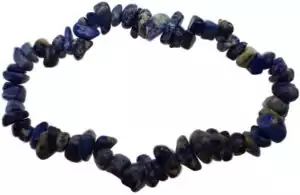
Mineralogically, lapis lazuli is a metamorphic rock rather than a single mineral. The blue comes primarily from lazurite, a member of the sodalite group. White calcite veins and gold pyrite inclusions are natural features of the matrix, not imperfections. A bracelet without any calcite or pyrite, presenting as a perfectly uniform blue, has likely been dyed or treated, so those natural variations are actually the authenticity markers worth looking for in a quality piece.
Third Eye, Truth, and the Layering Potential of 4mm Beads
Across crystal healing and contemplative traditions, lapis lazuli is most consistently associated with the third-eye and throat chakras, making it a go-to stone for practitioners working on intuition, honest communication, and mental clarity. It appears in Tibetan Buddhist contexts as a symbol of the medicine Buddha and in Egyptian healing rites as a stone of protection and transformation. In contemporary crystal work, lapis is recommended for those working through issues of self-expression, particularly around speaking difficult truths or accessing deeper insight during meditation.
The 4mm bead size is the most wearable format in the stretch bracelet category. Where 8mm or 10mm bracelets read as a statement piece, 4mm sits closer to a fine jewelry profile, comfortable against the wrist all day without drawing attention away from a watch or other stacked pieces. This makes it an ideal foundation for layering with other 4mm crystal bracelets. Browse my 4mm and 6mm beaded bracelets to find complementary stones for stacking.
How to Use a Lapis Lazuli Bracelet
How to use, wear, and care for a 4mm lapis lazuli stretch bracelet in daily practice and meditation.
- Set an Intention Before Wearing
Hold the bracelet in your non-dominant hand and spend 60 seconds with a specific intention, such as honest communication, mental clarity, or deeper meditation. This personalizes the stone to your current focus rather than wearing it passively.
- Wear on the Left Wrist for Receptive Work
Many crystal practitioners wear lapis on the left wrist to receive intuitive insight or enhance dream recall. The right wrist is preferred for projective intentions like assertive communication or speaking truth clearly in difficult conversations.
- Clean Periodically with a Soft Cloth
Lapis lazuli rates 5 to 5.5 on the Mohs hardness scale, making it softer than quartz. Wipe with a soft dry cloth after wear. Avoid prolonged soaking, ultrasonic cleaners, and steam, which can loosen the calcite matrix or discolor dyed stones.
The Tarot Fellow Standard
I carry the 4mm lapis bracelet specifically because this bead size is underrepresented in most crystal jewelry selections, which skew toward larger 8mm and 10mm formats. The small bead profile makes lapis genuinely wearable for people who want the stone’s associations without a bulky bracelet, and it layers cleanly with other pieces. The natural matrix variations in these beads, the white calcite and gold pyrite, are features I look for when selecting stock because they confirm untreated stone. Explore my full crystals and gemstones collection for tumbled lapis, raw specimens, and other crystal forms to complement your bracelet.
Frequently Asked Questions
A lapis lazuli bracelet is worn for its traditional associations with wisdom, truth, and mental clarity. Practitioners use it during meditation, creative work, and communication-focused practices tied to the third eye and throat chakras.
Genuine lapis lazuli shows natural white calcite veins and gold pyrite flecks in the matrix. A stone that is perfectly uniform deep blue with no variation has likely been dyed. The pyrite flecks are the key authenticity marker to look for.
Lapis lazuli is associated with the third-eye chakra, linked to intuition and inner vision, and the throat chakra, connected to honest communication. It is commonly used in meditation and energy work focused on both of these centers.
Yes. The 4mm bead profile is lightweight and sits close to the wrist, making it comfortable for all-day wear. Lapis has a Mohs hardness of 5 to 5.5, so avoid harsh impacts and chemicals. Wipe clean with a dry soft cloth regularly.



I didn’t EVEN RECIEVE THIS PRODUCT!!! IM SERIOUSLY VERY ANGRY ABOUT IT
Hi! Rick here. I see the item on your invoice. If you still have the packing slip, was it checked off? Happy to send a replacement or refund, just let me know what you prefer. You can also submit a refund request and I’ll approve it.