
Quick Specs
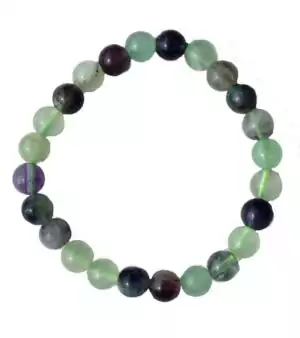
- Type: Crystal beaded bracelet
- Size: 4 mm
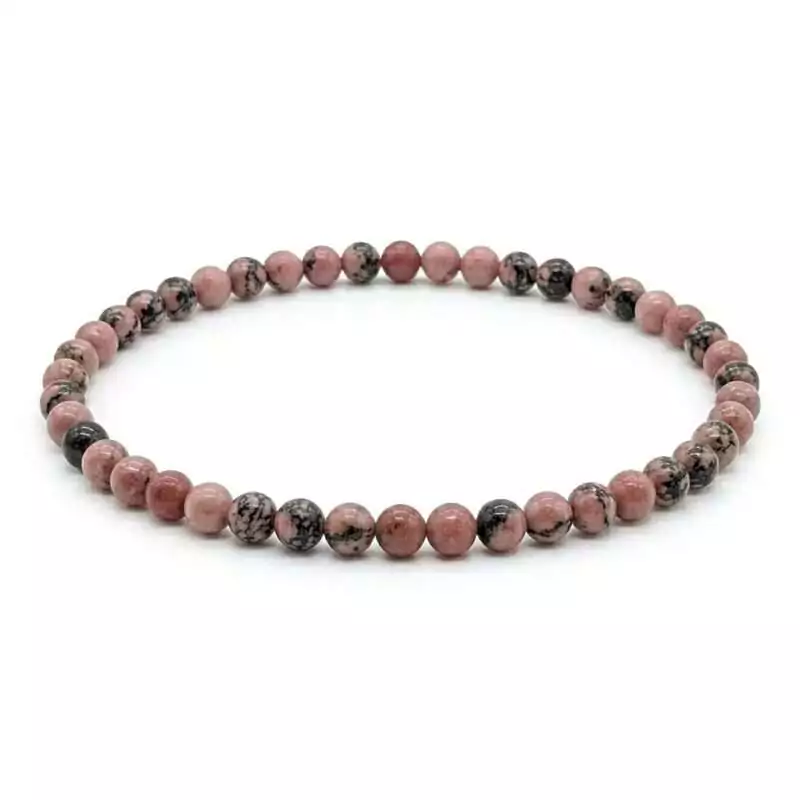
- Size/Quantity: 4mm rhodonite beads, stretch fit
- Best for: Heart chakra work, emotional healing, forgiveness rituals, grief support
Rhodonite: The Forgiveness Stone
Rhodonite is a manganese inosilicate mineral whose name derives from the Greek “rhodon,” meaning rose, a reference to its signature pink-to-rose-red coloration. It was first described in the Ural Mountains of Russia in the early 19th century, and significant deposits have since been found in Sweden, Australia, Canada, and the United States. What makes rhodonite visually distinctive is its characteristic black manganese oxide veining, which runs through the pink base in irregular patterns and is entirely natural, not an artifact of treatment or imitation.
Rhodonite is one of the primary heart chakra stones in crystal healing practice, and its use extends across traditions from New Age crystal healing to folk magic approaches to emotional work. Where rose quartz is typically associated with unconditional love and nurturing, rhodonite brings a more specific quality: forgiveness, particularly of self. Practitioners use it when working through long-held resentments, grief, or the aftermath of relational wounds that have calcified into patterns of self-blame or bitterness. Browse my crystal stone bracelets for heart chakra and emotional healing stones.
Rhodonite in Emotional Healing and Ritual Practice
Stacking rhodonite with rose quartz and green aventurine creates a focused heart chakra set that many practitioners use during grief processing, relationship transitions, or any period requiring sustained self-compassion. Each stone in this combination addresses a slightly different dimension: rose quartz for nurturing love, aventurine for forward movement, rhodonite for releasing and forgiving. The 4mm size allows all three to be worn on the same wrist without excessive bulk, which is a practical consideration for daily ritual wear.
Rhodonite rates 5.5 to 6.5 on the Mohs hardness scale, making it moderately durable for bracelet wear. The black veining is natural manganese oxide and not a flaw or sign of low quality. Cleanse it with dry methods such as selenite or sound rather than salt water, which can dull the surface over time with repeated exposure.
How to Use a 4mm Rhodonite Bracelet
Three practical steps for using rhodonite in heart chakra and emotional healing ritual work.
- Wear During Emotional Processing
Wear the bracelet during emotionally charged situations or when processing grief, conflict, or difficult transitions. Rhodonite is used in crystal practice for heart-centered healing, helping practitioners work through old wounds with less friction.
- Create a Heart Chakra Stack
Pair the bracelet with rose quartz or green aventurine on the same wrist to create a focused heart chakra stack. Rhodonite is known for complementing stones that carry nurturing energy, adding the element of forgiveness and self-worth.
- Cleanse with Dry Methods
Cleanse the bracelet by placing it on an amethyst cluster or selenite slab overnight. Avoid soaking rhodonite in salt water, as its manganese composition makes it somewhat sensitive to acidic or abrasive cleansing agents.
The Tarot Fellow Standard
I carry rhodonite because it fills a specific gap that rose quartz, for all its warmth, does not cover on its own: the forgiveness and self-reclamation dimension of heart work. Practitioners who are doing real emotional labor need a stone that can hold that more demanding territory, and rhodonite has earned its place in that role across multiple traditions. The black manganese veining on each bead is natural and makes every bracelet distinctly its own. Explore my full range of emotional and heart-centered crystals in my crystal and gemstone collection.
Frequently Asked Questions
Rhodonite is a manganese inosilicate mineral, typically pink to rose-red with distinctive black manganese oxide veining. It is found in Sweden, Australia, Russia, and the United States. The name comes from the Greek ‘rhodon’ for rose.
Rhodonite is associated with the heart chakra and is used in emotional healing, forgiveness rituals, and self-love practices. It is also used to ease grief, reduce anxiety in relationships, and support compassionate communication.
Rhodonite rates 5.5 to 6.5 on the Mohs hardness scale, making it moderately durable for daily bracelet wear. Avoid hard impacts and store it away from harder stones. The black veining is natural manganese oxide, not a flaw.
Yes. Rhodonite pairs naturally with rose quartz, green aventurine, and pink tourmaline in heart chakra work. It also complements black tourmaline as a grounding anchor when doing deeper emotional release or grief processing work.

Reviews
There are no reviews yet