

Quick Specs
- Type: Natural abalone shell (Haliotis sp.)
- Size/Quantity: 5 to 6 inches, size varies by individual shell
- Best for: Smudging ceremonies, sage burning, altar bowls, offering dishes
Abalone Shell in Smudging and Sacred Ceremony
Abalone shells (genus Haliotis, from the Greek for sea ear) have been used as ceremonial vessels across many Indigenous cultures of the Pacific Coast of North America, where the Haliotis rufescens (red abalone) was historically abundant. In smudging practice, particularly among Coast Salish, Lakota, and other nations, the shell serves as the bowl that holds burning sage, cedar, sweetgrass, or other sacred herbs. Its use in this context is meaningful: it brings the element of water into the ceremony alongside the earth of the herb, the fire of the flame, and the air carried by the smoke.
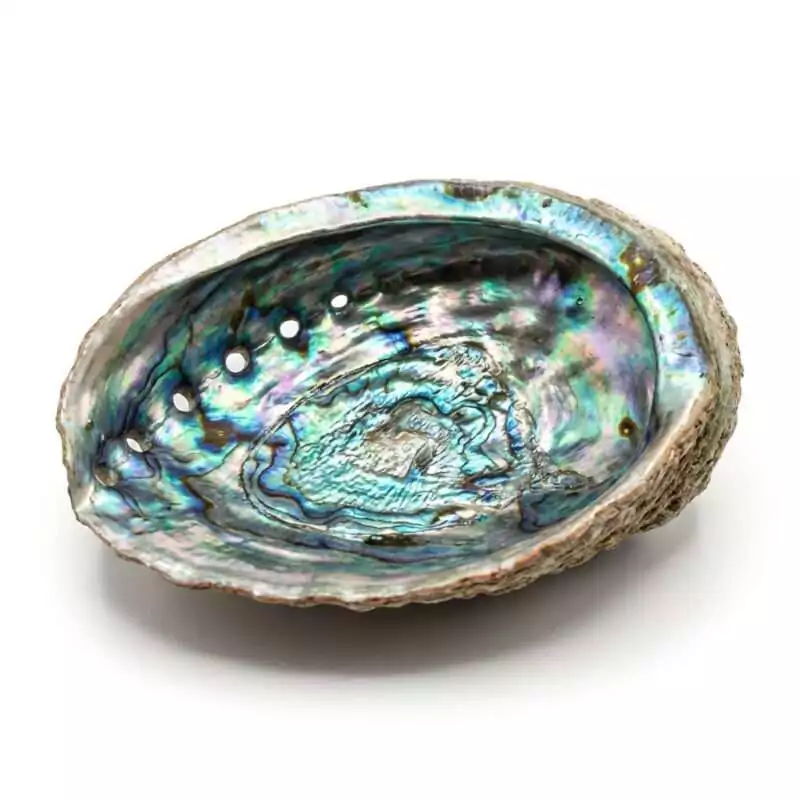
The natural holes running along the edge of the shell are the respiratory pores of the living animal, a feature of abalone biology (Haliotis is an epipodial gastropod that breathes through a line of holes along its mantle). In ceremonial use, these holes act as natural vents that allow airflow beneath the burning material, which helps maintain a smolder without constant relighting. The same characteristic that shaped the animal’s anatomy makes the shell functionally well-suited for this purpose.
Iridescent Nacre and Natural Variation
The interior of an abalone shell is nacre, or mother-of-pearl, composed of microscopic platelets of calcium carbonate (aragonite) arranged in parallel layers. These layers diffract light at slightly different wavelengths depending on the viewing angle, producing the shifting blues, greens, pinks, and silvers the shell is known for. No two shells are identical: color saturation, the distribution of hues, and the patterning of the nacre vary with the individual animal’s age, diet, and environment. This natural variation is part of what makes each shell a distinct object rather than a manufactured product.
Commercial abalone shells are sourced from aquaculture operations, primarily in Mexico, New Zealand, and Australia, where abalone farming is an established industry. Wild California red abalone has been protected from commercial harvest since 1997. The shells available for ritual and ceremonial use come from farmed stock. Browse my sage and smudge collection for herbs that pair naturally with this shell as a complete smudging setup.
How to Use an Abalone Shell Incense Burner
A natural abalone shell works as a smudge bowl, incense dish, or offering vessel. The steps below apply to sage smudging, the most common use.
- Prepare the Shell
Add a thin layer of white sand or fine salt inside the shell before burning. This insulates the nacre from direct heat, which can discolor or crack the iridescent surface over time, protecting the shell’s natural finish through repeated use.
- Burn Your Herbs or Incense
Place your sage bundle, herb stick, or lit charcoal disc in the shell on top of the sand. For smudging, light the sage, allow it to catch, then blow out the flame so it smolders. Hold or rest the shell and move through your space as needed.
- Clean and Store
After use, let the shell and its contents cool completely. Tip out the ash and sand carefully, as the shell is a natural object and can crack under pressure. Wipe the interior with a dry cloth and refill with fresh sand before the next session.
The Tarot Fellow Standard
I stock these shells because a natural abalone bowl is one of the few ritual items that genuinely cannot be replicated in manufactured form. The iridescent nacre, the organic shape, the ventilating holes, the variation from shell to shell, these are features no ceramic or metal bowl can match. Each shell is a complete, functional, and visually arresting piece on its own. For anyone building a smudging or altar practice, browse my full incense burner collection for complementary tools and burners to complete the setup.
Frequently Asked Questions
Abalone shells belong to the genus Haliotis and are sourced from farmed populations in Mexico, New Zealand, and Australia. Wild abalone is a protected species in California, so commercial shells come from aquaculture operations in other regions.
The iridescent interior is nacre, or mother-of-pearl, made of calcium carbonate platelets arranged in microscopic layers. These layers diffract light, producing the shifting blues, greens, pinks, and silvers that vary in every individual shell.
In many Indigenous North American traditions, the abalone shell represents water and holds burning herbs in purification ceremonies. Combined with sage (earth), fire, and feather-fanned smoke (air), it incorporates all four elements in the ritual.
Place a thin layer of sand inside the shell, then set your sage bundle or charcoal disc on top. Sand protects the nacre from scorching. The natural holes in the shell allow airflow beneath the burning material, helping maintain a steady smolder.
1 review for Abalone Shell Incense Burner — 5–6 Inch Large Natural Shell