

Quick Specs
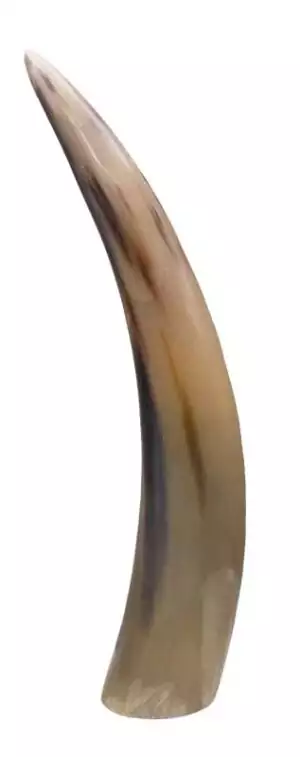
- Type: Natural buffalo horn tip shaped as ritual offering bowl or libation vessel
- Size: 8″
- Size/Quantity: 6 to 8 inches in length, one piece
- Best for: Norse pagan altar, libations, salt or herb offerings, shamanic ceremony
Buffalo Horn in Norse and Shamanic Traditions
Horn vessels have been central to Northern European ritual culture for millennia. The drinking horn, used for toasting the gods and the dead at blots and sumbels in Norse heathen practice, is the most recognizable form, but horn was also carved into spoons, ladles, and offering cups throughout Germanic, Celtic, and Siberian shamanic cultures. Archaeological finds from Migration Period Scandinavia include horn and bone vessels alongside iron tools in grave goods, marking horn as a material with ritual as well as utilitarian significance. Its organic origin, from a living animal, distinguished it from ceramic and metal vessels in traditions where the life-force of materials was understood to matter.
This piece uses the horn tip, the tapered end section that curves to a natural cup form, rather than being cut from the middle of the horn. No two tip sections are identical in curvature, grain, or coloration: the banded amber-to-dark-brown patterning varies across every piece, and the natural spiral of the horn creates a slightly asymmetric but stable base when set down. That variation is part of what makes a horn vessel a genuinely handmade sacred object rather than a manufactured altar prop.
Practical Uses at the Altar and in Ceremony
In Norse heathen practice, this size horn end works well as a small libation cup for pouring blot offerings of mead, ale, or water to the gods, land spirits, or ancestors, without committing an entire full-size drinking horn to small altar work. The tip cup also holds ritual salts, loose incense for a charcoal screen, or dried herbs at the foot of a god statue. At 6 to 8 inches, it sits proportionately beside standard altar candles and deity statues without overwhelming the working space.
Shamanic practitioners outside specifically Norse tradition also use horn cups for holding plant medicines, sacred tobacco, or earth offerings during ceremony. The material’s organic quality, keratin over a bone core, connects it to the animal kingdom in a direct way that resonates with traditions where animal allies and bones carry specific spiritual authority. Because each piece is unique, it is worth noting that the color, curve, and proportions of the piece you receive will differ from any photograph, which is in the nature of the material and considered a mark of its authenticity.
How to Use a Horn End Ritual Bowl
Three ways to work a buffalo horn tip vessel into active ritual and altar practice.
- Prepare the horn before first use
Rinse the horn end with cool water and dry it thoroughly. Rub a small amount of food-grade oil, such as mineral oil or beeswax polish, along the interior and exterior. This conditions the keratin, prevents micro-cracking, and brings out the grain.
- Use as a libation cup at a Norse heathen altar
Pour a small measure of mead, ale, or water into the horn end. Hold it toward the altar, name the recipient of the offering aloud, then pour slowly into a dedicated libation dish or outside into the earth. Clean and dry the horn after each use.
- Fill with salt or loose incense for altar dressing
Place the horn end at the base of a god statue or altar centerpiece and fill it with black salt, ritual salt, or a small pinch of loose resin incense. This gives the altar a material anchor through its organic texture and natural form.
The Tarot Fellow Standard
I carry these because genuine natural horn altar vessels are hard to source at a reasonable point, and the tip-end form specifically fills a niche that full drinking horns and ceramic bowls don’t: a small organic cup suited to an altar scale. Browse my ritual offering bowls for other vessel options, and find Norse altar tools and deity figures in my ritual supplies collection.
Frequently Asked Questions
Horn end bowls serve as libation cups for pouring offerings of mead, water, or ale at Norse or heathen altars, and as small holding vessels for salt, loose incense, or herbs. Their organic material connects them to shamanic and Norse traditions.
No. Every buffalo horn tip is unique in curvature, grain pattern, and color banding. The piece you receive will differ from any photograph. This variation is inherent to the material and is considered a feature of authentic handcrafted horn work.
After each use, wipe clean with a damp cloth and dry thoroughly. Do not soak in water or put in a dishwasher. Rub with mineral oil or beeswax polish a few times a year to prevent cracking and maintain the natural luster of the horn.
Yes, for small amounts. The horn tip cup is suitable for holding and pouring mead, water, or ale in a blot or libation ritual. Avoid leaving liquid in the horn for extended periods. Dry and oil the vessel after contact with liquid to preserve it.


Reviews
There are no reviews yet