
Quick Specs
- Type: Beaded crystal bracelet
- Size: 6 mm
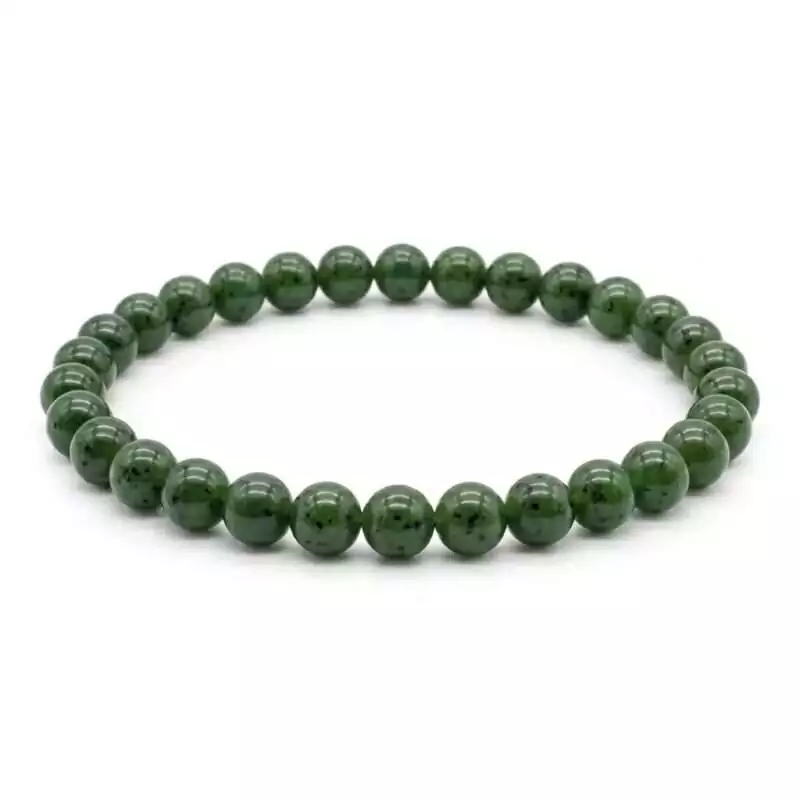
- Size/Quantity: 6mm nephrite jade beads on elastic cord
- Best for: Abundance work, heart chakra practice, protection, longevity intention
6mm Nephrite Jade: One of the True Jades with a Six-Thousand-Year History
Nephrite is one of the two mineral species classified as true jade, the other being jadeite. It is a calcium magnesium silicate of the amphibole group, typically ranging in color from deep forest green to pale celadon, and occasionally creamy white or gray. Nephrite deposits are found in British Columbia, New Zealand, Siberia, China, and Taiwan, and the stone has been carved into ritual objects, weapons, and ornaments by cultures across Asia and the Pacific for over six thousand years.
The distinction between nephrite and jadeite matters for practitioners doing research. Nephrite is generally the more widely available jade variety in beaded jewelry and has been the jade of choice in Chinese metaphysical and spiritual tradition. Jadeite, which includes the vivid imperial green gem-quality material, is rarer and more expensive. Both are genuine jade; nephrite is not lesser jade.
Nephrite Jade in Metaphysical Practice
In Chinese metaphysics, nephrite jade is among the most revered stones for protection and prosperity. It is associated with the wood element, the east direction, and the planet Jupiter. Traditional use includes wearing jade close to the skin to develop a bond between the stone and the wearer, with the jade believed to take on protective qualities over time as it absorbs the energy of its owner.
Nephrite also appears in Maori tikanga as pounamu, a deeply sacred green stone used for heirlooms and ceremonial tools passed between generations. Across multiple traditions, nephrite jade carries connotations of virtue, longevity, and continuity. For practitioners working with heart chakra energy, jade’s green color and its cultural resonance make it a natural fit.
How to Use Your 6mm Nephrite Jade Bracelet
Follow these steps to get the most from your 6mm nephrite jade bracelet.
- Wear on the Receptive Wrist
Wear the 6mm nephrite jade bracelet on your left wrist for receptive energy work, drawing in abundance and heart-centered focus during meditation. The smooth beads provide a gentle tactile anchor for breath-based practices.
- Use in Prosperity Ritual
Use nephrite jade during prosperity rituals or when setting intentions related to health, longevity, and stability. Place the bracelet on your altar beside a green candle and let it absorb the focused intent of your working.
- Store with Care
Store your nephrite jade bracelet away from harder stones that might scratch the surface. A small cloth pouch works well, and placing it near living plants reinforces its earthy, wood-element connection between uses.
The Tarot Fellow Standard
Nephrite jade earned a permanent spot in my crystal inventory because it genuinely belongs to one of the longest living ritual traditions in recorded human history. This 6mm bracelet is a wearable, accessible entry into that tradition. Explore my crystal bracelet collection and browse my full crystal selection for complementary pieces.
Frequently Asked Questions
Nephrite is one of the two true jades, the other being jadeite. It is a calcium magnesium silicate amphibole, typically ranging from deep forest green to pale celadon, and has been carved into ritual objects for over six thousand years.
In Chinese metaphysics, nephrite jade is among the most revered protective and prosperity stones. It is tied to the wood element, the east direction, and is traditionally worn to attract abundance, ward off misfortune, and promote longevity.
Nephrite jade is quite durable at a Mohs hardness of around 6, but the elastic cord of a beaded bracelet is the more vulnerable part. Avoid snapping the bracelet on or submerging it in harsh chemicals to preserve the stringing material.
Genuine nephrite jade has a waxy to resinous luster and feels cool and weighty in the hand. The 6mm beads on this bracelet are natural nephrite, distinct from dyed quartzite or serpentine, which are common substitutes in the market.

Reviews
There are no reviews yet