

Quick Specs
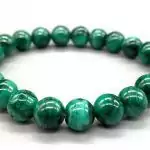
- Type: Natural Malachite Beaded Bracelet
- Bead Size: 8mm
- Best for: Heart chakra work, protection, transformation
Malachite Origins: Congo, the Ural Mountains, and Ancient Mines
Malachite forms as a secondary copper carbonate mineral in the oxidation zones of copper ore deposits, and the richest deposits in modern supply come from the Democratic Republic of Congo and, historically, the Ural Mountains of Russia, where imperial-quality material was quarried for the palaces of the tsars. The DRC material tends toward vivid, concentric banding, formed over millennia as copper-rich groundwater slowly deposited layer upon layer of the mineral in cavities and fissures. This slow banding process is what gives each 8mm bead its distinctive swirling pattern, unique from bead to bead.
Malachite carries one of the oldest human histories of any ornamental mineral. Ancient Egyptians ground it into a fine powder called udju and used it as a green eye cosmetic from the predynastic period onward, well before the transition to galena-based kohl around the New Kingdom. The same vivid green pigment later found its way into the studios of Renaissance painters, who prized malachite green as a lightfast, stable color for depicting foliage and drapery. That centuries-long relationship between human culture and this mineral speaks to something enduring in its appeal.
How Practitioners Work with 8mm Malachite
Crystal workers associate malachite with the heart chakra and with the kind of transformation that comes from confronting, rather than avoiding, difficult emotional territory. It’s frequently paired with rose quartz for heart healing or with black tourmaline when the protective aspect is the primary intention. The 8mm bead size sits comfortably on most wrists and is large enough that the banding remains clearly visible, which matters to practitioners who work with color and pattern as part of their visual focus.
Malachite rates 3.5 to 4 on the Mohs hardness scale, making it softer than many beaded crystals. It scratches easily against harder stones and should not be worn while swimming, bathing, or working with chemical cleaners. Dry it promptly if it gets wet, and store it separately from harder stones. With reasonable care, the natural banding stays clear and the polish holds for years of daily use.
How to Use an 8mm Malachite Bracelet
Three steps for setting intentions with, pairing, and caring for your 8mm malachite bracelet.
- Set a Protective Intention
Hold the bracelet in your left hand before wearing it for the first time. Breathe slowly and state your intention aloud or silently, whether that is protection, heart opening, or personal transformation, then slide it onto your wrist.
- Pair It Thoughtfully
Malachite amplifies energy already in motion. Wearing it alongside black tourmaline adds a grounding counterbalance, while rose quartz shifts the focus toward compassion and self-acceptance. Choose your pairing based on the session goal.
- Care After Each Wear
Wipe the beads with a dry soft cloth after each wear. Avoid water, perfume, and ultrasonic cleaners. Store in a soft pouch away from harder stones. The banding stays vivid when the polish is maintained, so gentle handling matters.
The Tarot Fellow Standard
I stock natural malachite rather than reconstituted or resin-stabilized material because the banding pattern, formed over geological time in the oxidation zones of copper deposits, is the whole point. Each 8mm bead is cut from solid mineral, so the swirling green bands you see are real structural features, not surface dye or fill. I source this bracelet for practitioners who want the full mineralogical history in their daily wear, from the Congo mines to the heart chakra. Browse my 8mm beaded bracelet collection for companion stones, or explore my full crystals and gemstones collection to build a complete practice kit.
Frequently Asked Questions
Most commercial malachite today comes from the Democratic Republic of Congo, where copper-rich deposits produce vivid banded material. The Ural Mountains of Russia yielded imperial-quality malachite historically, used in tsarist palace decor.
Yes. Ground malachite, called udju, was applied as green eye paint from the predynastic period onward. It predates the galena-based black kohl that became dominant in the New Kingdom, making it one of the oldest recorded mineral cosmetics.
Banding forms as copper-bearing groundwater slowly deposits mineral layers inside rock cavities over millennia. Each ring represents a cycle of mineral-rich water flow, which is why no two beads share the same pattern.
Yes, with care. Malachite rates 3.5 to 4 on the Mohs scale, so it scratches against harder stones and is sensitive to water and acids. Wipe it dry, store it separately, and avoid chemical contact to keep the polish intact.


Quality of work: I love my malachite bracelet. The bracelet is a beautiful piece of jewelry.