
Quick Specs
- Size: 9 1/2 inches long
- Type: Stick Incense Burner
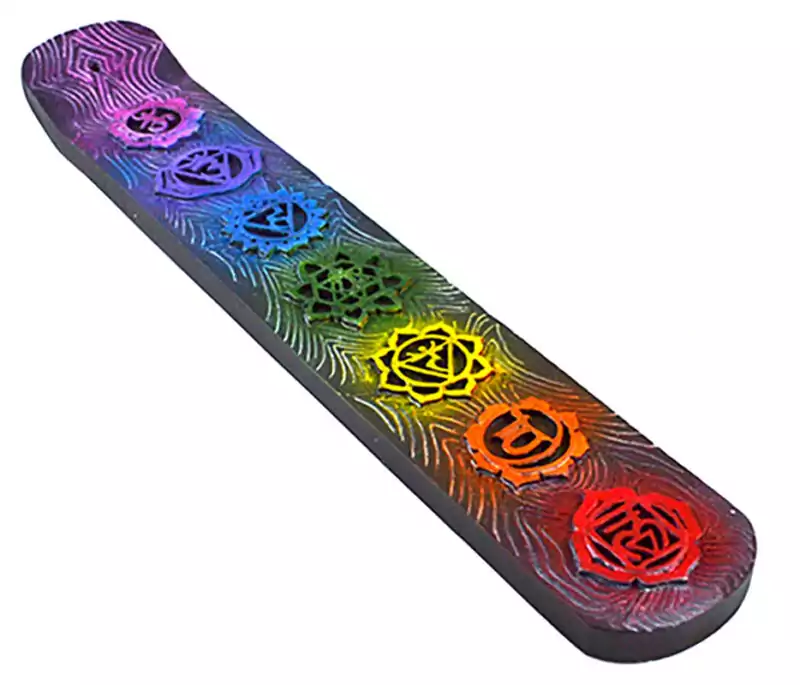
- Material: Cold cast resin with hand-painted chakra symbols
- Best For: Chakra meditation, daily incense practice, altar decor, energy work
A Burner Built Around the Map
The seven-chakra system originates in the tantric and yogic texts of ancient India, particularly the Sanskrit corpus associated with the Shaiva tradition, where each chakra (literally “wheel” or “circle”) marks an energy center along the sushumna nadi, the central channel running from the base of the spine to the crown of the head. The seven primary centers, from root to crown, are Muladhara, Svadhisthana, Manipura, Anahata, Vishuddha, Ajna, and Sahasrara. That’s the lineage this burner draws its visual language from.
This burner is made from cold cast resin, a process that mixes powdered mineral or stone filler into a resin base before it sets. The result is heavier and denser than standard molded plastic, with a surface that takes paint detail more cleanly. Each of the seven chakra symbols is painted in its corresponding color, red through violet, in proper sequence along the tray. It’s a straightforward, accurate representation rather than a decorative approximation. I carry this because the proportions are honest and the layout is actually usable. If you pair it with chakra-specific stick incense, the burner serves as both a tool and a visual anchor. You’ll find the matching incense in my stick incense burner collection, and if you’re building out a fuller practice space, my chakra and meditation products offer a range of complementary tools.
At 9.5 inches, it’s long enough to hold a full-length incense stick comfortably, with enough tray space to catch the ash without needing a separate catch dish. The hole is sized for standard commercial sticks. If you’re working with thicker hand-rolled varieties, test the fit before committing to a full burn session.
How to Use Your 7 Chakra Incense Burner
How to use the 7 Chakra incense burner for a focused meditation session.
- Set up your space
Place the burner on a heat-safe surface, ideally near your meditation spot. Orient it so the root chakra symbol faces toward you, grounding the sequence from base to crown as the smoke rises through the line.
- Light the incense stick
Hold your stick incense at the tip and light it with a flame. Let it catch for a few seconds, then blow it out gently so the tip glows. Insert the unlit end into the hole at the base of the burner and let the ash fall along the tray.
- Sit with the smoke
As the smoke rises, focus your attention on whichever chakra feels blocked. You can repeat a simple affirmation tied to that energy center, or just breathe and observe. Let the session last as long as the incense naturally burns down.
The Tarot Fellow Standard
I source this burner through a distributor with a long track record in the spiritual goods wholesale space. What I look for in a functional burner is simple: accurate proportions, paint that doesn’t flake after a few uses, and a hole that stays intact. This one holds up. The cold cast resin construction gives it a solidity that cheaper injection-molded burners don’t have, and the chakra colors are in the correct traditional sequence rather than a rearranged decorative pattern. That matters when the item is meant to support practice, not just sit on a shelf.
One practical note: cold cast resin can chip if dropped on hard flooring. It’s not fragile, but it’s not indestructible either. Keep it on a stable surface and it’ll last a long time. You don’t need to do anything special to clean it. A dry cloth after the ash cools is enough.
Frequently Asked Questions
It’s made from cold cast resin, which blends powdered stone or mineral filler with resin to create a dense, heavier feel than standard plastic. The chakra symbols are hand-painted in their traditional corresponding colors on top of the cast surface.
Yes, it works with standard stick incense. The hole fits most common diameters. If you use thicker hand-rolled sticks, test the fit first, as an overly tight hole can crack the resin over time with repeated forcing.
From base to crown: Muladhara (root, red), Svadhisthana (sacral, orange), Manipura (solar plexus, yellow), Anahata (heart, green), Vishuddha (throat, blue), Ajna (third eye, indigo), Sahasrara (crown, violet). All seven painted in their colors.
It works well as a visual anchor during seated practice. The sequential layout from root to crown gives you a built-in focal point for body-scan or chakra breathing work. It’s functional first and decorative second, which is what I look for.

Reviews
There are no reviews yet