
Quick Specs
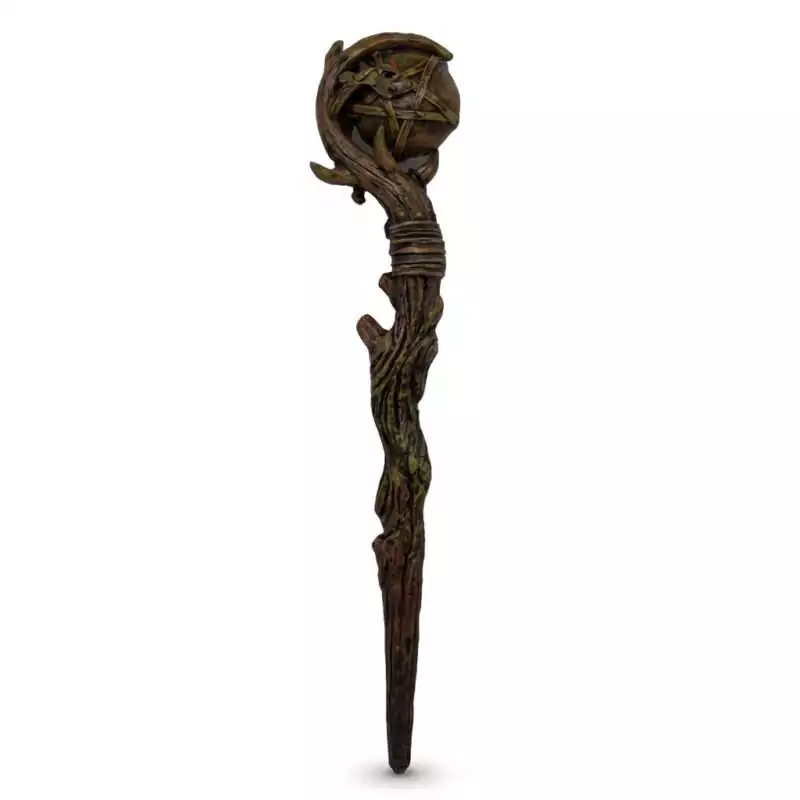
- Type: Ritual wand with pentagram design
- Size/Quantity: 9 inches length, single wand
- Best for: Directing energy, invoking elements, casting circles, altar work
The Wand as a Ritual Tool
The wand is one of the four classical elemental tools of Western ritual practice alongside the athame, chalice, and pentacle. Its documented use in ceremonial contexts stretches from ancient Egyptian priest-magicians, who carried rods as symbols of authority and divine will, through the Hermetic Order of the Golden Dawn in the late 19th century, which codified the wand as the Fire element tool of creative will, through Gerald Gardner’s Wiccan system and its widespread influence on contemporary Pagan practice. In Gardnerian tradition the wand is associated with the element of Fire or Air depending on the lineage, and it is used to invoke and direct energy outward toward a working rather than to cut or define boundaries.
The practical distinction between wand and athame is meaningful in actual ritual practice. An athame, as a blade, is understood to cut, sever, and define. It is used to cast the circle by drawing a boundary, to dismiss energies, and to work with precision on a specific targeted object or intention. A wand directs and projects energy in a more diffuse, inviting way; it is used to call in elemental forces, invoke deity, point toward an altar object to charge it, or sweep energy through a working space to activate it. Neither tool is superior; they serve complementary functions that a skilled practitioner uses deliberately.
The Pentagram and Its Elemental Symbolism
The pentagram carved or incorporated into this wand’s design is the five-pointed star that has served as a symbol of the five elements since at least the Pythagoreans of ancient Greece, who called it the Pentalpha. Each of the five points represents one element: Earth at the lower left, Water at the lower right, Fire at the upper right, Air at the upper left, and Spirit or Aether at the topmost point. In Wiccan and contemporary Pagan tradition, the upright pentagram with the Spirit point at the top represents the primacy of the spiritual over the material, and it appears on the classical pentacle altar tool for exactly this reason. Incorporating the pentagram into a wand connects the directing function of the wand to the elemental framework of the whole practice. For complementary altar supplies, including pentacle tiles and ritual tools, browse my collection.
The gnarled, natural wood character of this wand’s design reflects a crafting tradition that values the organic over the perfectly polished. In folk Wicca and hedgewitchery, wands cut from living or freshly fallen branches carry the energy of the tree species and the moment of harvest. The irregular surface texture provides grip and tactile feedback during ritual work, keeping the practitioner physically grounded even when directing high-focus visualization or ceremonial intention. At 9 inches, the wand fits comfortably in the hand without requiring an extended arm reach during circle casting or invocation.
How to Use 9 Inch Gnarled Pentagram Wand
How to use a pentagram wand for elemental invocation, energy direction, and ritual circle work.
- Invoke the Elements Before Ritual
Hold the wand in your dominant hand and face each cardinal direction. Point the tip toward each quarter and project an invitation to that element. The pentagram design reinforces the elemental framework as you work through the four directions.
- Direct Energy Toward Your Working
During spellwork or ceremony, extend the wand toward your altar, candle, or working space. Visualize focused intention traveling from your solar plexus, through the wand, and into the target. The wand functions as an extension of your directed will.
- Trace the Pentagram in Air
Extend the wand and trace a pentagram in the air, starting at the Spirit point and moving in the traditional invoking or banishing direction. The physical motion creates a kinesthetic anchor that reinforces intention more fully than visualization.
The Tarot Fellow Standard
I stock this wand because the pentagram integration makes it a complete elemental tool in its own right, not just a plain directing rod. The gnarled wood character gives it visual and tactile presence that a smooth-turned wand lacks for practitioners who prefer a more organic aesthetic in their tools. At 9 inches it is a versatile working length, long enough for confident extension and compact enough for close altar work. For additional ritual tools to complete your altar setup, my ritual supplies collection includes athames, pentacle tiles, and ceremonial accessories.
Frequently Asked Questions
A wand directs and projects energy outward in an inviting way; it is used for invoking elements, blessing, and charging objects. An athame is a blade that cuts and defines; used for casting circles, dismissing energies, and boundary work in ritual.
The pentagram represents the five elements: Earth, Air, Fire, Water, and Spirit. With Spirit at the top, it symbolizes spiritual authority over the material. Placing it on a wand connects the tool’s directing function to the elemental framework.
The wand is associated with Fire in the Golden Dawn tradition and many Wiccan lineages, representing creative will and transformation. Some traditions assign it to Air for directed thought. The association varies by lineage and individual practice.
Pass the wand through incense smoke (Air), briefly near a candle flame (Fire), sprinkle with water, and touch to salt or earth. State your intention. Many practitioners also charge new tools under a full moon and dedicate them in a brief ceremony.


Reviews
There are no reviews yet