


Quick Specs
- Stone: Amethyst
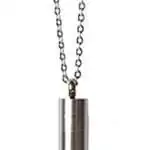
- Type: Crystal cage pendant on chain
- Chakra: Crown (Sahasrara), Third Eye (Ajna)
- Best for: Meditation, mental clarity, calm, stress relief
Amethyst: Crown and Third Eye Stone
Amethyst is a violet variety of quartz whose color originates from natural gamma radiation acting on iron inclusions within the crystal lattice during formation deep in the earth. The name derives from the ancient Greek word “amethystos,” meaning “not drunk,” a reference to the belief that the stone protected its wearer from intoxication and mental confusion. This association with mental clarity and protection of the mind has persisted across cultures, making amethyst one of the most consistently used stones in both folk magic and formal esoteric practice across millennia.
In contemporary chakra work, amethyst is paired with the crown chakra, Sahasrara, and the third eye, Ajna, the centers associated with higher awareness, intuition, and connection to spiritual states. Unlike rose quartz, whose energy is directed outward toward relationship and emotional healing, amethyst works inward, supporting stillness, clarity of mind, and the transition from anxious mental states into calm presence. Practitioners in Buddhist and Hindu meditation traditions, as well as Western ceremonial frameworks, have long used violet stones in contexts requiring focused inner attention.
The Cage Design: Worn Stone, Flexible Practice
This pendant uses a cage or chamber setting, meaning the amethyst sits inside a metal housing rather than being set in prongs or bezeled into a fixed mount. The practical consequence is that the stone is removable and replaceable. You can wear the amethyst for calm and clarity, then swap in a piece of black tourmaline for protection work or labradorite for psychic development, all with the same pendant body.
This differentiates the chamber pendant from the double terminated amethyst pendant, which features a fixed stone set in metal with points on both ends. The cage is more versatile; the double terminated is more structured, with a specific directional energy flow built into the form. Both are useful, and they complement each other rather than compete. If you’re choosing one as a starting point, the cage is better for practitioners who work with multiple stones across different intentions.
How to Use Amethyst Crystal Cage Pendant
How to wear and work with this amethyst cage pendant for crown chakra and meditation support.
- Load the Cage
Place a small amethyst point or tumbled stone inside the cage before wearing. Amethyst’s violet hue comes from natural gamma-ray interaction with iron inclusions in the quartz crystal matrix during formation.
- Position for Your Practice
Wear the pendant at the throat or above for crown and third eye work, or at chest height during meditation sessions. The closeness of the stone to the head supports the traditional use for clarity and calm.
- Swap Stones as Needed
Swap the amethyst for other stones as your practice evolves. The cage design accepts any small point or tumbled piece, making this one pendant adaptable to protection, grounding, or intuition-focused work.
The Tarot Fellow Standard
I stock the cage pendant alongside the double terminated amethyst pendant because they serve different needs. The cage is the right choice for practitioners who like to rotate stones, beginners building a first crystal kit, or anyone who wants maximum flexibility in a single piece of jewelry. The swappable design also makes it a better gift for someone who already has a small crystal collection and wants a way to wear their stones. Explore the full range in my stone and crystal pendant collection, and see my tumbled stones for small pieces to use inside the cage.
Frequently Asked Questions
Amethyst is iron-bearing quartz colored violet by natural gamma radiation during crystal formation. The word comes from the ancient Greek ‘amethystos,’ meaning ‘not drunk,’ reflecting its long history.
Amethyst is traditionally associated with the crown chakra, Sahasrara, and the third eye, Ajna. Worn on a chain, it supports meditation, mental clarity, and the reduction of anxiety and scattered thinking.
The cage version uses a wire or metal housing that holds a small loose stone, making the stone swappable. The double terminated version features a fixed point set in metal with terminations on both ends.
Amethyst is widely used to support sleep quality and deeper meditative states. Wearing it during evening wind-down or placing the pendant on a nearby bedside surface are both common practical applications.



Reviews
There are no reviews yet