
Quick Specs
- Brand: Llewellyn Publications
- Format: Trade Paperback
- Pages: 438
- Trim Size: 7 in x 10 in
- ISBN-13: 978-0-7387-8365-9
- Weight: 1.8 lb
Decoding the Language of Animal Messengers
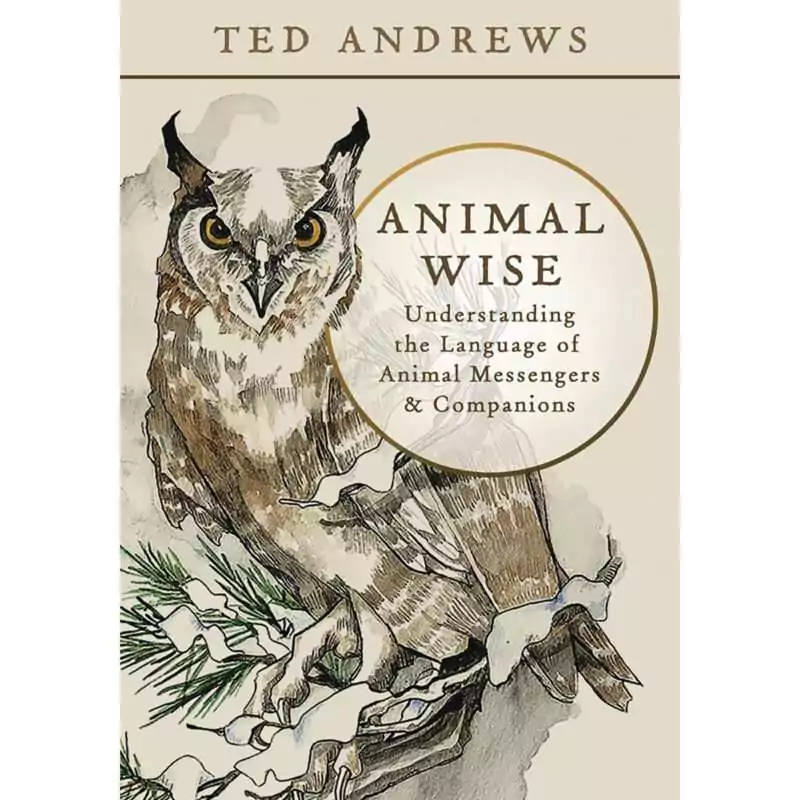
Ted Andrews spent decades studying the ways animals communicate meaning through appearance, behavior, and timing, and Animal Wise stands as his expanded follow-up to Animal Speak, the book that first introduced hundreds of thousands of readers to the idea that a hawk overhead or a fox at the tree line can carry a message worth reading. This current Llewellyn paperback edition runs 438 pages and gathers close to 200 animals that Andrews never covered in the original volume, from lesser-known birds and insects to creatures of the ocean that barely appeared in his earlier catalog. Rather than repeating ground already covered, Animal Wise pushes further into the animal kingdom, treating every species profile as its own small door into symbolism, folklore, and the personal significance an encounter might hold for you. The book is organized the way Andrews organized Animal Speak, so if you already lean on that volume you’ll recognize the format immediately: individual entries you can flip to the moment an animal crosses your path, plus surrounding chapters on how to actually work with the information rather than just look it up. Andrews frames every entry around the premise that nature is still speaking, whether through a bird that lands nearby at an unlikely moment or a creature that keeps reappearing in dreams. He treats each encounter as an invitation rather than a coincidence, and the text spends real time on how to slow down enough to notice what’s happening around you before reaching for a dictionary-style answer.
What sets this edition apart from the well-worn library copies still floating around is that it’s the current Llewellyn printing, so the trim size, page count, and binding match what you’ll actually receive rather than an out-of-print edition with different pagination. At 7 inches by 10 inches, it sits comfortably on a nightstand or altar table, thick enough at 438 pages to hold up to repeated flipping without the spine giving out early the way a lot of oversized paperbacks do. The scope goes well beyond common totem animals like wolves and owls, since Andrews built this volume specifically to reach the creatures his first book skipped, including a much larger treatment of ocean life. If you came to animal symbolism through Animal Speak and found yourself wanting more entries, this is the book built to answer that directly, and it works just as well as a starting point if you’d rather begin with the expanded catalog and go back to the original later. Either direction gets you the same underlying method: learning to read behavior, color, and circumstance as pieces of a message instead of background noise. For anyone building a working relationship with the natural world around their home, garden, or regular walking routes, having both books on the shelf turns an occasional interesting sighting into an ongoing conversation you can actually follow over time.
Practical Ritual Applications
Animal Wise works best as a reference you keep within reach rather than a book you read once and shelve. Keep it near the rest of your tarot and spirituality books so you can log an animal encounter right after it happens, while the details of the animal’s behavior, direction, and your own reaction are still fresh. Andrews built the entries around noticing patterns over time, so a single sighting matters less than what keeps showing up across weeks or months, and a dedicated journal page lets you track that the way a dream journal tracks recurring symbols. The book also pairs naturally with any ongoing pagan or nature-based practice built around seasonal awareness, since animal activity shifts with the wheel of the year and Andrews ties several entries to migration, mating, and hibernation cycles you can watch for locally. Use it before or after time outdoors, whether that’s a walk, garden work, or simply time spent near a window where birds and insects pass through, so the reading stays grounded in what you’re actually seeing rather than becoming abstract. It also works well as a shared reference if you lead or attend group workings, since a specific animal that shows up during ritual gives everyone present a concrete symbol to discuss instead of a vague impression.
How to Work With Animal Wise When an Animal Crosses Your Path
Here’s a simple approach for turning a chance animal encounter into something you can actually learn from using this book.
Here’s a simple approach for turning a chance animal encounter into something you can actually learn from using this book.
- Note the Encounter Immediately
Write down the animal, its behavior, and the exact circumstances as soon as you can after the encounter, before memory smooths out the details. Include the direction it came from and went, what it was doing when you first noticed it, and anything unusual about the timing, since Andrews treats these specifics as part of the message rather than incidental detail. A quick phone note works if you’re away from your journal, but transfer it over the same day while the sensory details are still sharp. The goal at this stage is capturing raw information, not interpreting it yet.
- Look Up the Entry and Read It in Full
Find the animal’s profile in Animal Wise and read the entire entry rather than skimming for a single keyword, since Andrews layers folklore, behavior, and symbolic meaning together instead of offering a one-line definition. If the animal doesn’t appear here, check whether it was covered in Animal Speak instead, since the two books were built to complement rather than duplicate each other. Pay attention to any mention of the animal’s typical behavior pattern, then compare it to what you actually observed, because a departure from normal behavior often carries more weight in Andrews’s system than a routine sighting.
- Connect the Symbol to What’s Happening in Your Life
Sit with the entry and ask what’s happening in your life right now that the animal’s traits or symbolism might speak to, rather than forcing a literal interpretation. Andrews frames this step as a conversation rather than a lookup, so give yourself a few minutes of quiet before deciding what the encounter means for you specifically. Log your conclusion alongside the original note, and revisit it if the same animal reappears later, since a repeated visitor over weeks or months usually points to something worth watching closely.
Tarot Fellow Standard
I brought Animal Wise into the shop because Animal Speak alone only gets you so far once you start noticing how often the natural world around you has something to say. Ted Andrews built a genuinely useful second volume here rather than a reprint with a new cover, and the fact that this Llewellyn edition matches the current 438-page printing matters to me, since older secondhand copies floating around online don’t always match the page count or entry list you’re expecting. I stock it alongside the rest of my pagan and nature-based titles for anyone building a working relationship with the wildlife around their own home rather than treating animal symbolism as an abstract idea. If you already own Animal Speak, this is the natural next book for your shelf.
Frequently Asked Questions
Reading Animal Speak first gives you the foundation, since Animal Wise is written and marketed as its sequel and assumes you already have the base method for reading animal behavior and symbolism. That said, Animal Wise works as a standalone reference if you start here, because each entry still explains itself in full rather than pointing you back to the earlier book. The real difference is coverage: Animal Speak profiles the animals most people encounter first, while Animal Wise fills in close to 200 more, including a much larger ocean life section.
Animal Speak came first and covers more than 100 animals, birds, insects, and reptiles that most readers encounter regularly. Animal Wise followed as the expanded sequel and adds close to 200 additional animals the first book left out, along with a substantially larger section on ocean life compared to Animal Speak’s brief fish coverage. Both books use the same entry format and underlying method, so owning both gets you closer to full coverage of the animal kingdom rather than duplicate information.
Most traditions point to the same starting method: pay attention to which animals show up repeatedly in your waking life or dreams, rather than picking one that simply appeals to you. Andrews builds Animal Wise around this same principle, treating a spontaneous, surprising encounter as more meaningful than one you go looking for. Once you notice a pattern, look up that animal’s entry and compare its traits and behavior to what’s happening in your own life at the time, then keep a note of it so you can track whether it keeps returning.
A repeated appearance is generally treated as more significant than a one-off sighting, since it suggests the message hasn’t landed yet or the situation it relates to is still active. Animal Wise approaches this by having you weigh both the animal’s traditional symbolism and what was happening in your life each time it showed up, since the pattern across multiple encounters usually points to the actual message more clearly than any single sighting could. Writing down the date and circumstances each time makes that pattern much easier to spot.
No. Animal-Wise Tarot is a separate 78-card tarot deck that Ted Andrews also created, built around full-color animal photographs instead of traditional Rider-Waite-style imagery, with renamed suits. Animal Wise, the book on this page, is a 438-page paperback reference with no cards included. If you’re looking for the tarot deck rather than the book, search for Animal-Wise Tarot specifically, since the similar titles are easy to mix up while shopping.




Reviews
There are no reviews yet