

Quick Specs
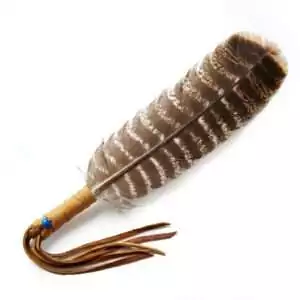
- Type: Natural patterned ritual smudging feather
- Size: 12″
- Size/Quantity: Single feather, 6 to 12 inches in length (natural variation)
- Best for: Directing sacred smoke, Air element altar work, smudging ceremonies, ritual fan use
Barred Feathers in Smudging and Ceremonial Practice
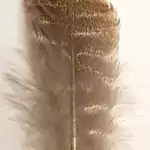
Barred feathers are characterized by their crossbar pattern of alternating light and dark bands running perpendicular to the feather shaft, created by rhythmic variation in melanin deposition during feather growth. This natural patterning appears in many bird species, including various hawks, owls, and domestic fowl, and has been prized in ceremonial traditions for its visual distinction from plain feathers. The alternating bands create a sense of movement and rhythm, qualities that practitioners associate with the dynamic, directional energy of Air in elemental ritual work.
Feathers as ritual tools for directing smoke have deep roots in Indigenous North American ceremonial practice, where eagle, hawk, and turkey feathers are used to fan sacred smoke toward participants and sacred objects during purification ceremonies. Contemporary Wiccan, pagan, and eclectic practitioners have widely adopted the practice of using feathers as smoke-directing tools, with the feather representing the Air element and the smoke representing the transformation and transmission of intention. A genuine, naturally patterned feather adds a layer of authentic natural material to this practice.
Working with the Barred Wing Feather
At 6 to 12 inches, this feather falls in a practical middle range: larger than the smallest ritual feathers but compact enough for personal smudge ceremonies and travel altar setups. Natural size variation is inherent to genuine feathers and each piece is unique in exact length, barring density, and shaft thickness. The striking black-and-white barred pattern makes this feather visually prominent on an altar, functioning as both a working tool and a decorative piece between rituals. Store it flat or upright to protect the vane structure.
How to Use a Barred Wing Smudging Feather
Three methods for using and preserving a barred wing smudging feather as a ritual Air element tool.
- Fan Sacred Smoke
Light your sage bundle, palo santo, or incense and allow it to smolder. Hold the feather by the quill end and use smooth, sweeping motions to direct smoke around a person, object, or space. Work methodically to ensure thorough and even coverage.
- Air Element Altar Placement
Place the feather on the East quarter of your altar to represent the Air element. Many Wiccan traditions assign Air to the East, the direction of new beginnings and mental clarity. The barred pattern adds authentic natural material to the work.
- Storage and Preservation
Store the feather flat in a shallow box or hang it vertically in a dry location. Keep it away from direct sunlight, which can fade the barring, and from moisture, which causes the vanes to mat. Handle gently to preserve the natural barb alignment.
The Tarot Fellow Standard
I carry this feather because genuine natural patterning is worth having on the altar. The barred pattern is visually striking in a way that plain feathers are not, and it comes from natural material rather than dye. Find it alongside other smudging accessories in my shells, burners, and feathers accessories section, and pair it with sage or palo santo from my sage and smudge sticks collection.
Frequently Asked Questions
A barred feather has alternating light and dark crossbands perpendicular to the shaft, produced by rhythmic variation in melanin during feather growth. This natural patterning creates a distinctive look prized in ceremonial practice for centuries.
These feathers range from 6 to 12 inches due to natural variation between specimens. Each piece is unique in exact size, barring density, and shaft thickness. This size range suits personal smudging ceremonies, travel altars, and compact ritual use.
Hold the feather by the quill end and make long, sweeping strokes to direct smoke from a burning sage bundle or incense around a person or space. Work methodically, using the feather to guide smoke deliberately to the areas you are cleansing.
This is a genuine natural feather with authentic barred patterning from the bird’s own plumage. The barring is produced naturally, not dyed or painted. Natural variation in pattern, size, and shaft thickness between individual feathers is expected.


Reviews
There are no reviews yet