
Quick Specs
- Brand: Weiser
- Author: Elwynn Green
- Format: Paperback
- Pages: 224
- Dimensions: 6 in x 9 in
- ISBN-13: 978-1-57863-928-1
- Publication Year: 2026
- Weight: 0.7 lb
Inside a Book of Liminal Witchcraft
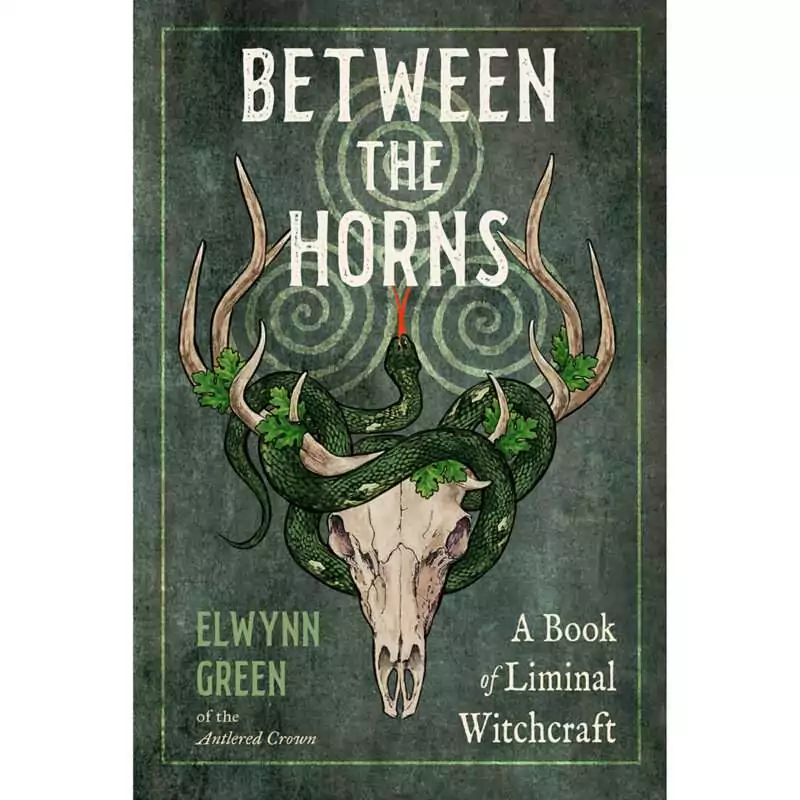
Between the Horns takes its title from an old witch’s image: the space held between the horns of the goat, the crescent moon, or the standing stag, the narrow gap where one thing turns into another. Elwynn Green uses that image as a working definition of liminal witchcraft, a practice built around thresholds, transitions, and the in-between hours and places where the veil between worlds runs thin. Doorways, crossroads, dusk, the turn of the year: these are the raw material the book asks you to work with.
Green writes from a family line of English mediums and witches, four generations deep, and from years spent as an archaeologist excavating Northern European prehistoric sites before he turned to writing and teaching full time. That background shows in how the 224-page paperback is built. Rather than starting with aesthetics or lore recitation, it opens with the history and origins of the working itself, then moves through complex energy workings before asking you to turn the same tools on your own shadow material and the taboos that keep so many beginners stuck at the threshold instead of walking through it.
The back half of the book shifts into Green’s own spellcraft, workings pulled directly from his personal practice rather than generic templates. He hosts The Antlered Crown podcast with his wife Amanda and has written for the Museum of Witchcraft’s Enquiring Eye and for Witchology, and that same teaching voice carries through the chapters here: direct, unromantic about what the craft actually asks of you, and more interested in giving you a repeatable practice than a performance.
What sets this apart from a general spellbook is the throughline of heuristic witchcraft, Green’s own term for a self-testing, experience-first approach to magic. Instead of memorizing someone else’s correspondences, you’re walked through a method for building and refining your own, checking each working against what actually happens when you cast it rather than against what a book insists should happen. That structure makes the material useful whether you’re standing at the very start of a magical path or already have years of practice and want a framework for organizing what you’ve picked up along the way.
Liminal witchcraft as Green presents it is not a closed or lineage-locked tradition. It draws on folk magic, ceremonial structure, and personal gnosis, and it asks you to locate your own thresholds rather than adopt his wholesale. The chapters on facing the self are the most demanding in the book: Green treats shadow work as inseparable from spellcraft, arguing that workings aimed outward tend to stall until the witch has done the harder work of looking inward first.
For a shop built around witches at every stage, this is the kind of book that rewards a slow read. It’s dense enough to sit beside your working notebook for months, and structured so you can return to a single chapter, on facing taboo or on complex energy work, without rereading the whole thing.
Practical Ritual Applications
Between the Horns works best as a book you dog-ear rather than shelve. Read the origins and history chapters first if you’re new to spellcraft and witchcraft generally, since Green assumes you’ll want context before technique. If you already have a working practice, you can skip straight to the energy work and spellcraft chapters and treat the earlier material as reference.
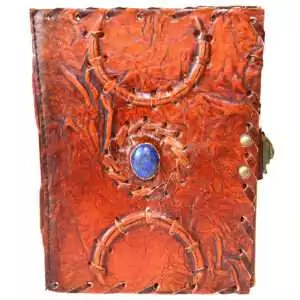
The liminal framing gives you natural points to put the book’s exercises into practice: dusk and dawn, the turn of the seasons, doorways and crossroads in your own home or neighborhood. Green’s exercises on facing the self pair well with a dedicated journal, since the book asks you to track what happens when you test a working rather than take correspondences on faith. Keep the book near wherever you do that testing so you can note results against the method as you go.
Because the approach is self-testing rather than tradition-locked, it sits comfortably next to other titles in a broader witchcraft and tarot library without contradicting them. Pair it with a devotional candle for the liminal hours it centers on, or read it alongside a beginner-friendly primer if the energy work chapters move faster than feels comfortable at first.
How to Work With Between the Horns
Here is a straightforward way to move through the book if liminal witchcraft is new to you.
Here is a straightforward way to move through the book if liminal witchcraft is new to you.
- Read the History and Origins Chapters First
Begin with the sections on the history and origins of the working before jumping to spellcraft. Green builds his method on a specific understanding of what liminal witchcraft is and where it comes from, and the later energy work only makes sense once you know the reasoning behind it. Reading in order also means you’ll meet the term heuristic witchcraft on Green’s own terms, as a testing method, rather than mistaking it for a fixed set of correspondences to memorize. Give yourself a session or two just for this section before moving on.
- Practice the Energy Workings Before the Self-Facing Chapters
Work through the energy exercises in order and give each one real time rather than reading straight through to the end. Green’s heuristic approach depends on you testing a working and noting what actually happened, so treat a notebook as required equipment alongside the book itself. Doing the energy chapters first builds the skills the later shadow work chapters lean on, since facing taboo material is easier once you already trust your own working method. Rushing this stage tends to make the self-facing chapters feel heavier than necessary.
- Adapt the Spellcraft Chapters to Your Own Practice
Treat the final spellcraft chapters as a demonstration of Green’s method rather than a script to copy exactly. He pulls these workings from his own family line and personal practice, so use them as a model for building versions rooted in your own liminal spaces, whatever doorway, crossroads, or in-between hour you keep returning to. Revisit the book’s earlier chapters on facing the self whenever a working stalls, since Green treats that as the most common reason a spell fails to land.
Tarot Fellow Standard
I brought Between the Horns into the shop because most of what gets marketed as beginner witchcraft either oversimplifies the craft or dresses it up as aesthetic without much underneath it. Elwynn Green’s background, four generations of English mediums and witches plus years spent excavating prehistoric sites, gives this one a different weight. I like that it doesn’t ask you to take his correspondences on faith. The heuristic method he teaches, testing a working and adjusting based on what actually happens, is something you can apply no matter what tradition you already practice. I stock it as a foundation text for witches starting out and as an organizing framework for readers who already have years of practice behind them.
Frequently Asked Questions
Liminal comes from the Latin limen, meaning threshold, and in witchcraft it refers to spaces, times, or states caught between two conditions rather than settled in either. Doorways, crossroads, dusk and dawn, the turn of a season, and the edge of sleep all count as liminal because the boundary between one thing and another feels thin there. Practitioners who focus on this territory, sometimes called liminal or hedge witches, treat those in-between points as places where magical work runs stronger and where contact with the unseen comes easier. Between the Horns builds its entire method around locating and working these thresholds rather than treating them as a side note to a wider practice.
Between the Horns works as a first book if you want a grounded, no-nonsense introduction rather than an aesthetic-first one, since Elwynn Green opens with the history and origins of the working before moving into practice. It also holds up for readers with existing experience, because the heuristic method it teaches, testing a working against what actually happens rather than memorizing fixed correspondences, gives you a framework rather than a fixed script. New readers should expect to spend real time on the early chapters before reaching the spellcraft section, since the book is built to be read in order rather than skimmed for isolated workings.
Heuristic witchcraft is the term Elwynn Green uses for the method taught in Between the Horns: a self-testing, experience-first approach where you try a working, observe what actually happens, and refine your practice from those results rather than accepting someone else’s correspondences as fixed. It is not a separate tradition so much as a way of approaching whatever tradition you already work in. Green developed it as an alternative to memorization-heavy teaching, and the book walks you through applying it across energy work, shadow work, and personal spellcraft.
Elwynn Green is an English witch who describes himself as the fourth generation in a family of mediums and witches, known particularly for divination and spiritual work. Before writing, he worked as an archaeologist studying Northern European prehistory and excavating sites in and around the UK. He has written for publications including the Museum of Witchcraft’s Enquiring Eye and Witchology, and he co-hosts a podcast called The Antlered Crown with his wife Amanda. Between the Horns, published by Weiser Books, is his approach to teaching practical, tradition-rooted witchcraft to a general audience.



Reviews
There are no reviews yet