
Quick Specs
- Type: Dragon pen with dragon-head holder
- Size: 7 inches
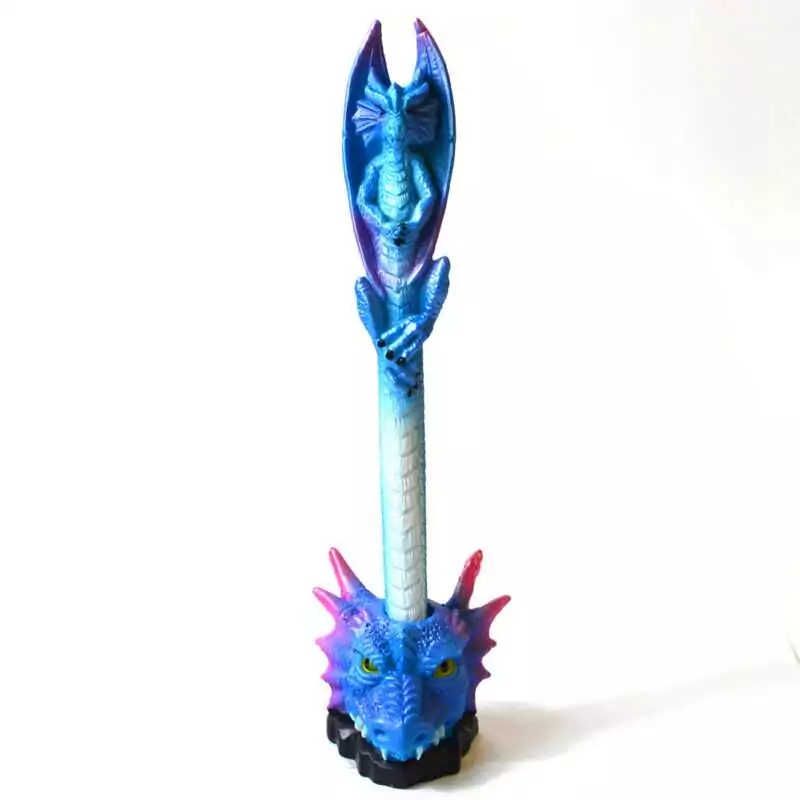
- Color: Blue
- Design: Winged dragon seated on the pen; royal blue dragon-head holder with magenta horns
- Best for: Grimoire and journal writing, evening desks, bookshelf display, dragon-themed gifts
A Blue Dragon Shaded from Cobalt to Pale Ice
The pen’s dragon is cobalt blue, with a lighter turquoise belly and violet on the inside of its raised wings, so the wing membranes read purple where they meet the blue body. It sits still, hands clasped and feet hooked over the barrel, with fins flaring from either side of its head under a short crest. Below it the barrel shades from sky blue to nearly white, with the scale ridges picked out in pale highlights like frost along a spine. The holder’s head is a deeper royal blue, speckled across the brow. Its eyes are yellow-green, its fangs a pale teal, and its horns and cheek fins run from blue into magenta. A black rock slab forms the base, and the pen stands in a round socket between the horns. The range is wide, from saturated cobalt on the head to almost white on the barrel, and it gives the long pen a cool, gradual fade.
Blue and violet give this dragon a night-sky look. Under a desk lamp or beside a dark journal, the cobalt head and violet wings look at home, and the pale barrel catches the light and draws the eye up toward the winged dragon on top. Blue and violet also sit next to each other on the color wheel, which is why the shift from the blue body to the purple wing membranes looks smooth and not striped. The magenta on the horns and the yellow-green eyes keep the cool palette from going flat, so the head in the holder looks sharp and alert. Cool colors also sit well with the usual things on a writing table: a dark leather journal, a brass lamp, a deck in a black box, a mug of tea. Placed among them, the pen looks chosen and not left over from an office drawer.
Practical Ritual Applications
Reach for it whenever the writing matters: a grimoire, a Book of Shadows, a dream journal, or a log of your readings. If you’re gathering supplies for a first grimoire, my parchment paper and stationery pair paper with a pen like this. The cool blue and violet suit an evening desk, so it works well for journaling under a lamp. Keep a spare notebook beside it for quick notes during readings, so the pen has a job between longer journaling sessions. When you’re not writing, leave the pen standing in the holder, and it doubles as a conversation piece on a bookshelf or a home office desk. As a gift, it suits a reader who already has a shelf of fantasy novels.
How to Display and Use Your Blue Dragon Pen
Stand it where you can reach it and keep the pale barrel clean, and the set takes care of itself.
- Place the holder on a level surface
Put the dragon-head holder on a flat, stable surface where you write, such as a desk, a reading table, or a shelf at hand height. Lower the pen into the socket until it stands straight. Keep the set away from candle flames, incense, and any spot where a sleeve or a cat could knock it over.
- Try a few lines first
Before you write in a good journal, test the pen on scrap paper. Check that the ink starts and flows evenly, and find the place on the barrel where your fingers rest best. The sculpted dragon on top gives the pen a different balance from a slim pen, so a short test saves a smudged first page.
- Dust the pale barrel and store it upright
Return the pen to its holder after each session. Wipe the pale barrel and the dragon's wings with a soft, dry cloth, and use a dry brush in the creases of the scales and horns. Keep the set out of strong, direct sunlight so the blues and violets stay vivid.
The Tarot Fellow Standard
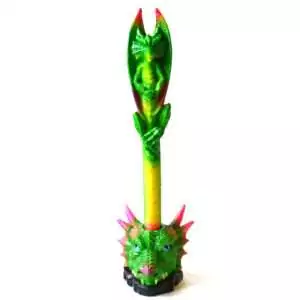
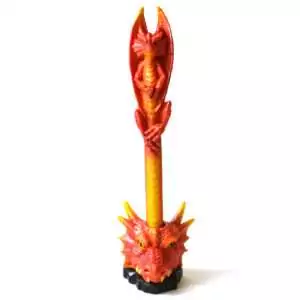
I stock the blue dragon pen because its colors run in order from top to bottom: cobalt on the winged dragon, a pale barrel, then royal blue and magenta in the holder’s head, so the set reads as one design and not as separate parts. Cool colors suit a night-time desk and a dark journal. The same sculpt comes in red and in green, so you can choose the one that fits your altar or desk. For other dragon pieces, browse my dragon collection.
Frequently Asked Questions
No, though the names overlap. The Azure Dragon, Qinglong, is one of the Four Symbols of Chinese constellations and stands for the east and spring. Its name literally means blue dragon, and the same character can mean green. Chinese tradition also pairs dragon kings with the four seas by color, and the East Sea's king carries the azure, or blue-green, association. A winged blue dragon like this one comes from the European style, which is a different tradition.
Yes, the constellation Draco, whose name is Latin for dragon. It is the eighth-largest constellation and one of the 48 that Ptolemy listed in the second century, and it never sets for observers far enough north. Its star Thuban served as the northern pole star from 3942 BC to 1793 BC, and the name Thuban comes from an Arabic word for a large snake.
In the legend, the dragon demands tribute from a town, including human sacrifices, and George kills it. The oldest known record is a Georgian text of the eleventh century, and earlier tellings gave the story to Saint Theodore Tiro. The Golden Legend, compiled in the 1260s, spread it across Western Europe and set it in Silene, in what it called Libya.



Reviews
There are no reviews yet