

Quick Specs
- Type: Ritual athame
- Size: 8.5″
- Size/Quantity: 8.5 inches overall, approx. 3-inch blade
- Best for: Wiccan altar work, ceremonial magic, casting circles, directing energy in ritual
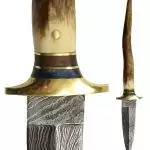
Damascus Steel and Bone Handle: Materials with History
Damascus steel is recognized by its characteristic watered or layered pattern, produced by forge-welding multiple steel types together and drawing out the resulting billet. The visual texture varies per piece, making each athame unique. Historically, Damascus-pattern blades were prized across the Middle East, South Asia, and Europe for their combination of strength and flexibility. In modern ritual knife-making, the pattern carries aesthetic weight, lending the blade an antique and ceremonially serious appearance that suits altar work.
The handle is fashioned from natural bone. Because bone is a natural material, each piece varies in color and grain, meaning no two of these athames are identical. The bone material connects the blade to traditional ritual tool-making, where natural materials, stone, wood, horn, and bone, were preferred over synthetic alternatives for their grounding quality. At 8.5 inches overall with a compact blade, this athame sits comfortably in the hand and stores easily on smaller altar setups.
The Athame in Wiccan and Ceremonial Practice
The athame is the ritual knife of Wicca and many Western ceremonial traditions, associated with the element of air or fire depending on the tradition. It is never used for cutting physical materials; its function is entirely symbolic and directional, used to cast circles, invoke the quarters, draw sigils in the air, and direct energy during ritual workings. The blunted or sharply pointed tip matters less than the practitioner’s intent and the tool’s consecration within their practice.
For practitioners choosing an athame at the 8.5-inch scale, this piece suits both dedicated altar display and active use during ritual. The Damascus blade pattern catches the light during candlelit workings in a way that plain steel does not, which many practitioners find adds presence and gravitas to the ceremonial moment. Browse my ritual athame collection to compare styles and blade types available.
Note: this athame cannot be shipped to Massachusetts or California due to state regulations on bladed ritual implements. Please verify your local laws before ordering.
How to Use the Bone Damascus Athame
Guidance on consecrating, using in circle-casting, and maintaining a Damascus athame in regular ritual practice.
- Consecrate Before First Use
Before using a new athame in ritual, cleanse it with incense smoke and consecrate it by anointing the blade with a small amount of ritual oil while stating your intent. Many practitioners dedicate the tool to a specific deity or elemental force.
- Cast a Circle with the Blade
Hold the athame in your dominant hand and move clockwise, pointing the blade outward at roughly waist height. Visualize energy flowing from the tip to form the boundary of your ritual circle as you complete the full circumambulation.
- Store and Maintain the Athame Respectfully
Store the athame wrapped in cloth or in a dedicated pouch on your altar when not in use. Clean the Damascus blade with a dry cloth after handling to prevent moisture damage, and re-consecrate periodically to maintain its ritual alignment.
The Tarot Fellow Standard
I carry this Bone Damascus Athame because the combination of Damascus-patterned steel and natural bone handle puts a genuinely distinctive ritual tool on the altar without the price point of a custom piece. Each athame varies because the materials are natural, which is a feature rather than a flaw in a tradition that values individuality in sacred tools. For altar supplies to accompany this athame, explore my full altar supplies collection.
Frequently Asked Questions
A Damascus athame is a ritual knife used to cast circles, invoke elemental quarters, draw sigils in the air, and direct energy during magical workings. It is never used for cutting physical materials; its function is symbolic and directional.
Yes. The handle is made from natural bone, meaning each piece varies in color, grain, and exact shape. No two are identical. This variation is a characteristic of the material and contributes to the individuality of the ritual tool.
No. This athame cannot be shipped to Massachusetts or California due to state regulations governing bladed implements. Buyers in those states should verify local laws before ordering any ritual blade from this or any other retailer.
Wipe the Damascus blade with a dry cloth after handling to prevent moisture and fingerprint corrosion. Store it wrapped in cloth when not in use. Do not soak or submerge the blade, as prolonged moisture exposure can damage the pattern and steel.


Reviews
There are no reviews yet