


Quick Specs
- Authors: Daniel Harms and S. Aldarnay
- Publisher: Llewellyn Worldwide
- Format: Hardcover, 648 pages
- Best for: Scholars of occult philosophy, ceremonial magic practitioners, and serious students of Western esoteric history
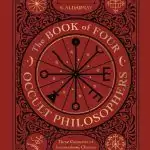
Three Centuries of Occult Philosophy in One Volume
The Book of Four Occult Philosophers presents primary texts from three centuries of Western occult philosophy, edited and contextualized by Daniel Harms and S. Aldarnay. Harms is a researcher and writer known for his scholarly work on grimoire traditions, including his contributions to Keys of the Gateway of Mysteries and his role in bringing rigorous historical analysis to texts that popular occultism often treats loosely. Aldarnay brings a practitioner perspective that complements the archival approach, grounding the philosophical content in operative magical context.
The volume is published by Llewellyn Worldwide and runs to 648 pages in hardcover format, with dimensions of approximately 7.28 inches by 10.16 inches. That scale reflects the ambition of the project: this is not a general introduction to occultism but a serious document collection with editorial apparatus designed for readers who want to engage with source material rather than secondary summaries. The hardcover binding suits a text likely to be consulted repeatedly over years of study.
Western Occult Philosophy: Historical Context and Scholarly Value
The four philosophers referenced in the title draw from the tradition of Renaissance natural magic, Neoplatonism, and Hermeticism that shaped European occultism from the 15th century onward. Figures such as Heinrich Cornelius Agrippa, Marsilio Ficino, Giovanni Pico della Mirandola, and Giambattista della Porta established frameworks for understanding the relationship between the divine, the natural world, and human magical action that continued to influence occult practice through the Rosicrucian movement, Freemasonry, and the 19th-century revival associated with the Hermetic Order of the Golden Dawn.
This book addresses a gap common in the popular occult market, where historical synthesis is often thin and primary sources are rarely made accessible with proper scholarly framing. Readers who want to encounter the actual philosophical arguments that underpin modern Western magic will find this far more rewarding than another introductory survey. It stands apart from the beginner-oriented introductory texts I also stock, and belongs alongside Agrippa’s Three Books on the serious occultist’s shelf.
How to Use This Book
How to approach this scholarly primary source collection for maximum value as a student or practitioner of Western occultism.
- Read the Editorial Introduction First
Before diving into the primary texts, read Harms and Aldarnay’s editorial introduction and notes carefully. This contextual framing places each text within its historical moment and traces its influence on subsequent Western magical traditions.
- Cross-Reference With Primary Sources
Use this volume alongside standard editions of Agrippa’s Three Books of Occult Philosophy and related Renaissance magical texts. It is most valuable as part of a reading sequence that builds familiarity with primary sources before this anthology.
- Apply Philosophical Frameworks to Practice
For practitioners of ceremonial magic or Hermeticism, these arguments illuminate reasoning behind ritual structures and correspondences. Reading primary sources deepens understanding of why specific frameworks persist in Western magical tradition.
The Tarot Fellow Standard
I stock this title because the serious occultist’s library cannot run on introductory texts alone. The Book of Four Occult Philosophers by Harms and Aldarnay is the kind of book that earns permanent shelf space alongside Agrippa and Ficino rather than being read once and set aside. The scholarly apparatus makes dense primary material navigable without dumbing it down. If your occult reading practice extends into the history and philosophy that underpin ceremonial work, this is an essential acquisition. For other titles at this level, browse my esoteric and occult books.
Frequently Asked Questions
The four philosophers draw from Renaissance natural magic and Hermeticism, including Agrippa, Ficino, Pico della Mirandola, and della Porta. Harms and Aldarnay contextualize each within three centuries of Western occult philosophical history.
No. This is a scholarly primary source collection for students with grounding in Western esoteric history. Readers new to occultism will find it more rewarding after working through foundational texts on ceremonial magic and Hermeticism first.
This edition is hardcover, published by Llewellyn Worldwide, measuring 7.28 inches by 10.16 inches and running 648 pages. The large format and hardcover binding suit a reference text expected to be consulted repeatedly over years of study.
Where Agrippa’s Three Books is a single Renaissance synthesis by one author, this is an edited anthology across multiple thinkers and three centuries. It complements rather than replaces Agrippa and belongs alongside it in any serious library.
Reviews
There are no reviews yet