


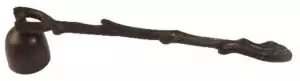
Quick Specs
- Type: Candle Snuffer
- Material: Brass
- Style: Renaissance, featuring a dimpled decorative bell
- Best for: Historical-style altars, ceremonial magic, ornate ritual setups, Hermetic practice
Ornate Brass Snuffer with Historical Renaissance Design
The Brass Renaissance candle snuffer takes its design cues from the ornate metalwork that characterized European household and ecclesiastical accessories during the 15th through 17th centuries, when decorative dimpling, repoussé textures, and bulbous bell forms were common in high-status brass goods. The dimpled bell on this snuffer is not merely decorative; the indentations interrupt the interior surface and create slightly more turbulence in the air pocket trapped beneath the cone, which can help the flame extinguish a fraction more quickly. More practically, the textured surface resists showing fingerprints and minor wear as readily as a polished plain bell would.
Brass became the standard material for candle snuffers in European noble and clerical households during the Renaissance precisely because it was workable, durable, and could be polished to a near-gold brilliance associated with wealth and sacred significance without the expense of actual gold. Renaissance-era alchemists and Hermeticists, whose visual culture influenced later occult tradition significantly, worked extensively with brass instruments in their laboratories and considered the metal symbolically tied to Venus and transformative processes. A snuffer in this style places a practitioner in visual continuity with that lineage.
Aesthetic Fit for Ceremonial and High-Magic Altars
The Renaissance snuffer is well matched to altars in the ceremonial magic tradition, where the aesthetic tends toward historical European high-magic, grimoire-referenced tools, and the visual vocabulary of Solomonic or Hermetic practice. It suits practitioners drawn to the Golden Dawn aesthetic, Thelemic altar setups, or the broader European grimoire tradition, where ornate and historically resonant objects carry cultural weight. It also pairs naturally with Renaissance faire enthusiasts or historical practitioners who want their tool kit to reflect the period from which much of modern Western occultism draws its symbolic vocabulary.
Find matching brass altar accessories to complete a cohesive look by visiting my altar supplies collection, which includes chalices, cauldrons, and offering bowls. For a complete candle tool set in a historical style, also browse my candle holders and snuffers range.
How to Use the Brass Renaissance Candle Snuffer
Use this historically styled brass snuffer to close ritual fire work with a deliberate, intentional gesture.
- Position With Intention
Pause before extinguishing to mentally mark the closing of the ritual. In ceremonial magic, the act of snuffing each candle signals the closing of elemental quarters or the dismissal of invoked forces. Make the gesture deliberate and intentional.
- Lower the Dimpled Bell Fully
Bring the dimpled bell straight down over the flame until it fully covers the wick. The Renaissance bell fits standard taper and votive candles. Hold in place until both the flame and any wick glow are fully out, which takes three to five seconds.
- Polish and Store Properly
Brass develops a warm living patina with regular use. If you prefer a bright finish, buff the snuffer periodically with a brass polish cloth. Avoid storing brass tools near salt, vinegar, or damp materials that accelerate corrosion between uses.
The Tarot Fellow Standard
I stock the Renaissance snuffer specifically for practitioners whose altar aesthetic skews toward the historical and ornate. It reads as a proper period tool rather than a novelty, and it holds up well with regular use. The dimpled bell is more visually interesting than a plain cone at the same price point, which matters when the snuffer is displayed on the altar between workings. For practitioners assembling a complete ceremonial kit, my ritual supplies collection has additional tools suited to this style of practice.
Frequently Asked Questions
Renaissance-style snuffers reference 15th to 17th century European decorative metalwork: dimpled bells and warm brass. This style bridges functional altar tools and the period objects favored in historical occultism and ceremonial magic traditions.
The dimpling adds Renaissance texture and interrupts the interior bell surface, helping trapped air extinguish the flame more efficiently. The textured surface also resists fingerprints and minor wear better than a smooth polished bell does.
Brass is historically the most common material for altar snuffers: workable, durable, and warm-toned. Silver is more costly and carries moon associations. Pewter is softer. For most ritual uses, brass is the most practical and versatile choice.
Yes. The dimpled bell fits standard taper and small to medium pillar candles. For wide-wick pillars, confirm the bell fits before purchasing. The handle length gives comfortable reach for most altar setups without requiring you to lean over flames.





Reviews
There are no reviews yet