

Quick Specs
- Type: Ritual caftan / ceremonial garment
- Size/Quantity: 3 ft square, V-neck, one size
- Best for: Pagan ritual, Green Man ceremonies, seasonal celebrations, altar work
The Green Man Symbol in Ritual Clothing
The Green Man is one of the oldest and most enduring symbols in the Western esoteric tradition, a foliate face wreathed in leaves that appears carved into medieval churches, Roman temples, and Celtic stonework from Britain to the Levant. He represents the wild, regenerative force of nature, the cycle of growth and decay that underlies all agricultural and animist spirituality. In contemporary Pagan and Wiccan practice, the Green Man is invoked at Beltane, Litha, and the autumn equinox as an embodiment of the masculine divine in its most primal, earth-bound form.
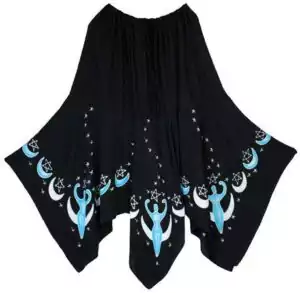
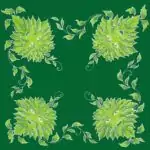
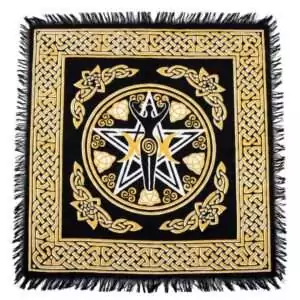
This caftan is constructed from two Celtic Moon and Star altar cloths sewn together with a V-neck opening, making it a garment that doubles as wearable altar cloth. The Green Man image appears on each corner of the square, front and back, so the symbol travels with you through the ritual space rather than sitting static on the altar. The 100% rayon batik fabric drapes in the loose, flowing style traditional to ceremonial garments across many cultures, from Sufi robes to Hindu dhoti-style wraps.
Ritual Garment Tradition and Practical Notes
Ritual clothing serves a practical psychological function: changing into dedicated garb signals to the subconscious that ordinary time has ended and sacred time has begun. Many Wiccan covens, solitary hedge witches, and Celtic reconstructionist practitioners keep specific garments solely for circle work, sabbat celebrations, and devotional rites. The loose, one-size-fits-most cut of this caftan makes it accessible to practitioners of varying body types, and the soft rayon doesn’t restrict movement during kneeling, dancing, or drumming.
The rayon batik construction means this garment should be hand-washed or machine-washed on a gentle cycle in cold water, then laid flat or hung to dry rather than machine-dried. The dye process used in batik fabrics can bleed slightly in the first few washes, so washing separately is advisable initially. Because this is a ritual garment, many practitioners also choose to smoke it with incense or leave it under moonlight before first wear as a personal dedication practice.
How to Use Green Man Caftan 3 ft Square
How to wear and care for the Green Man caftan for ritual use.
- Prepare for Ritual
Put the caftan on over your everyday clothing or directly against the skin, depending on your tradition. The V-neck pulls over easily. Many practitioners hold a moment of stillness after dressing to mark the transition from mundane to sacred space.
- Work with the Green Man Symbolism
During seasonal rites such as Beltane or the summer solstice, position yourself so the Green Man corners face the cardinal directions. Touch each corner as you call the quarters, letting the garment become part of the directional ritual structure.
- Care and Storage
After ritual, brush off any ash or salt, then hand-wash in cool water with gentle soap. Store folded or rolled in a cloth bag away from direct sunlight. Many practitioners keep a dedicated shelf or drawer for ritual clothing between uses.
The Tarot Fellow Standard
I stock this caftan because ritual clothing at a fair price is genuinely hard to find, and this piece delivers on both cut and symbolism. The Green Man corners give it a specific devotional identity rather than generic witch-aesthetic, which matters when you’re building a practice around particular traditions. It fits naturally alongside the ritual wear I carry for ceremonial and seasonal work. If you’re looking for complementary tools for Green Man or nature-based ritual, browse my altar supplies for cauldrons, offering bowls, and other circle essentials.
Frequently Asked Questions
The Green Man is a foliate nature spirit in Celtic, Roman, and medieval symbolism. In Pagan practice he represents the masculine divine force of wild nature, seasonal cycles, and the regenerative earth, especially honored at Beltane and Litha.
The caftan is cut from a 3 ft square of fabric with a V-neck, designed as a loose one-size garment. It drapes generously over most adult body types and is meant to be worn loose rather than fitted, suitable for a wide range of practitioners.
Yes. It is constructed from two Celtic Moon and Star altar cloths sewn together, so it retains the cloth design and weight. Some practitioners use it as altar covering between rituals, then wear it during circle work for dual ceremonial function.
Hand-wash or machine-wash on a gentle cycle in cool water. Lay flat or hang to dry rather than tumble drying. Wash separately for the first few uses as batik dyes may bleed slightly. Store away from direct sunlight to preserve the dye colors.
Reviews
There are no reviews yet