

Quick Specs
- Type: Herbal salve preparation guide, Book Two of the Herbal Preparations series
- Format: 6 by 9 inch paperback, 130 pages
- Author: Starr Morgayne (certified herbalist)
- ISBN: 978-1-4953-8107-2
- Contains: Instructions for making herbal salves for a range of uses, with photos from the author’s own herb garden
- Best for: Home practitioners with some kitchen-herbalism basics who want to move into salve making
A Certified Herbalist’s Guide to Salve Making from Her Own Garden
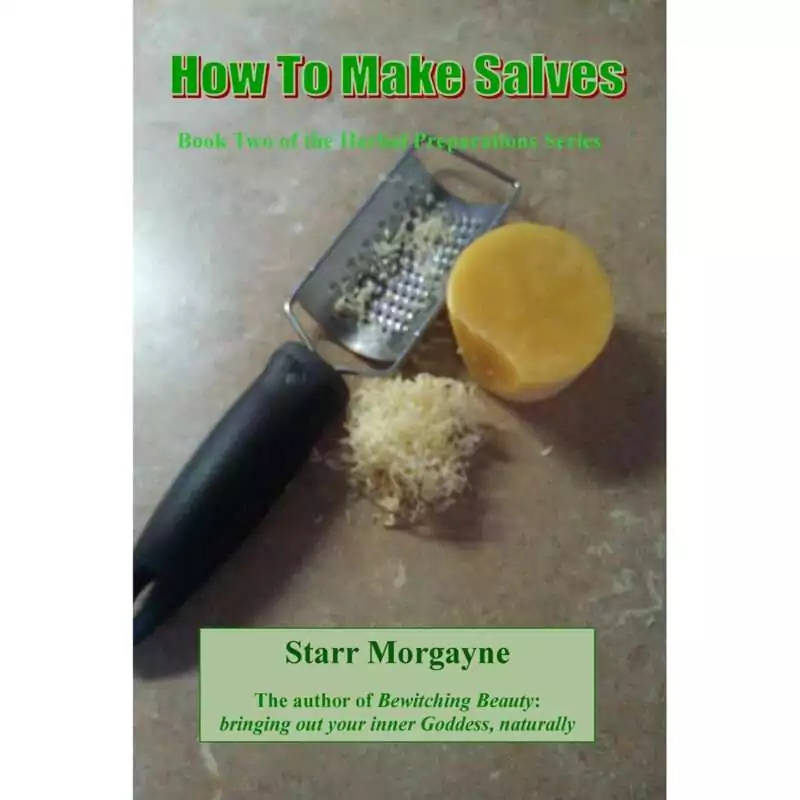
How to Make Salves is the second volume of Starr Morgayne’s Herbal Preparations series, and it walks the reader through salve making as a specific home herbalism technique. A salve is a semi-solid preparation made by infusing herbs into oil and then thickening the oil with beeswax or a plant wax, and the resulting form is easier to store and apply than a raw infused oil. Morgayne, a certified herbalist, works from her own herb garden and includes photos of the plants she uses, which gives the book the working specificity of a practitioner sharing direct experience rather than a compilation from other sources. The 130 pages structure the material around the technique of salve making so that a reader who has learned the basic method can apply it to a range of herbs and uses.
The material is presented in the folk-tradition register rather than as clinical herbal medicine. Morgayne describes her own practice: which herbs she uses for which purposes, how she infuses the oils, how she thickens the salves, and how she stores them. As with any folk-tradition herbal writing, treat the material as reference to a living tradition of home herbal practice rather than as medical advice, and consult qualified healthcare providers for any medical concern. Salve making is a workable home skill once you have kitchen herbalism basics, and Morgayne’s photographed examples give you the visual grounding to build the practice.
How This Book Fits in Your Practice
Reach for this book if you already have some kitchen herbalism basics (Book One in the series covers those) and want to move into salve making as a specific skill. Salves keep well, portion easily for gifts or personal use, and are useful in ritual practice as fixed forms of infused oil. If you are new to herbal preparation entirely, start with Book One first and come to this volume once you have the foundational technique vocabulary. Browse my Herbal Spell Mixes collection for adjacent working supplies.
How to Make Salves at Home
Salve making rewards patience and clean technique; rushing the infusion or the thickening step reduces what the salve becomes.
- Infuse the Oil Slowly
A salve starts with an herb-infused oil, and the infusion is the step most likely to be rushed. Follow Morgayne’s timing rather than shortening it. Slow cold infusion over several weeks gives a fuller extraction than fast heat methods, and the difference shows in the finished salve. If you must use heat, keep it low and steady rather than hot and quick.
- Strain and Thicken with Care
Strain the infused oil thoroughly through fine cloth so no plant material carries into the salve. Then melt the beeswax or plant wax into the warmed oil according to Morgayne’s ratios, stir until fully incorporated, and pour into clean containers before the mixture cools. Rushing the strain or the wax incorporation gives you a salve with sediment or an uneven texture.
- Label and Store Properly
Label each salve with contents, date, and intended use. Store in a cool, dark place; salves keep well for months when properly made and stored. Portion into smaller containers for gifts or on-the-go use. Do not use a salve past the point where the oil smell has turned; rancidity is the most common failure mode in home salve making.
The Tarot Fellow Standard
I brought this book into the shop because working salve-making manuals from certified herbalists are less common than general herbalism books, and the salve is a specific home skill worth learning as its own technique. Morgayne teaches from her own practice, which gives the material the working specificity a technique book needs. This book pairs with Book One in the series on infusions and decoctions. Browse my Spellcraft, Witchcraft and Magic collection for the broader working practice these preparations support.
Frequently Asked Questions
The common starting point is roughly one ounce of beeswax to one cup (eight ounces) of infused oil, which gives a soft, spreadable salve. More wax firms the salve for balm-textured products; less wax leaves it closer to an infused oil. Morgayne gives specific ratios for the salves she makes, and once you have made a few, you will develop a feel for the texture you want and can adjust from there.
A properly made salve stored in a cool, dark place typically keeps for six months to a year before the oil begins to turn rancid. Adding vitamin E oil as a natural preservative extends the shelf life. The most common failure mode is rancidity from warmth or light exposure; if the salve smells sour or off, discard it. Labeling each jar with the make date makes storage rotation easier.
Not strictly, but Book One (Infusions and Decoctions) covers the oil-infusion techniques that make salve making easier to learn. If you have never infused an oil, start with Book One. If you already know how to make an infused oil, you can start with Book Two directly and pick up the wax thickening technique from there.

Reviews
There are no reviews yet