
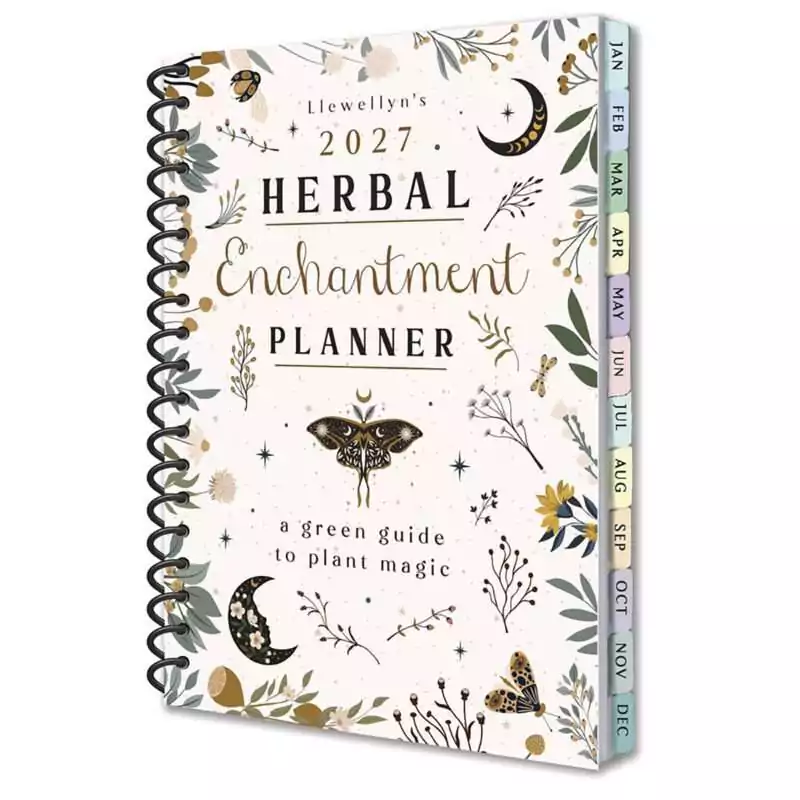


Quick Specs
- Brand: Llewellyn Publications
- Format: Spiral-bound planner with weekly and monthly spreads
- Year Covered: January to December 2027
- Size: 6 x 8 in
- Pages: 196
- Month Tabs: Colored tabs marking each month
- ISBN-13: 9780738783086
Garden Lore Built Into the Calendar
Each month opens with an essay and weekly tips on folklore, crafts and gardening from contributors including Monica Crosson, Arin Murphy-Hiscock, Laurel Woodward and JD Walker. Their spreads read like a seasonal almanac. In July, for example, JD Walker looks at the Dog Days of summer and the rising of Sirius, gives a ritual wash for the home made from lemongrass and juniper, and lays out practical ways to keep beetles and blossom-end rot off garden plants. An August week opens with goldenrod and the prosperity and protection that traditional herb lore attaches to it, and an October week suggests carving protective symbols into pumpkins in place of faces. Sara Mellas supplies the magical timing: ribbons along the day boxes mark days she picks by astrological and seasonal energies, each with a one-line suggestion such as deep cleaning the house and donating what you don’t use. The cover, printed with leaves, crescent Moons and moths, sets the tone before you open it, and inside, watercolor leaves, wildflowers and dragonflies frame the pages in colors that shift with the season, from spring green in March to amber in August and gray-lilac in October.
Under the lore sits a working planner. The monthly spread has a to-do column down the left, a Sunday-first grid and labels for holidays from several traditions; March 2027 shows St. Patrick’s Day, Purim, Eid al-Fitr, Good Friday, Easter and Ostara, along with Mercury turning direct. The weekly spread gives each day a box with six check boxes and small print for the Moon’s quarter and sign, void-of-course times and the sign changes of the Sun and planets. In the back, a planting guide lists vegetables, herbs and flowers against the Moon quarters and signs usually advised for them, followed by month-by-month tables of the Moon’s sign and phase and a Simple Plant Magic section on starting seeds, preparing beds, blessing a new plant, transplanting and cleaning tools. Eclipses and planetary transits appear on the dates they occur, and a symbol key on the how-to-use pages explains the planets, signs and Moon phases. The spiral binding lets the book lie open on a potting bench or a kitchen counter, and the paper is FSC-certified and printed with soy-based ink.
Practical Ritual Applications
Use the monthly spread to rough out the garden year, then let the weekly pages hold the details. Mark seed-starting, transplanting and harvest days beside the Moon quarter and sign suggested in the back tables, and write your own frost dates next to them, since the tables follow the Moon and not your climate. The six boxes on each day suit a short task list: water the seedlings, pot up the basil, dry the goldenrod. When a timing ribbon appears, treat it as a prompt for a small household or altar task. On a windowsill or balcony, the Simple Plant Magic pages work as a checklist for a first container garden. For further reading on herbs and garden craft, browse my oils, herbs and plant magic books.
How to Plan a Garden Month by the Moon
Ten minutes at the start of each month sets up the weeks that follow.
- Read the month opener
Read the contributor's opening spread and choose one idea from it, a craft, a bed task or a herb to grow, then copy it onto the monthly grid on a day you can keep free. The openers come from working gardeners, so their timing follows the season: beetles in July, protective gourds in October. Choosing one idea keeps the month from filling with tasks you won't reach.
- Match tasks to the Moon
Find the month in the Moon sign and phase tables, then cross-reference the planting guide for your crop. Write the matching dates in the check boxes on the weekly pages. Convert the printed times to your own time zone first, since a phase change near midnight can move a task to the next date, and compare the result with your local frost dates.
- Close out each week
Tick the boxes as you finish tasks. On Sunday evening, carry anything unfinished onto the following week and read that week's tip and timing ribbon. Keeping the boxes current shows you what a realistic week in the garden holds, which makes the next month's plan easier to set.
The Tarot Fellow Standard
I brought this planner into the shop because it gives herb and garden lore the space a magical gardener needs: contributors who write as magical gardeners, planting tables that follow the Moon, and a spiral-bound book you can prop open outdoors. It works for a kitchen witch with pots on a windowsill as well as for someone with a full vegetable bed. The rest of the 2027 lineup, from wall calendars to other planners, sits in my almanacs and calendars collection.
Frequently Asked Questions
It's a long-standing tradition with simple rules. Plant crops that grow above ground, such as lettuce, beans and tomatoes, while the Moon waxes from new to full, and plant root crops such as carrots, beets and onions while it wanes from full to new. University of Illinois Extension notes that few lunar planting traditions have scientific support. Many gardeners still use the Moon calendar as a rhythm for sequencing tasks.
In the traditional system the Moon's sign matters as well as its phase. Cancer, Scorpio and Pisces are the fruitful water signs, favored for planting, while Leo, Virgo, Sagittarius, Aquarius and Gemini are called barren signs and are kept for weeding. The Moon changes sign every two to three days, and the planner's month-by-month tables show where it sits, so you can find the days that match your crop.
The Moon's phase and sign are the same for everyone on Earth, so the quarter-and-sign guidance holds on any continent. What changes is the growing season. The planner's holidays and monthly essays follow the Northern calendar, so a spring job in March belongs in September south of the equator. Choose your crop's sowing window from local advice, then use the Moon tables to pick among the days inside it.
Both are 2027 Llewellyn planners with weekly spreads. The Herbal Enchantment Planner opens every month with plant and garden lore and adds Moon-based planting tables. The Witches' Datebook, at 168 pages, carries Jennifer Hewitson's scratchboard illustrations, articles, Full Moon rituals, seasonal recipes and more than 100 magical tips. Choose this one if you grow or cook with herbs, and the Datebook if you want articles and ritual ideas.






Reviews
There are no reviews yet