
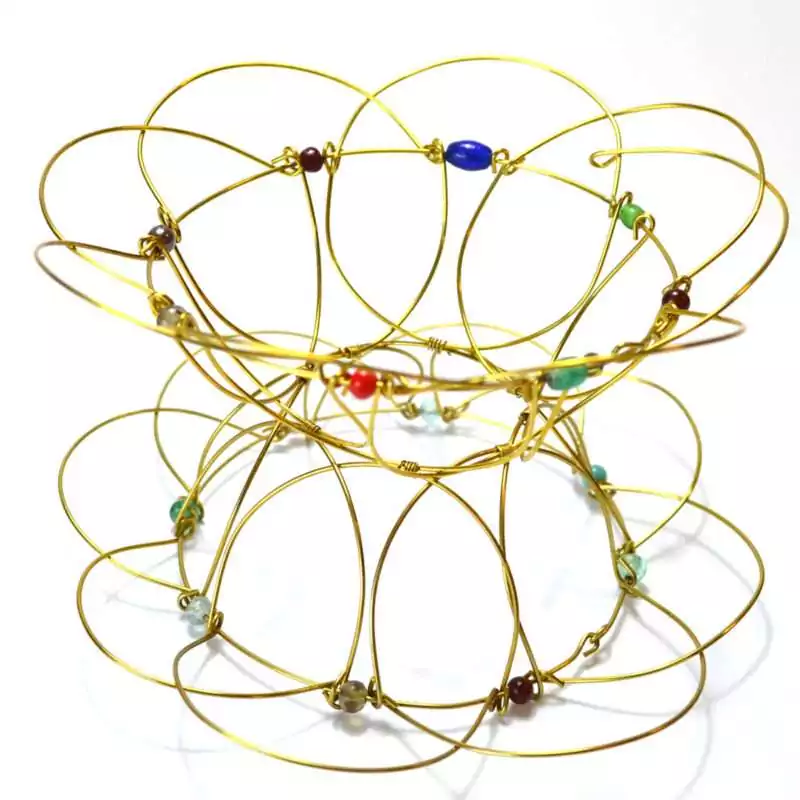


Quick Specs
- Material: Brass wire
- Size: 5 inches
- Shapes: Up to 35 distinct configurations
- Use: Meditation aid / mindful focus tool
- Best for: Tactile meditation, focus rituals, altar decor
The Art of Tactile Meditation
The Mandala Meditation Puzzle sits at the intersection of sacred geometry, tactile meditation, and practical ritual focus. Mandalas have served as meditation anchors across Buddhist, Hindu, and esoteric Western traditions for centuries, the symmetrical radiating form trains the eye and mind toward center, encouraging the kind of single-pointed concentration that deeper meditation requires. This brass wire version extends that tradition into a three-dimensional, tactile object: instead of gazing at a two-dimensional design, you hold it, turn it, and shift it through configurations while your mind settles. The interconnected wire structure has enough complexity to occupy the hands without demanding conscious cognitive effort, which is precisely the state that supports a shift into meditative presence. Brass is a material with long associations in esoteric and ritual contexts: it has been used in altar tools, divination instruments, and sacred objects across many traditions because of its warm color, its durability, and its resonance with solar and mercurial energies depending on the tradition. Here, the material choice also has practical value: brass wire is durable enough to withstand regular handling without bending out of shape, and its weight in the hand provides a grounding sensory anchor during restless or anxious meditation sessions.
The thirty-five possible shapes embedded in the wire structure give the puzzle an element of ongoing discovery that prevents it from becoming a purely mechanical habit. Most meditation tools reward the practitioner for increasing familiarity, the more you use them, the more they work. The Mandala Puzzle does this through two mechanisms simultaneously: the gradual physical mastery of moving through its configurations more fluidly, and the mental freedom that comes from having the hands productively occupied. Practitioners who struggle with traditional seated breath-awareness meditation because their hands need something to do will often find that a tactile focus object dramatically reduces the restlessness that interrupts their practice. The puzzle also functions well as a ritual focus anchor during readings, divination work, or any practice where you want to occupy the analytical mind lightly while keeping the intuitive channel open. At five inches, it is compact enough to carry in a pocket or a bag, making it a travel-friendly complement to a deck, a crystal kit, or any other portable practice toolkit.
Practical Ritual Applications
The Mandala Meditation Puzzle integrates into existing practice in several ways. As a pre-reading focus tool, working with it for three to five minutes before pulling tarot cards or doing divination can help quiet cognitive chatter and shift into a more receptive mode. During chakra meditation, holding the puzzle while visualizing each energy center gives the hands something to do that does not conflict with the visualization practice. As a desk or altar object, the brass wire form has enough visual interest to serve as a meditation anchor without being distracting, the warm metal tone complements crystal arrangements, candles, and other altar elements naturally. For practitioners who work with ritual circles, passing the puzzle through its configurations as a grounding practice at the close of a working can serve as a physical transition ritual back into ordinary awareness. The five-inch size and compact format also make it a reliable gift item for practitioners who have most of the standard tools but do not yet have a dedicated tactile focus object in their kit.
How to Work With the Mandala Meditation Puzzle
Three ways to integrate the brass wire Mandala Puzzle into a daily mindfulness or ritual practice.
- Use as a Pre-Meditation Focus Anchor
Before beginning a seated meditation session, hold the puzzle in both hands and begin shifting it through configurations slowly and without any goal of reaching a particular shape. Allow your breath to slow to match the pace of your hands. Continue for three to five minutes until you notice your thinking becoming quieter. Then set the puzzle down and begin your meditation. The tactile engagement acts as a transition bridge from ordinary activity to meditative stillness.
- Carry as a Mindfulness Interrupt During the Day
Keep the puzzle accessible, in a pocket, bag, or desk drawer, and reach for it whenever you notice stress, scattered thinking, or anxiety arising. A few minutes of slow, tactile engagement with the wire form is enough to interrupt a rumination loop and bring attention back to the present moment. Treat it as a portable version of the breath-focus techniques common to most mindfulness traditions, something available outside of formal meditation time.
- Incorporate Into a Ritual Close or Grounding Practice
At the close of ritual, spell work, or a tarot reading session, work slowly through the puzzle’s configurations while consciously releasing the elevated state of the working. This functions as a physical grounding ritual, the hands are engaged, the breath normalizes, and the transition back into ordinary awareness is deliberate rather than abrupt. It is especially useful after intense or emotionally engaging readings or deep trance-adjacent work.
The Tarot Fellow Standard
I carry the Mandala Meditation Puzzle because not everyone meditates well through stillness alone. For practitioners whose hands need engagement, this brass wire form is a genuine tool rather than a novelty, the thirty-five shapes give it enough variety to sustain a real practice, and the compact size means it travels with you. At under five dollars it is also one of the most accessible entry points into tactile meditation work in the shop. Browse my chakra and meditation collection for complementary mindfulness tools.
Frequently Asked Questions
Brass wire is durable for regular tactile handling, the material resists bending out of shape under normal use. That said, it is a delicate wire structure rather than a solid cast piece, so it is not suited to rough handling or being thrown in a bag without protection. Kept on an altar or in a small pouch for travel, it will hold its shape indefinitely with ordinary care.
The puzzle is designed for adults as a meditation and focus tool. The small wire components are not appropriate for young children. Older children and teenagers who are drawn to tactile focus objects for managing anxiety or attention may find it useful under appropriate supervision, but it is primarily intended for adult practitioners.
The puzzle arrives in a standard base configuration and can be shifted into up to thirty-five different shapes from there. There is no single ‘solved’ state, each configuration is a valid form. The exploration of different shapes is part of the meditative practice, rather than a puzzle with a single correct answer to find.

Reviews
There are no reviews yet