

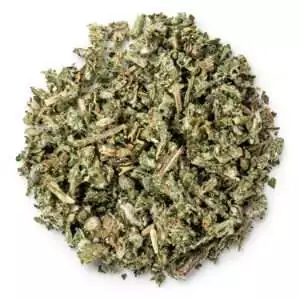
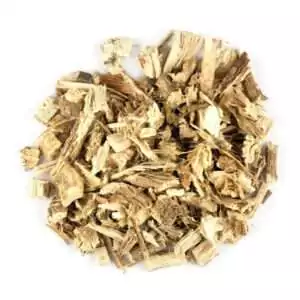
Quick Specs
- Botanical Name: Podophyllum peltatum (American Mandrake / Mayapple)
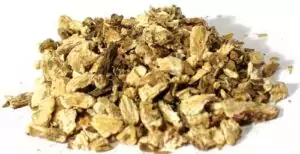
- Type: Dried Cut Root
- Size/Quantity: 1 oz
- Best for: Protection, banishing, hex-breaking, charm bag work
- Sourcing: SQF & Kosher certified supplier
I source this herb from a supplier that’s both SQF, Safe Quality Food, certified and Kosher certified, meeting real, audited quality standards rather than just a label. What’s in this packet is sourced from that supplier, but American mandrake (Podophyllum peltatum) contains podophyllotoxin and is toxic, so it is not a kitchen or tea herb and should not be taken internally.
American Mandrake vs. European Tradition
Podophyllum peltatum is the botanical reality behind American Mandrake, a rhizomatous woodland plant native to eastern North America and completely unrelated to the European Mandragora officinarum that Shakespeare and medieval herbalists immortalized. The two plants share a name but not their lore: the humanoid-root and screaming-plant stories belong to the European plant, while the American root is also used in hoodoo love and money charms.
In the wild, Podophyllum peltatum grows under deciduous forest canopy in large colonies, spreading by underground rhizome. The familiar shape of the sold root is that rhizome. It emerges in spring with umbrella-like leaves, produces a single white flower, and sets a small yellow fruit in early summer before going dormant. The plant’s toxicity is well-established: the root contains podophyllotoxin, which is why it is for external ritual use only and never for internal use.
Protective and Banishing Work
American Mandrake is placed at thresholds to ward malevolent energy, carried in black charm bags for hex-breaking, and set on altars during uncrossing and banishing rituals. Its Saturn correspondence aligns it with binding, returning, and boundary-setting work. When a practitioner needs to stop a working directed at them or close off a space to harmful influence, mandrake is one of the roots people reach for, alongside black salt and rue. Browse my banishing and hex-breaking herbs to find complementary ingredients for protection workings.
The one-ounce cut format is appropriate for this root because a small amount goes a long way. A typical use calls for a single piece in a charm bag or a pinch at a threshold. This is not a root you need in bulk quantities. Store the unused portion in a sealed glass jar away from heat and moisture. The cut format preserves the root’s structure better than powder for long-term storage and for placement applications where you want a visible piece rather than a powder. Explore my herb packets for companion roots and herbs that complete a working.
How to Use American Mandrake Root
Three applications for American Mandrake in protective and banishing practice. Handle with care and use externally only.
- Threshold Protection
Place a small piece of cut root in a sealed cloth pouch and set it beneath your doorstep or inside the threshold. This placement is used to ward off malevolent visitors and return sent harm to its source.
- Hex-Breaking Charm Bag
Combine a piece of American Mandrake root with black salt and a piece of black tourmaline in a black flannel bag. Carry it when you suspect active negative working, or hang near your entrance to shield that space from interference and intrusion.
- Altar Ward Placement
Set a piece of cut root on your working altar during banishing or uncrossing rituals. It amplifies Saturn-ruled workings and adds crossroads energy. After the ritual, wrap the root in black cloth and store it sealed until the next working.
The Tarot Fellow Standard
I carry American Mandrake because Podophyllum peltatum is the plant used in hoodoo love and money charms, and it is not the same plant as European mandrake. The toxicity is real: this root is for external ritual work only. I stock it for practitioners who want a correctly identified root for their practice. If you are building a protection herb kit, this belongs alongside black salt, rue, and High John as a banishing and warding material.
Frequently Asked Questions
No. This is Podophyllum peltatum, American Mandrake or Mayapple, native to eastern North America. Mandragora officinarum is a Mediterranean plant. Both share the folk name mandrake, but they are not botanically related, and the screaming-root lore belongs to the European plant.
Yes. Podophyllum peltatum root contains podophyllotoxin, which is toxic if ingested and causes serious harm. Use it externally only in charm bags, threshold placements, and altar work. Keep it away from children and pets, and avoid it during pregnancy.
American Mandrake is used in hoodoo love and money charms, and in ritual work for protection, hex-breaking, and banishing. Practitioners place it at thresholds to ward harm, carry it in charm bags for luck, and use it in uncrossing rituals to break hexes.
Yes, Mayapple spreads by rhizome and establishes in shaded woodland gardens in USDA zones 3 through 9. It goes dormant in summer after the fruit ripens. Wild harvesting is discouraged; ethical cultivated supply protects natural woodland populations.
Reviews
There are no reviews yet