
Quick Specs
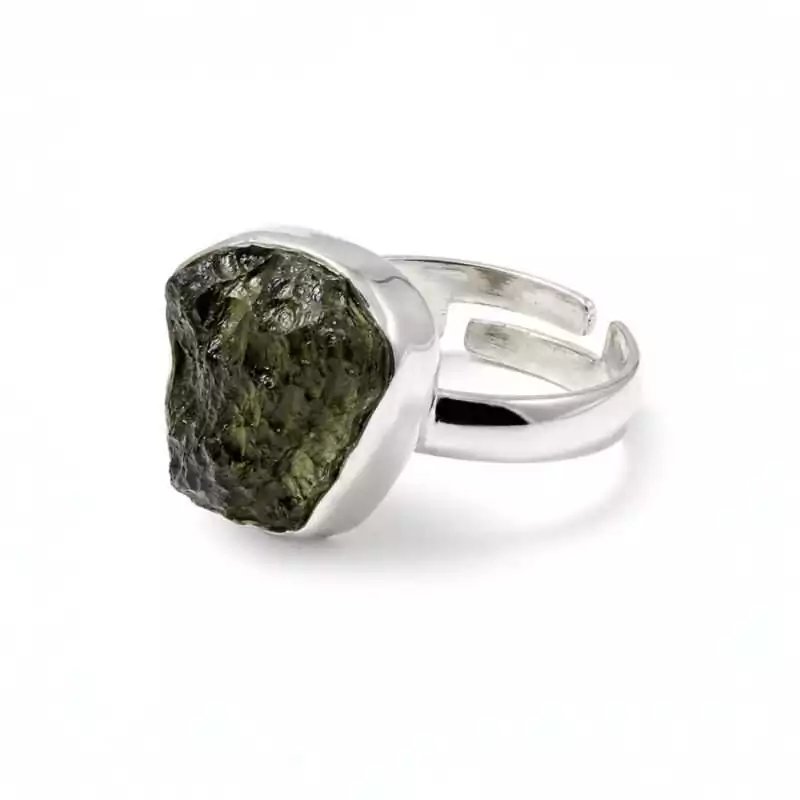
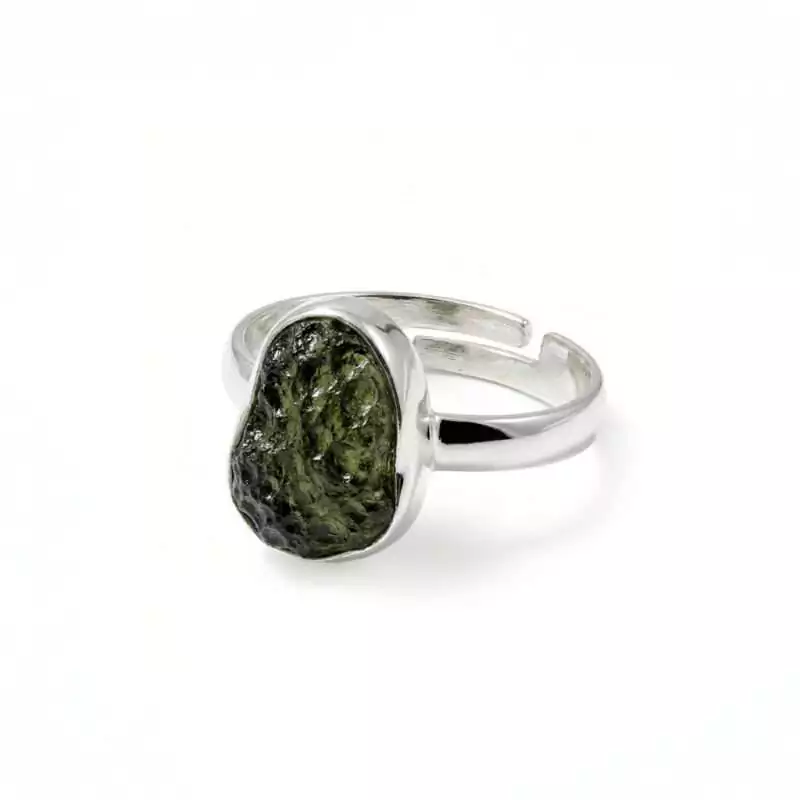
- Stone: Genuine moldavite tektite from the Czech Republic
- Setting: Sterling silver (.925) adjustable band
- Fit: Adjustable, approximate sizes 6 to 10
- Stone size: Approximately 1/2 inch x 1/2 inch (each piece varies in shape and thickness)
- Best for: Heart chakra work, transformation intention, metaphysical collection
What Moldavite Actually Is
Moldavite is a tektite, a natural glass formed roughly 15 million years ago when a meteorite impact in what is now southern Germany melted and ejected terrestrial rock at extreme velocity. That material traveled and cooled mid-air, falling back to earth across a strewn field covering parts of the Czech Republic, Austria, and Germany. The name comes from the Moldau River region of Bohemia, where it has been collected and treasured since the Neolithic period: polished moldavite pieces have been found in archaeological sites alongside Venus figurines, suggesting ritual use by prehistoric Europeans.
Unlike many metaphysical stones, moldavite has a documented geological origin story that is genuinely extraordinary. It is neither mineral nor crystal in the traditional sense but a form of impact glass, amorphous and non-crystalline, which accounts for its distinctive texture: a wrinkled, sculpted surface with internal bubbles and flow structures visible under magnification. Its color ranges from dark bottle green to pale olive depending on the piece, and genuine specimens feel lighter than they look because glass is less dense than most rock.
Authenticity and the Fake Moldavite Problem
The moldavite market has significant issues with fakes. Green glass, resin, and dyed synthetic materials are regularly sold as genuine tektite, particularly through low-cost online marketplaces. Genuine moldavite will always display the characteristic surface texture: a rough, bubbly, lechatelierite-patterned exterior that takes magnification well and shows flow lines within the glass. Smooth, perfectly uniform pieces or pieces with suspiciously low prices should be treated with skepticism. This ring features a genuine Czech moldavite piece, and each stone varies naturally in exact size, shape, and color depth. You can browse complementary pieces in my crystal and stone rings collection.
In contemporary crystal healing and metaphysical practice, moldavite is associated with the heart and third eye chakras, and practitioners often describe it as one of the more intense stones to work with. These experiences are anecdotal and not guaranteed, but they reflect why moldavite has developed such a devoted following. Whether you’re drawn to it for its extraterrestrial origin story or its reputation as a transformation catalyst, the stone earns its place in a serious collection.
How to Use a Moldavite Ring
How to wear, adjust, and care for a genuine moldavite tektite ring.
- Adjust the Band
The sterling silver band is open-backed and adjustable. To size it, hold the shank on both sides of the stone and gently ease outward until the ring slides onto your finger. Make small adjustments to avoid stressing the silver at the setting joint.
- Start with Short Sessions
Practitioners new to moldavite often start with brief wearing periods rather than all-day use. Wearing the ring for an hour during meditation or intention-setting, then removing it, lets you observe your response before committing to full-day wear.
- Store Safely Between Wears
Moldavite is relatively fragile, roughly 5.5 on the Mohs scale. Store the ring in a soft pouch or padded box, away from harder stones like quartz that could scratch the surface. Keep away from ultrasonic cleaners, which can fracture impact glass.
The Tarot Fellow Standard
Moldavite is one of the few stones where the science is as compelling as the metaphysics: impact glass from a meteor strike 15 million years ago, worn by Neolithic Europeans, now set in sterling silver. I carry this ring because that provenance is real and the fake market is a genuine problem worth addressing honestly. If you’re building a stone collection around transformation work, browse my full crystals and gemstones section for complementary pieces.
Frequently Asked Questions
Genuine moldavite has a distinctive wrinkled, sculpted surface with visible flow lines and internal bubbles under magnification. It is always green, never perfectly smooth. Very cheap, flawless-surfaced pieces are almost certainly glass imitations.
Moldavite is a tektite, a natural glass formed from terrestrial rock melted by a meteorite impact roughly 15 million years ago in the Czech Republic. It is not a crystal in the mineralogical sense but a form of amorphous silica impact glass.
Moldavite is linked to the heart chakra (Anahata) and the third eye chakra (Ajna) in crystal healing. Practitioners use it for transformation, emotional release, and intuition, often paired with grounding stones like black tourmaline for balance.
Moldavite can be worn daily but requires care. It scores about 5.5 on the Mohs scale, softer than quartz, so avoid activities that risk knocking the ring against hard surfaces. Store it padded and separate from harder stones between wears.
Reviews
There are no reviews yet