
Quick Specs
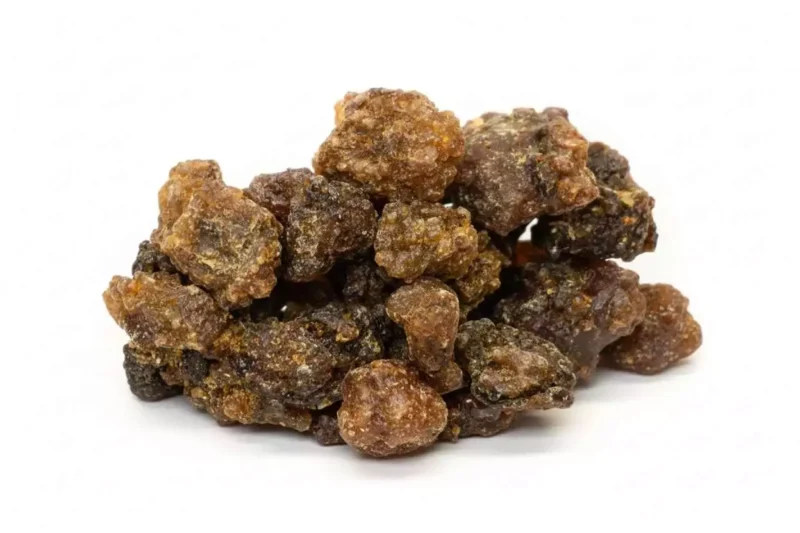
- Type: Pure granular resin incense (Commiphora myrrha)
- Size/Quantity: 1.5 oz
- Best for: Consecration, ancestral work, grief ritual, deep purification, Catholic and Coptic liturgical use
Pure Myrrh Granular Resin: Origin and Harvest
Myrrh resin comes from Commiphora myrrha and related Commiphora species, small thorny trees native to the Horn of Africa and the southern Arabian Peninsula, particularly the regions that today encompass Somalia, Ethiopia, Oman, and Yemen. The resin is harvested by wounding the bark, causing the tree to exude a protective oleoresin that slowly hardens into amber-brown tears or granules on exposure to air. These hardened tears are what practitioners receive as granular resin incense. The word myrrh likely derives from the Arabic murr, meaning bitter, which describes the resin’s characteristic flavor and the slightly sharp, balsamic undertone of its smoke.
Granular resin incense differs fundamentally from stick or cone incense. Sticks and cones incorporate binders, base materials, and sometimes fragrance compounds to hold a shape and allow slow combustion. Pure granular myrrh is the raw resin with nothing added. When placed on hot charcoal it releases its full aromatic complexity without dilution, which is why traditional ceremonial and liturgical practitioners favor raw resin: it produces a richer, more complex smoke that carries the full character of the original material. Browse my granular and resin incense collection for frankincense, copal, and other traditional resins to pair with myrrh.
Myrrh in Ancient, Biblical, and Liturgical Tradition
Myrrh’s documented history spans at least four thousand years. The Egyptian Ebers Papyrus, dated to roughly 1550 BCE, records myrrh as a medicinal and ritual material. In ancient Egypt, myrrh was used in the embalming process and burned during temple ceremonies, connecting it to both physical preservation and spiritual transition. The Old Testament mentions myrrh as one of the ingredients in the holy anointing oil described in Exodus, used to consecrate priests and sacred vessels. In the New Testament, myrrh is one of the three gifts brought by the Magi at the birth of Christ, interpreted theologically as foreshadowing mortality and suffering alongside the gifts of gold and frankincense.
The Catholic Church, Coptic Church, and Eastern Orthodox traditions have burned myrrh resin in censers as part of liturgical practice from the early centuries of Christianity, a use that continues today without interruption. In Western occult tradition and folk magic, myrrh is associated with Saturn, deep purification, letting go, grief work, and communication with ancestors and the dead. It is burned to open communication channels with departed family members, to consecrate ritual tools, and to mark the closing of a cycle or the passage from one state to another. For this reason, myrrh is considered one of the most spiritually serious resins in the Western incense canon.
How to Use Myrrh Granular Incense
How to burn pure myrrh granular resin on a charcoal disc for ritual, ancestral, or purification work.
- Light and Ash the Charcoal Disc
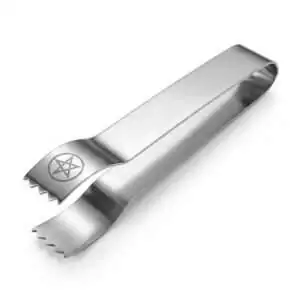
Place a self-lighting charcoal disc in a fireproof burner and light one edge. Hold the disc with tongs and let the sparks travel across the surface. Wait eight to ten minutes until the disc is covered with grey ash before placing any resin on top.
- Place Granules and Tend the Burn
Place two or three granules of myrrh resin on the ashed charcoal. Add more every five to seven minutes as the granules smoke and dissolve. Use small amounts; myrrh is potent and a little goes far. Too much at once produces heavy, bitter smoke.
- Direct the Smoke Through Your Space
Move the burner slowly through your space or hold it near an altar, ritual tools, or a candle you plan to light. Myrrh smoke is dense and settles into a space rather than dissipating quickly, so allow the smoke to linger and work before ventilating.
The Tarot Fellow Standard
I stock pure myrrh granular resin because it belongs to the deepest tier of incense tradition, one shared by ancient Egyptians, early Christians, and folk magicians across three continents. The granular format is the traditional one, not a niche specialty, and 1.5 oz gives regular practitioners a supply that lasts through a meaningful stretch of work. This is a single-ingredient resin, not a blend, so what you’re getting is the full, unadulterated character of Commiphora myrrha without anything added to extend shelf life or alter the scent profile. For ritual tools, altar supplies, and accessories to complete a resin-burning setup, explore my altar supplies collection.
Frequently Asked Questions
Myrrh granular incense consists of raw resin tears from Commiphora myrrha and related species. It requires burning on a hot charcoal disc and produces a dense, balsamic smoke. It is not self-lighting and is more potent than stick or cone formats.
Myrrh resin is traditionally used for consecration, deep purification, ancestral connection, and grief work. In Egyptian practice it was burned during embalming. In Christian liturgy it symbolizes mortality and sacrifice as one of the Magi’s gifts.
Pure myrrh burns solo as a single-note resin with its full balsamic, bitter-sweet, earthy character. Frankincense and myrrh blends combine two resins. Many practitioners prefer pure myrrh when the focus is specifically on ancestral or memorial work.
The 1.5 oz size is well suited for regular practitioners who burn resin incense frequently. A typical session uses two to four granules, so 1.5 oz provides many sessions. Store granular resin in a sealed jar away from heat and direct sunlight.
1 review for Myrrh Granular Resin Incense — 1.5oz Pure Commiphora for Ritual