

Quick Specs
- Author: Disa Forvitin
- Publisher: Wellfleet Press (2024)
- Format: Hardcover, 144 pages, 5.6 x 8.5 inches
- Best for: Norse pagans, Asatru practitioners, rune students, heathen beginners
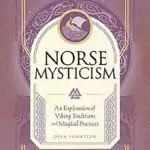
Norse Mysticism by Disa Forvitin: Runes, Seidhr, and Heathen Practice
Norse Mysticism: An Exploration of Viking Traditions and Magical Practices is a 2024 hardcover by Disa Forvitin, a lifelong practitioner of mystical traditions and a pagan with deep roots in Norse history and culture. Published by Wellfleet Press and running 144 pages in compact hardcover format, the book covers the history of early Nordic society, the pantheon of Norse gods and goddesses, the Elder Futhark rune system, Norse cosmology including Yggdrasil and the Nine Realms, and living magical practices such as seidhr (Norse shamanic magic), galdr (vocal runic chanting), and Trolldom, the folk magic tradition of Scandinavia.
Forvitin writes from within the tradition rather than as a detached academic, which gives the book a practical orientation alongside its historical overview. She addresses the oral nature of Norse myth directly in the introduction, noting that because these traditions were passed through speech rather than text, no single written version is more authoritative than another. The book also includes a statement on the co-opting of Norse symbols by white nationalist groups, affirming that authentic heathenry was an inclusive practice honoring both men and women as practitioners of magic.
What the Book Covers: Runes, Goddess Rituals, and Norse Folk Magic
The Elder Futhark receives dedicated coverage in its own chapter, making this book useful as an entry point for rune students who want the mythological context behind the characters before moving to casting practice. Norse poetry, including skaldic verse and the eddic tradition, is covered as both literary form and living magical practice: galdr, the chanting of rune names and verses, is presented as a technique practitioners can apply directly. Spells, rituals, and craft projects drawn from Norse folk tradition appear throughout the chapters as applied examples rather than appendices.
This is an introductory and overview text, not an advanced grimoire. Readers already deep in Norse practice will find it a useful one-volume reference. For those approaching Norse paganism for the first time, it provides the historical grounding, mythological narrative, and practical starting points that scattered sources rarely combine in one place. Browse my witchcraft and magic books for related titles covering broader magical practice.
How to Use Norse Mysticism by Disa Forvitin
How to read and apply Norse Mysticism across history, mythology, and hands-on practice.
- Start with the Historical and Mythological Chapters
Read the sections on Nordic society and Norse mythology first to build cultural context that makes the magical chapters coherent. Norse myths function as riddles about behavior and fate, and understanding that framing makes the spells meaningful.
- Work Through the Elder Futhark Chapter Actively
Use the rune chapter alongside physical rune stones or a casting cloth. Forvitin covers each rune’s name, meaning, and mythological associations, making it a practical companion for learning to cast the Elder Futhark rather than just reading it.
- Practice the Spells and Rituals in the Text
The book includes spells, crafts, and rituals from Norse and Scandinavian folk tradition throughout the chapters. Work through them as you read, keeping a journal of observations. Applying each practice in sequence tracks your development well.
The Tarot Fellow Standard
Norse Mysticism fills a real gap in my book inventory. My other magical titles cover elemental practice, Wiccan frameworks, rootwork, and general symbolism, but nothing had specifically addressed the Norse and Heathen tradition until this book. Forvitin writes from within the practice, which gives her practical chapters a credibility that an outsider’s summary cannot replicate. The 144-page hardcover format keeps it approachable without feeling thin; there is enough historical and mythological grounding to make the magical instruction meaningful. For practitioners who also work with physical rune objects, find casting sets and rune stones in my runes collection to use alongside the book.
Frequently Asked Questions
Disa Forvitin is a lifelong practitioner of mystical traditions focused on Norse history and pagan practice. She casts runes in the Twin Cities, Minnesota. Norse Mysticism was published by Wellfleet Press in 2024 as a 144-page hardcover.
Yes, it covers Norse history, mythology, gods and goddesses, the Elder Futhark runes, and folk magic including seidhr and galdr. It is an accessible introduction rather than an advanced grimoire, providing enough depth to orient a new practitioner.
Yes. There is a dedicated chapter on the Elder Futhark covering each rune’s name, meaning, and mythological context. The book treats rune casting as a practical skill as well as history, making it useful alongside a physical set of rune stones.
Seidhr is Norse shamanic magic associated with the volva, a Norse seeress, involving trance, prophecy, and spirit contact. Forvitin covers seidhr alongside galdr (vocal runic chanting) and Trolldom, Scandinavian folk magic, in the magical section.
Reviews
There are no reviews yet