

Quick Specs
- Type: Pewter pendant
- Size: 1″
- Size/Quantity: One pendant, approx. 5.3 inches cord length
- Best for: Wiccan elemental symbol, pagan daily wear, beginner spiritual jewelry, protection amulet
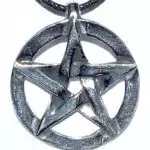
Pewter Pentagram Pendant: Classical Pagan Amulet for Wiccan Practice
The pentagram in its encircled form, often called the pentacle in Wiccan usage, is the defining symbol of modern witchcraft and the broader pagan revival. Its five points correspond to the four classical elements plus spirit, a mapping that traces through Pythagorean sacred geometry, Agrippa’s Renaissance occultism, and the founding texts of Gardnerian Wicca. Cast in pewter, this pendant carries the form’s full symbolic weight in a material that is durable, accessible, and free of the pretension that can attach to precious metals in beginner contexts.
Pewter itself has a long history in amulet production. A lead-free tin alloy, it casts cleanly into fine detail and acquires a pleasing matte finish that reads more antiquarian than cheap when the casting quality is solid. Pagan and ceremonial practitioners have used pewter jewelry for decades as a practical alternative to sterling silver for pieces that will see heavy use in ritual environments where moisture, incense smoke, and altar candle proximity are daily realities.
Elemental Symbolism and Tradition in the Pentagram Amulet
In contemporary Wicca, wearing the pentagram signals alignment with earth-based spirituality and serves as a daily protective ward. The encircling line binding the five points represents spirit’s sovereignty over matter, a core teaching in Wiccan theology. Celtic and folk practitioners also use the five-pointed star as a protective device independent of specifically Wiccan framing, rooting the symbol in older folk magic traditions that predate the Wiccan revival by centuries.
This pendant is particularly suited to practitioners beginning their practice who want a recognizable, quality piece without a significant investment, and to experienced practitioners seeking a durable everyday piece. Explore more pagan and protection jewelry in my pentagram pendant collection.
How to Use a Pewter Pentagram Pendant
Three ways to work with a cast pewter pentagram pendant in Wiccan practice.
- Consecrate the Pendant at Your Altar
Consecrate by passing the pendant through each element: salt for earth, incense smoke for air, near a candle flame for fire, and a few drops of water. This links the five-pointed symbol directly to the forces it represents.
- Wear as a Daily Protective Ward
Wear the pendant when you dress each morning with a brief spoken or mental statement of its protective purpose. Many practitioners touch the pentagram at moments of stress as a kinesthetic reminder of their elemental grounding.
- Use in Circle Casting Rituals
Hold the pendant at the center of your altar when casting a ritual circle, visualizing the five points extending outward to the four cardinal directions and zenith. The pendant anchors the circle’s elemental geometric boundary.
The Tarot Fellow Standard
I stock this pewter pentagram because it offers the full symbolic impact of the form in a durable, accessible piece that does not require a significant financial commitment from someone building their first practice. The casting quality matters here, and this piece holds its detail well. For practitioners looking to build out a complete elemental toolkit alongside this pendant, browse my altar supplies collection.
Frequently Asked Questions
In common pagan usage, pentagram means the five-pointed star; pentacle means the star enclosed in a circle. The circle adds a binding and completing element. Both terms are often used interchangeably to describe this pendant style.
Modern lead-free pewter is safe for skin contact, containing mainly tin with antimony and copper but no lead. People with nickel sensitivities usually tolerate pewter well. Discontinue wear if you notice irritation and consult a dermatologist.
A black or brown leather cord at 18 inches pairs well with the antiquarian look of cast pewter. For a polished finish, a gunmetal or oxidized silver chain maintains the tonal range. The pendant bail fits most standard cord gauges.
Wipe pewter with a soft dry cloth after wearing. Warm water and a little dish soap on a soft cloth removes oxidation. Do not use silver polish or abrasives on pewter, as these strip the matte finish. Store dry to prevent surface buildup.

Reviews
There are no reviews yet