
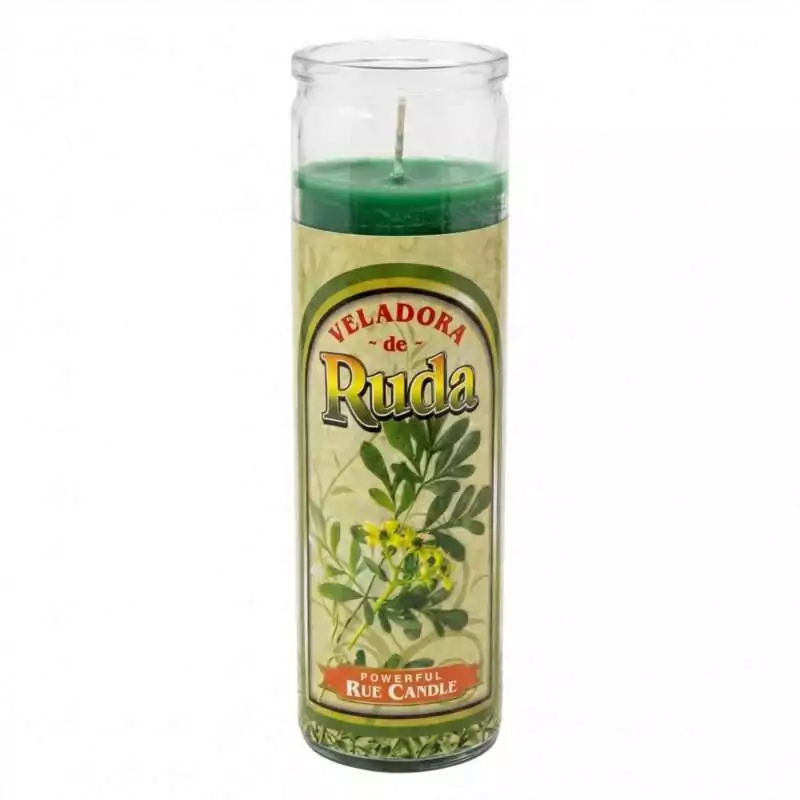

Quick Specs
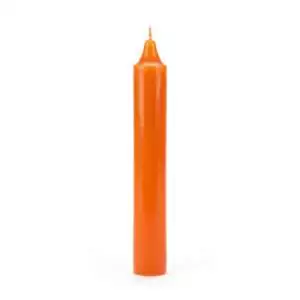
- Type: Aromatic 7-day style ritual candle with rue fragrance
- Key herb: Rue (Ruta graveolens), also known as Ruda
- Best for: Protection, evil eye warding, purification, uncrossing, Latin folk magic
- Tradition: Latin American botanica, curanderismo, Italian folk magic
Rue (Ruda) in Folk Magic and Ritual Tradition
Rue (Ruta graveolens) is one of the most deeply embedded protective herbs in Western folk magic, with a continuous documented use stretching back to ancient Rome and Greece. Known in Spanish and Latin American tradition as ruda, it holds a central position in curanderismo and Espiritismo, where it appears in limpia (spiritual cleansing) ceremonies, despojo baths, and protective plant bundles. The plant earned the folk name “herb of grace” in medieval Europe from its use by Catholic priests to sprinkle holy water at High Mass, reinforcing its association with spiritual purification across both secular and religious contexts.
Protective and Magical Properties of Rue
Rue is one of the five most powerful protective herbs in European folk magic tradition. It is most prominently used for evil eye protection: in southern Italy, a silver charm called the cimuruta (cimi di ruta, meaning “sprig of rue”) is worn as a necklace specifically to deflect the evil eye (malocchio), and sprigs of rue are hung above infant cradles to protect newborns.
This candle delivers rue’s aromatic signature in a sustained-burn format suited to ongoing protective working. It is sold here for ritual and metaphysical use only, consistent with rue’s traditional role as a folk magic and spiritual protection herb. The aromatic format makes it accessible to practitioners who prefer a prepared candle over working with dried herb directly. Browse compatible tools for protective work in my 7-day ritual jar candle collection.
How to Use a Rue Aromatic Ritual Candle
How to incorporate this rue aromatic candle into protective ritual practice.
- Set Up Your Protection Working
Place the candle on a stable surface or altar for protective work. Write a brief petition on paper and place it beneath the candle if desired. State your intention clearly before lighting, naming what or who you are protecting against.
- Light and Maintain the Burn
Light with a match or long lighter. For sustained protective work, burn each day for a set period, extinguishing with a snuffer each time. Observing the flame behavior, height, and steadiness is part of traditional candle reading practice.
- Combine with Complementary Tools
Rue candles pair with rue sachets near doorways, protective oils at thresholds, or salt at entry points. For a full despojo or limpia in Latin folk tradition, use alongside a ritual bath prepared with rue and other protective herbs.
The Tarot Fellow Standard
I stock this candle because rue is one of the foundational herbs in Latin American and Italian protective traditions, and a rue-scented ritual candle is a practical form of that tradition for practitioners who do not work with loose herbs. The aromatic format delivers rue’s distinctive sharp scent, which is part of its ritual signature, in a sustained-burn candle appropriate for ongoing protection work. For additional protective tools, browse my herbs and ritual accessories collection.
Frequently Asked Questions
Rue is used for protection and evil eye warding in Latin American and Italian traditions. It appears in spiritual baths, floor washes, sachets, and candle magic, ranking among the most powerful protective herbs in European folk practice.
Rue is used in curanderismo, Espiritismo, and Italian folk magic. In southern Italy, a silver charm called the cimuruta is worn against the evil eye. In Latin American practice, ruda is central to limpias and despojos.
Yes. This rue candle is sold exclusively for ritual and metaphysical use, consistent with the folk magic and spiritual protection traditions in which rue has been employed for centuries. It is not sold as a food, supplement, or medicinal product.
Rue has a sharp, pungent, slightly bitter aromatic profile that is immediately recognizable. The scent differs markedly from sweet or floral ritual herbs, reflecting the plant’s long association with serious protective and banishing magical work.




Reviews
There are no reviews yet