

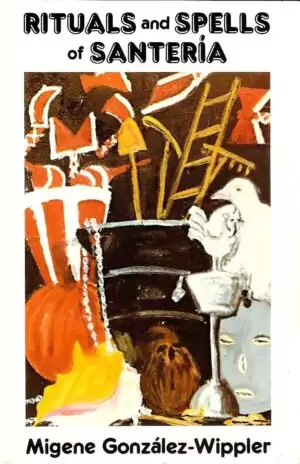

Quick Specs
- Author: Migene Gonzalez-Wippler
- Format: Paperback, approx. 8.2 x 5.6 x 0.7 inches
- Subject: Lucumi / Santeria / Afro-Caribbean religion
- Best for: Beginners seeking the Yoruba diaspora context, practitioners building a reference library, students of Afro-Caribbean religions
Santeria Book: Yoruba Religion Across the Atlantic Diaspora
Santeria was born among the Yoruba people of southwestern Nigeria, a civilization whose theology centered on the orishas, divine forces each governing a domain of nature and human experience. When Yoruba captives were brought to Cuba and other Spanish Caribbean colonies during the Atlantic slave trade, colonial authorities prohibited the practice of African religion and forced conversion to Catholicism. The Yoruba response was a profound act of cultural preservation: they mapped their orishas onto Catholic saints, creating a syncretic system that survived under the surface of the imposed religion. This tradition is known variously as Lucumi, Candomble in Brazil, Shango in Trinidad, and most commonly in the English-speaking world as Santeria, a term derived from the Spanish word for saint.
Migene Gonzalez-Wippler was among the first writers to bring this tradition to an English-language audience. Her book Santeria: African Magic in Latin America, originally published in 1973, broke ground at a time when virtually no scholarly work on the tradition was available outside of Spanish. Gonzalez-Wippler, born in Puerto Rico with degrees in psychology and anthropology from the University of Puerto Rico and Columbia University, brought both academic grounding and personal familiarity with Caribbean religious culture to the work. The book went through four editions and became a widely cited foundational text in Afro-Caribbean religious studies.
What the Book Covers: Orishas, Ceremonies, and Practical Context
The text traces the religion from its Yoruba roots in Nigeria, through the Middle Passage and the process of syncretism in Cuba and Puerto Rico, to its spread across the United States and Latin America. Gonzalez-Wippler covers the orisha system in detail, explaining the identities, attributes, colors, numbers, and Catholic counterparts of major deities including Chango, Oshun, Yemaya, and Elegua. She describes initiation ceremonies, divination systems including the Ifa oracle, the role of the babalawo as high priest, and the use of offerings, sacrifices, and botanical preparations in ritual practice.
Readers approaching Santeria as complete outsiders will find this book accessible as an introduction. Practitioners already within the tradition sometimes note that later scholarship, including Gonzalez-Wippler’s own subsequent books, corrects some early-edition details that were incomplete due to the secretive nature of initiation at the time of writing. Treated as a historical document and entry point into the literature, it remains an excellent starting place. Browse my Voodoo, Hoodoo, and Santeria books collection for the full range of related texts available.
How to Use This Santeria Book
How to approach reading Santeria: African Magic in Latin America for maximum understanding.
- Start with the Historical Context Chapters
Read the opening chapters on Yoruba origins and diaspora transmission before ritual specifics. The historical grounding distinguishes Santeria from generic magic literature and clarifies why specific orisha attributes developed as they did.
- Cross-Reference the Orisha Profiles
The orisha descriptions function as a reference table for ritual work. Note each deity's associated colors, numbers, Catholic saint counterpart, and domain of influence. These correspondences form the basis for altar setup and offerings.
- Use as a Gateway to Deeper Study
Gonzalez-Wippler's bibliography and the Lucumi scholarship that followed provide the next layer of reading. Academic titles by Raul Canizares and Lydia Cabrera build on the foundation this text establishes for serious students of the tradition.
The Tarot Fellow Standard
I carry this title because it opens doors for readers who have no prior entry point into Afro-Caribbean religion. The subject is treated with the seriousness it deserves, grounded in Gonzalez-Wippler’s academic credentials and her personal connection to Caribbean religious culture. Readers should go in knowing this is a foundational text from 1973, and that later scholarship adds nuance, but as an introduction it remains accessible and wide in scope. Santeria is a living tradition, and I offer this book as an entry point, not a substitute for learning from practitioners and community. Explore my full Voodoo, Hoodoo, and Santeria collection for ritual supplies, statues, and tools that complement the study of these traditions.
Frequently Asked Questions
Yes. It was one of the first English-language introductions to the tradition and remains accessible to beginners. It covers Yoruba origins, orisha profiles, ceremonies, and the syncretism that shaped Santeria in Cuba and the Latin diaspora.
She is a Puerto Rican cultural anthropologist with degrees from the University of Puerto Rico and Columbia University. She wrote foundational books on Santeria and is a leading English-language authority on Afro-Caribbean religion.
Lucumi is the insider name used by practitioners, from a Yoruba greeting. Santeria is the widely known outsider term referencing the Catholic saint syncretism. Both refer to the same Yoruba-rooted Afro-Cuban religion and its diaspora branches.
The book focuses primarily on Cuban Santeria and Puerto Rican practice but places them within the broader context of Yoruba diaspora religions including Candomble in Brazil and Shango in Trinidad, giving readers a comparative framework.




Reviews
There are no reviews yet