
Quick Specs
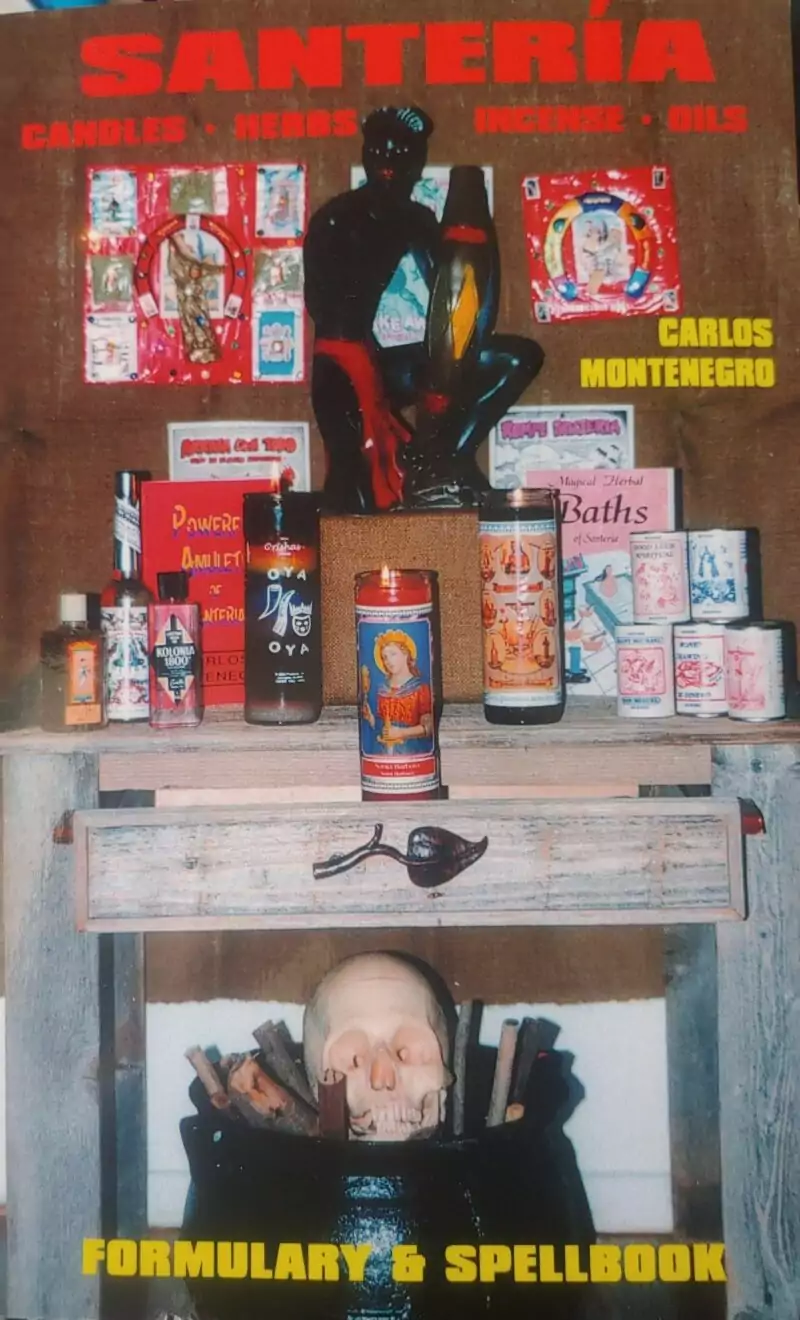
- Author: Carlos Montenegro
- Type: Paperback formulary and spellbook, 147 pages
- Publisher: Original Publications
- Best for: Santeria practitioners, Santeros, Paleros, Afro-Caribbean religious workers
Santeria Formulary and Spellbook: A Hands-On Working Reference
Carlos Montenegro is a Cuban-trained Santeria practitioner, and this book reads like one. The Santeria Formulary and Spellbook is not a scholarly overview or an introduction to the Lukumi faith. It’s a how-to guide written specifically for people already active in the Santeria religion who want to prepare their own ritual ingredients rather than purchase everything commercially. Montenegro’s core argument is practical: natural magic is embedded in the Afro-Caribbean tradition, and a practitioner who knows how to make their own oils, powders, and incense works more economically than one who relies entirely on pre-packaged products.
The book covers a wide range of traditional Santeria and Palo Mayombe preparations. Readers find step-by-step methods for spiritual oils, Black Salt, Polvo De Venado, incense blends, and rare traditional items that rarely appear in print at this level of detail. Montenegro’s direct lineage training from Cuba gives the formulary its specificity. Browse my Santeria books for companion titles across the Afro-Caribbean traditions.
Natural Magic, Orishas, and the Practitioner’s Toolkit
Santeria, formally known as Lucumi or Regla de Ocha, is a Yoruba-derived religion that developed in Cuba among enslaved West Africans during the colonial period. Its ritual magic system centers on maintaining right relationship with the Orishas, the divine intermediaries who govern the forces of nature and human experience. Montenegro’s formulary is grounded in this worldview: each preparation in the book is framed as a way of working harmoniously with the Orishas through the materials they govern, from specific herbs and roots to particular mineral compounds and animal-derived curios.
The book is frank about its intended audience. Montenegro writes for Santeros and Paleros who are already within the tradition, not for curious outsiders. That narrowness is a feature, not a limitation: the book stays focused on the preparations themselves. Pair this text with ritual supplies from my voodoo, hoodoo, and Santeria collection to put the formulary to work.
How to Use the Santeria Formulary and Spellbook
How to work with this traditional Santeria formulary as a practicing Santero or Palero.
- Understand the Framework
Begin with the foundational chapters, which cover ingredient sourcing and the logic behind natural magic in the Santeria tradition. Montenegro explains why certain plants, minerals, and animal products carry specific ritual functions.
- Select Your Formula
Select the formulary section relevant to your working, whether oils, incense, powders, or specialty items. Montenegro provides step-by-step preparation methods, including ingredient ratios and the ceremonial conditions that matter for each.
- Prepare With Proper Orientation
Prepare ingredients with the respect Montenegro emphasizes throughout. The book treats natural magic as a living relationship with the Orishas, not a mechanical recipe exercise, so intention and proper orientation are part of every method.
The Tarot Fellow Standard
I carry this because it is a formulary written for working Santeria practitioners by a Cuban-trained practitioner. Montenegro’s background shapes its practical specificity. For practitioners who want to deepen their own preparation work rather than rely on off-the-shelf ritual products, this is an important reference. Santeria is a living tradition, and this book is meant to be used alongside the guidance of practitioners and community, not in place of it.
Frequently Asked Questions
It’s written for active Santeria practitioners who want to prepare their own ritual ingredients. Montenegro frames it as a how-to guide for Santeros who want inexpensive, traditionally grounded methods for making oils, powders, and incense.
The book covers spiritual oils, Black Salt, Polvo De Venado, incense blends, and rare traditional Palo Mayombe items. Montenegro provides preparation methods drawn from his Cuban training.
Montenegro is a Cuban-trained practitioner with direct initiation lineage into Santeria.
No. Montenegro is explicit that the book supports active Santeria and Palo Mayombe practitioners. It presents working formulary methods, not an anthropological survey, and assumes familiarity with the Orishas and basic religious framework.
Reviews
There are no reviews yet