
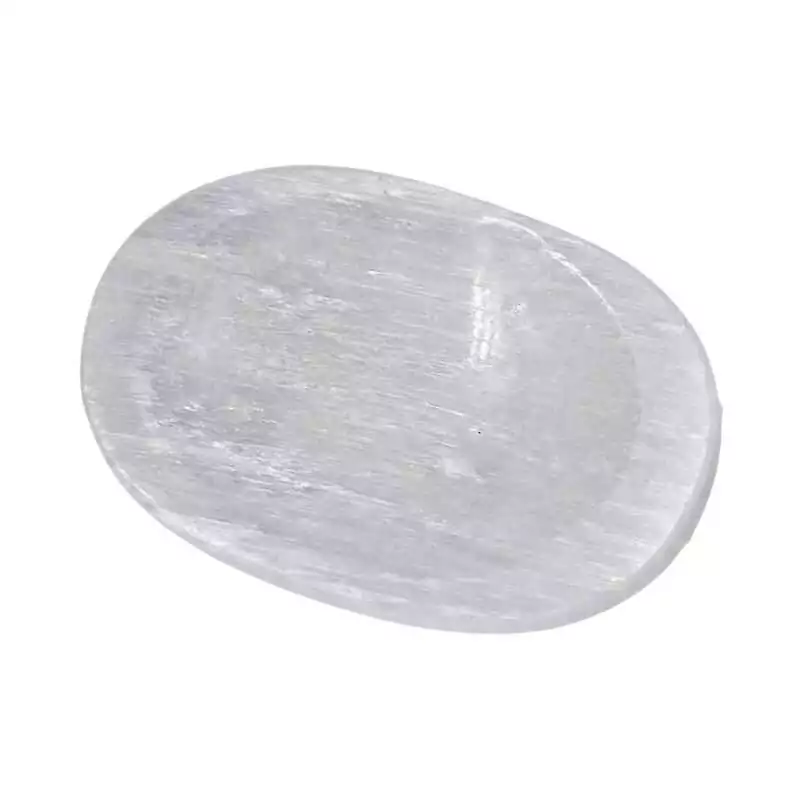

Quick Specs
- Material: Selenite (hydrous calcium sulfate, gypsum family)
- Size: Approximately 1.4 x 1.2 x 0.3 inches
- Format: Smooth worry stone with thumb-worn indentation
- Best for: Tactile anxiety relief, meditation anchoring, mindfulness practice, and stress reduction
Selenite, Gypsum, and the Tactile Science of the Worry Stone Format
Selenite is a variety of gypsum, a hydrous calcium sulfate mineral that forms in evaporite deposits when saline water evaporates slowly over geological time. The largest and most historically significant selenite deposits are found in Morocco, Mexico, and the Naica mine in Chihuahua, where crystals grow to extraordinary size. The stone’s characteristic translucent white appearance and its silky, almost pearlescent surface come from the way its parallel fibrous crystal structure reflects light, and that same fibrous structure gives polished selenite a distinctively soft, warm feel against skin that harder stones like quartz or obsidian don’t replicate. At a Mohs hardness of 2, selenite is one of the softest stones commonly used in crystal work, and that softness is part of what makes the worry stone format suit it particularly well.
The worry stone is one of the oldest and most cross-cultural stress management tools in human history, with versions found in ancient Greece, Tibet, Ireland, and among Native American traditions. The distinguishing feature is the oval or rounded shape paired with a thumb-sized indentation, which gives the thumb a specific place to rest and rub in the repetitive motion that grounds anxious thought and engages the parasympathetic nervous system. For practitioners who work with crystals in my worry and palm stone collection, the selenite version offers a particularly gentle tactile experience precisely because of gypsum’s softness.
Using a Selenite Worry Stone for Meditation and Stress Relief
The selenite worry stone works as a meditation anchor by giving the mind a physical focal point during sitting practice. Holding the stone in one hand with the thumb resting in the groove and moving it slowly back and forth creates a rhythmic, grounding sensation that keeps the body present while the mind settles. This is particularly useful for practitioners who find breath-only meditation difficult to sustain or who experience restless energy during seated practice. The stone’s lightness and small size, at approximately 1.4 inches, means it rests easily in a cupped palm without requiring effort to hold.
Selenite should not be exposed to water or excessive humidity. Because it is a gypsum mineral, prolonged moisture contact will begin to dissolve the crystal structure, dulling the surface and eventually causing the stone to degrade. Clean it with a soft dry cloth only, and store it away from bathroom moisture or outdoor humidity. The stone’s natural surface variation, including the shimmering striations that are characteristic of selenite’s fibrous crystal structure, means each piece looks slightly different, and no two worry stones are identical in their exact banding and translucency.
How to Use a Selenite Worry Stone
Using a selenite worry stone for tactile anxiety relief, meditation anchoring, and mindfulness practice.
- Hold the Stone Correctly
Place the selenite worry stone in either hand with the indentation facing upward. Rest your thumb in the groove. The oval shape and indentation fit the natural position of a relaxed thumb, making the hold comfortable for extended use.
- Begin the Grounding Motion
With your thumb in the groove, move it slowly and rhythmically back and forth. The motion should be slow and deliberate. Focus on the sensation of the silky selenite surface, which redirects anxious thought toward the present moment.
- Integrate into Meditation or Daily Use
Use the stone at the start of meditation as an anchor, or carry it in a pocket for stressful moments during the day. For meditation, set it down once settled. For anxiety relief, use as long as needed. Clean only with a dry cloth.
The Tarot Fellow Standard
I carry this selenite worry stone because the format serves a specific need that other selenite shapes don’t address. The bowls, wands, and harmonizers I stock are for different applications, but the worry stone format is the right tool for the practitioner who needs something small, portable, and tactilely engaging during anxious moments or seated meditation. The gypsum softness gives it a sensory quality that harder stones can’t match, and its compact size means it travels easily. For anyone building a broader selenite or crystal practice, the rest of my chakra and meditation collection has tools to complement this stone.
Frequently Asked Questions
Selenite is a variety of gypsum, a hydrous calcium sulfate mineral. Its Mohs hardness of 2 makes it one of the softest crystals. Its fibrous structure gives it a silky, warm feel against skin that harder stones like quartz lack.
No. Selenite is a gypsum mineral and will dissolve slowly with prolonged water contact. Moisture exposure dulls the surface over time. Clean only with a soft dry cloth. Do not rinse it under water, even briefly, as damage accumulates.
A worry stone has a thumb-sized indentation for repetitive rubbing that engages calming tactile feedback. A palm stone is smooth all the way across, shaped for holding in the palm. The worry stone is designed for the grounding motion.
Hold it in your non-dominant hand with your thumb in the groove at the start of your session. Rub slowly back and forth as you settle your breath. Once grounded, set it down or keep holding it throughout. It anchors the body present.

That is so so small.
Worry stones are small so they can be easily carried. The dimensions in the product description are correct. If you’re looking for something a bit more substantial, a palm stone might be a better option.