
Quick Specs
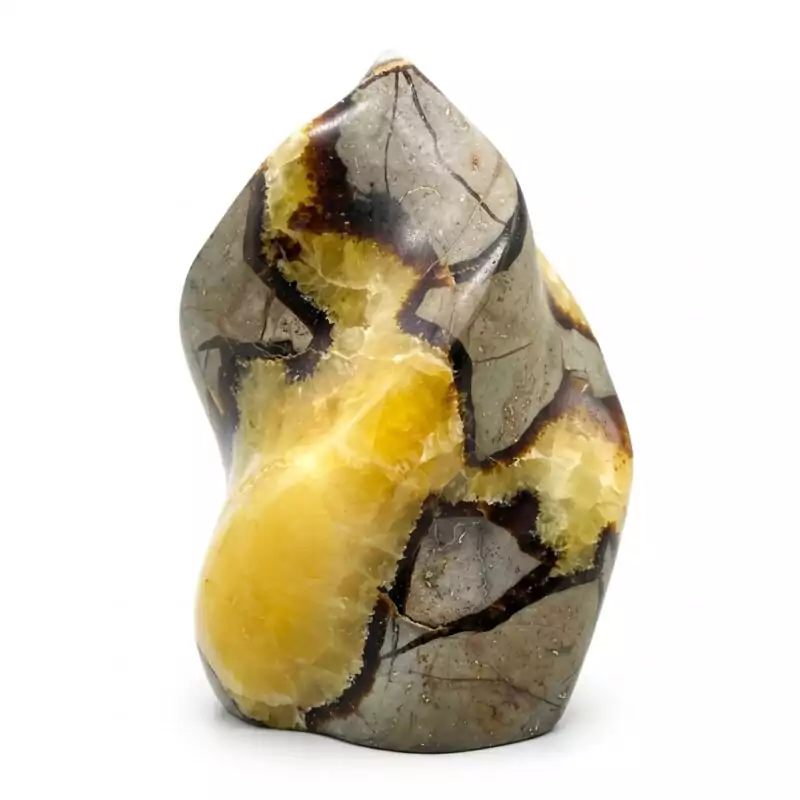
- Type: Septarian (Dragon Stone) Flame Carving
- Composition: Calcite, aragonite, and limestone nodule
- Origin: Madagascar, Utah, or Morocco (varies by batch)
- Best for: Display, grounding practice, collector piece, altar centerpiece
Septarian Dragon Stone: 50 Million Years in a Flame Shape
Septarian nodules began forming approximately 50 to 70 million years ago during the Cretaceous period, when volcanic ash settled into shallow prehistoric seabeds and cemented decaying sea life, mud, and organic matter into compact egg-shaped masses. As the oceans retreated and the nodules dried, they shrank and cracked from the inside outward, creating the distinctive angular fissure pattern found in specimens today. Those cracks then filled with mineral-rich groundwater over millions of years, depositing yellow calcite in the narrowest veins and brown aragonite in the wider chambers, against the gray limestone host rock.
The result is a stone with three distinct mineral zones visible in cross-section: the golden-yellow calcite veining, the warm brown aragonite matrix, and the cool gray limestone outer shell. Carving septarian into a flame shape reveals those internal structures on all sides, making it one of the more visually dynamic display stones available. No two pieces show the same pattern of veining and mineral distribution.
Dragon Stone Symbolism and Practical Uses
The trade name “dragon stone” references the cracked, scaly surface of unpolished septarian nodules, which resembles the shell of a dragon egg in fantasy imagery. Practitioners in earth-based traditions associate septarian with grounding, confidence, and communication, linking it to the root chakra through its mineral origins deep in prehistoric seabeds. It appears in crystal healing practice as a stone for transitions, public speaking preparation, and shadow work requiring emotional steadiness.
The flame shape adds a layer of symbolism: the upward-tapering organic form represents the movement of fire energy or ascending spirit, making it a natural centerpiece for ritual altar work. The flat base of most flame carvings keeps the piece stable for display without a stand. Each septarian flame is hand-carved and one-of-a-kind in its exact proportions and mineral patterning.
How to Use a Septarian Flame
Three practical steps for displaying, working with, and caring for your septarian dragon stone flame.
- Study the Mineral Layers
Place the flame on a flat surface and tilt it toward a light source to reveal the color contrast between the yellow calcite veins, brown aragonite matrix, and gray limestone base. Each piece shows a different distribution of these three minerals.
- Hold During Grounding Practice
Hold the flame in both hands during grounding meditation, letting the weight and warmth anchor your attention. The tri-mineral structure, calcite, aragonite, and limestone, is associated with earth energy and root chakra work in crystal practice.
- Care and Storage
Wipe septarian with a soft dry cloth. The calcite and aragonite components are both Mohs 3 to 4, meaning harder minerals can scratch the surface. Avoid prolonged water exposure, which can slowly erode the softer calcite veining over time.
The Tarot Fellow Standard
I stock septarian flame carvings because they are genuine geological specimens with a formation story that stands on its own without requiring metaphysical embellishment. The 50-million-year origin, three-mineral composition, and distinctive crack pattern make septarian inherently interesting to any collector or practitioner, and the flame carving form displays that interior complexity better than a simple sphere or tumble. Explore my free-form crystal shapes for more display specimens, or browse my full crystals collection for complementary stones.
Frequently Asked Questions
Septarian nodules formed roughly 50 to 70 million years ago when volcanic ash settled into prehistoric seabeds. As the oceans receded, the nodules dried and cracked outward, creating the distinctive angular fissure pattern found in specimens today.
Dragon stone is a common trade name for septarian, referring to the cracked, scaly pattern on the nodule surface that resembles dragon skin or a dragon egg shell. The name is informal and not a separate mineral classification.
The yellow or golden material inside the cracks is calcite, the brown surrounding matrix is aragonite, and the gray outer shell is limestone. Some specimens also show white barite or chalcedony depending on the deposit of origin.
A flame carving tapers to a curved organic point, symbolizing the upward movement of fire or spirit. Unlike an obelisk, the flame shape has asymmetrical curves better suited to decorative display than to directional energy work in a grid.
Reviews
There are no reviews yet