
Quick Specs
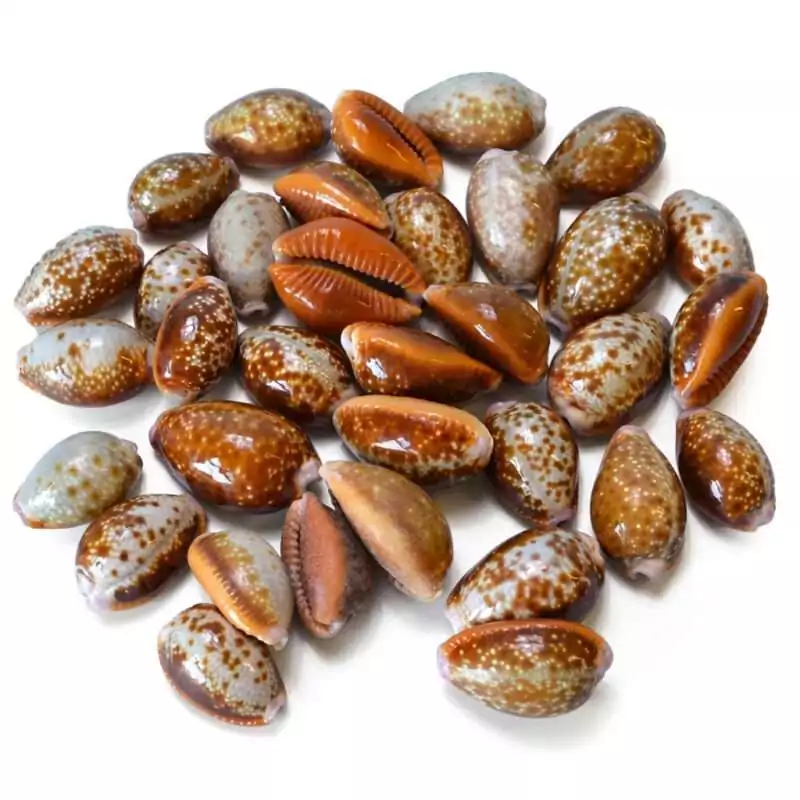
- Type: Cypraea Helvola cowrie shells — set of 100
- Shell size: 15–24mm each
- Surface: Glossy, naturally warm-toned
- Quantity: 100 shells per pack
- Traditional use: Divination casting, Ifa, Santería, Voodoo, craft
Cypraea Helvola in Divination and Afro-Caribbean Tradition
Cowrie shell divination is one of the most widely practiced forms of oracle work across African and Afro-diasporic spiritual traditions. In Yoruba-derived practice, Ifa, Lukumí (Santería), and the related systems that traveled the African diaspora to Cuba, Brazil, Haiti, the United States, and beyond, cowrie shells called diloggún are among the primary divination instruments. A trained diviner casts a set number of shells onto a surface and reads the pattern of apertures-up and apertures-down against a complex corpus of sacred knowledge. In Haitian Vodou and related Voodoo practices, cowrie shells are similarly used as sacred objects and oracular tools, connected to specific Lwa (spirits) and their domains. Cypraea helvola, with its warm reddish-brown tone, natural gloss, and consistent 15–24mm size, is a standard shell type used for these casting practices, small enough to cast in quantity, uniform enough for reliable reading, and beautiful enough to feel sacred in the hand.
Beyond the formal divination systems, this pack of 100 shells is the right quantity for practitioners who want to build a dedicated divination set with spares, create a shell grid or altar arrangement, use shells for craft and jewelry projects with a ritual purpose, or supply shells for group ceremonial use. The 15–24mm range means shells in the pack will vary slightly in size, a natural feature of real shells, and one that some diviners factor into their reading practice (larger shells may carry heavier energetic weight; smaller shells lighter). Each shell has the distinctive Cypraea helvola pattern: a warm brownish-red or orange-brown base with lighter spotting and a glossy natural finish. This is an accessible entry point into building a working divination shell collection. For single display shells see the tiger cowrie; for bulk prosperity shells see the 400-piece moneta set.
Practical Ritual Applications
Build a diloggún casting set: in Lukumí practice a standard set is 16 to 21 shells; this pack of 100 provides enough to build multiple sets and to replace lost or damaged shells over time. For Voodoo practitioners, use a set of 7 or 13 shells for Lwa casting, keeping the remainder in a dedicated cloth pouch. In broader folk-divination practice outside formal Ifa, use the shells for simple yes/no or landscape readings: cast a handful onto a marked cloth and read the spatial distribution. For protection and abundance workings, shells can be sewn into mojo bags, incorporated into charm bottles, or strung into protective necklaces and bracelets. The 15–24mm size works well for both casting and jewelry making. In craft and creative work, the natural gloss means no finishing is needed, the shells are ready to use in wire wrapping, knotwork, weaving, and macramé projects that benefit from sacred material.
How to Set Up and Begin Working With Cowrie Shell Divination
Three foundational steps for building and starting to use a cowrie shell divination practice.
- Prepare Your Casting Set
Choose the number of shells for your set based on the tradition you are working within: 16 or 21 for diloggún-style Lukumí practice; 7 or 13 for many Vodou-aligned approaches; 8 for many general folk divination systems. From the 100-shell pack, select your shells by feel and visual impression, some practitioners hold each shell briefly before selecting, building a felt sense of which shells ‘want’ to be in the working set. Store your selected casting shells in a dedicated pouch, away from the bulk supply.
- Cleanse and Activate Your Casting Shells
Cleanse the selected shells with salt water, incense smoke, or running spring water, the cleansing method should match the tradition you are working in. In Ifa-adjacent practices, shells are typically fed with specific offerings before first use; consulting a trained elder or priest is strongly recommended before attempting formal Ifa divination. For folk and personal divination, a simple smoke cleansing with your preferred incense, followed by a prayer or statement of purpose, is sufficient to begin. Hold the shells in your dominant hand and speak your purpose to them.
- Practice the Cast and Learn to Read
Cast the shells onto a flat surface, traditionally a cloth-covered mat, divination tray, or clean floor, from a low height so they scatter naturally without bouncing far. For yes/no practice, count apertures-up: more than half up is yes, more than half down is no, equal counts prompt a re-cast. For landscape readings, note where clusters form, which shells sit isolated, and whether apertures-up shells face the querent or away. Keep a journal of your casts to develop your personal reading vocabulary over time.
The Tarot Fellow Standard
I carry this set of 100 because cowrie shell divination is one of the most living, practiced oracle traditions in the world, and having enough shells to build a serious working set with extras matters. The Cypraea helvola size and gloss are right for casting work. This is the practitioner-grade pack, not a handful of shells from a craft bin. I want to stock tools that respect the traditions they serve, please approach Ifa and Santería divination with proper study and guidance. Browse the ritual items and spell supplies collection for the full range of divination and shell tools.
Frequently Asked Questions
Cypraea helvola is a standard shell type used in cowrie divination practice. However, formal Ifa and Santería diloggún divination involves initiation, years of study, and learning the Odù corpus from a trained lineage priest or priestess. These shells are appropriate for practitioners already engaged with those traditions under proper guidance, and for students building familiarity with the shells before formal training. Do not attempt to practice formal Ifa or diloggún divination without lineage authorization.
This depends on the tradition. Lukumí diloggún uses 16 to 21 shells per reading set. Many folk and personal divination systems use 7, 8, or 13 shells. The pack of 100 provides enough shells to build one or more complete working sets with significant spares, and is also useful for craft projects, altar arrangements, and sharing with other practitioners or students.
Yes, the natural gloss finish means they require no additional treatment for jewelry or decorative use. The 15–24mm size works well for shell necklaces, bracelets, macramé embellishments, and woven pieces. Many practitioners combine ritual and craft use: a necklace made from casting shells can serve as both wearable protective jewelry and a portable divination set.


Reviews
There are no reviews yet